
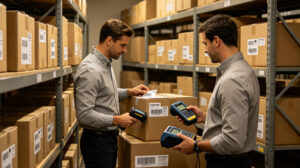
When a small business experiences rapid growth, operational bottlenecks quickly become apparent. What worked for shipping ten packages a day out of a home office becomes a logistical nightmare when daily volumes hit the hundreds or thousands. If your staff is constantly battling paper jams, waiting for ink to dry, or dealing with overheated desktop printers, your hardware is actively limiting your profitability.
Upgrading to a commercial-grade label printer for small business is a critical transition. For procurement managers, warehouse supervisors, and ambitious business owners, selecting the right hardware requires looking beyond basic retail brands. Here is a comprehensive buying guide focusing on commercial specifications, hardware durability, and the strategic advantages of factory-direct sourcing.
1. Commercial and Industrial Specifications
A consumer-grade printer and a commercial labeling machine may look similar on the outside, but their internal mechanics are built for entirely different workloads. When sourcing equipment, evaluate these core specifications:
- Print Volume and Speed:Standard desktop printers often require “cool down” periods after printing 50 to 100 labels. A true commercial or industrial printer features robust thermal mechanisms designed to continuously print thousands of labels daily at speeds exceeding 150mm/s without thermal shutdown.
- Resolution (DPI):While 203 DPI is the industry standard for standard 4×6 shipping labels and basic retail tags, businesses dealing with micro-components, jewelry, or dense QR codes should prioritize 300 DPI printheads for flawless scanning accuracy.
- Media Handling:Commercial units accept large, high-capacity label rolls or external fan-fold stacks. This drastically reduces the downtime spent reloading media during peak fulfillment shifts.
2. Hardware Durability for Real-World Environments
As a small business scales into larger warehouse spaces or light manufacturing facilities, the operating environment becomes hostile to delicate electronics. Dust, humidity, and accidental impacts are daily realities.
When upgrading your equipment, prioritize durability. While basic retail printers rely on lightweight plastic casings, commercial and industrial printers utilize reinforced frames, dual-wall constructions, and heavy-duty printhead assemblies. These ruggedized designs protect the internal motors from airborne dust and ensure the machine delivers consistent, aligned prints even in demanding, high-traffic work zones.
3. Strategic Sourcing: OEM/ODM and Wholesale Advantages
For growing enterprises or regional hardware distributors, where you procure your hardware dictates your bottom line. Buying standard retail brands limits your margins and restricts your ability to scale. Sourcing directly from an established manufacturer unlocks significant B2B advantages:
- Tiered Wholesale Pricing:Eliminate middleman markups. Partnering directly with the factory secures distributor-level pricing, drastically lowering your initial capital expenditure when outfitting multiple packing stations.
- OEM/ODM Customization:Direct manufacturers offer the flexibility to customize the printer’s firmware, rebrand the physical exterior with your company logo, and tailor the software integrations to meet local market demands or specific corporate IT standards.
4. After-Sales Support and Total Cost of Ownership (TCO)
The true cost of a printer is not just the upfront price tag; it is the Total Cost of Ownership (TCO), which includes consumables and maintenance. Commercial hardware operates on an open-consumable ecosystem, allowing you to buy standard third-party thermal labels at competitive market rates rather than being locked into expensive proprietary rolls.
Furthermore, direct factory sourcing guarantees enterprise-level after-sales support. You gain immediate access to technical engineering teams for rapid troubleshooting and secure a reliable, long-term supply of critical spare parts like printheads and platen rollers, ensuring your business never faces extended downtime.
Scale Your Operations with Detonger
Procuring the right commercial hardware requires a partner with proven manufacturing strength. With over 16 years of R&D and supply chain expertise, Detonger builds robust thermal labeling solutions trusted by businesses scaling up in over 50 countries.
Whether you need reliable desktop units for an expanding e-commerce team or heavy-duty machinery for a new warehouse, our open-ecosystem printers deliver high-speed performance and uncompromising reliability.
Ready to upgrade your enterprise hardware or explore B2B distribution opportunities?