
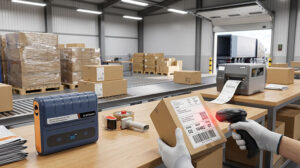
When an emerging enterprise transitions from small-scale operations to high-volume fulfillment, initial bottlenecks invariably appear at the packaging and logistics benches. Relying on lightweight consumer gadgets or standard office desktop setups for continuous corporate workflows leads to frequent mechanical jams, overheated printheads, and costly operational delays.
For procurement managers, supply chain directors, and global hardware distributors, sourcing the best label printer for small business means looking past standard retail marketing and evaluating equipment through a rigorous commercial lens. This practical 2026 buying guide breaks down the essential technical parameters, industrial durability standards, factory-direct OEM/ODM customization capabilities, and B2B after-sales support frameworks required to maximize your Return on Investment (ROI).
1. Critical Commercial Parameters for Hardware Selection
Commercial label printing requires robust internal mechanics engineered to maintain absolute precision under intense daily workloads. When sourcing equipment, evaluate these performance metrics:
- Print Resolution (DPI):While a 203 DPI print engine provides high speeds and adequate clarity for standard 4×6 inch shipping face sheets and retail markdown tags, businesses dealing with micro-components, laboratory assets, dense QR codes, or 6-point typography must prioritize 300 DPI or 600 DPI configurations to ensure perfect scanning rates.
- Throughput Speed:Operational velocity directly impacts your daily outbound margins. Professional commercial printers must deliver steady print speeds of 150mm/s to 200mm/s (6 to 8 Inches Per Second), producing high-contrast, smudge-proof barcodes every single second without caching delay.
- Media Capacity and Width:True business-centric systems integrate an adjustable 4-inch (104mm) wide thermal printhead to handle standard logistics bills, with the internal flexibility to seamlessly narrow down to 2-inch or 3-inch tracks for retail pricing or asset tracking.
2. Industrial Durability Standards and Duty Cycles
The environment of a fast-growing warehouse, fulfillment center, or light manufacturing plant is naturally hostile to delicate electronics. Airborne dust, temperature fluctuations, and physical impacts are daily operational realities.
To guarantee continuous uptime, prioritize industrial label printer models built with reinforced double-walled structural housing or upgraded all-metal die-cast aluminum internal mechanisms. A rigid internal chassis maintains exact printhead and roller alignment under sustained mechanical vibration. Furthermore, advanced thermal dissipation management prevents mid-shift system shutdowns caused by continuous batch processing.
3. Supply Chain Advantages: OEM/ODM and Wholesale Sourcing
Procuring hardware through standard retail channels restricts your profit margins and limits long-term scalability. Partnering directly with an established original equipment manufacturer (OEM) provides deep strategic B2B advantages:
- Tiered Wholesale Sourcing:Bypassing intermediate consumer distribution tiers unlocks factory-direct wholesale pricing, lowering your upfront capital expenditure when outfitting multiple regional fulfillment stations.
- Comprehensive OEM/ODM Customization:Direct manufacturing allows you to inject proprietary command languages (such as ZPL, TSPL, or EPL) into the firmware, customize API/SDK software integrations for specialized internal WMS/ERP tech stacks, and rebrand the physical housing color and logo plates to match corporate brand compliance.
4. Enterprise-Grade After-Sales Support and Component Security
The real cost of a commercial labeling fleet is measured across its complete operational lifecycle, including long-term maintenance and consumable compatibility:
- Open Consumable Ecosystem:Choose hardware that avoids proprietary, micro-chipped media rolls that inflate recurring costs. True business-grade systems feature an open ecosystem, allowing your supply chain department to source affordable third-party thermal paper in high-capacity rolls or fan-fold stacks at market rates.
- Direct Technical Access:Factory-direct sourcing ensures your internal IT team has immediate access to hardware application engineers for rapid troubleshooting, rather than automated retail customer bots. Critical high-wear components, specifically replacement printheads and platen rollers, are kept in long-term stock for immediate dispatch.
Scale Your Corporate Fleet with Detonger
Fulfillment excellence and asset tracking security require rugged, high-performance hardware engineered for continuous durability. Upgrading your corporate packaging lines with commercial-grade thermal label printing infrastructure lowers your recurring media overhead, completely eliminates label formatting errors, and accelerates your outbound processing capacity.
With over 16 years of unified R&D, manufacturing precision, and global supply chain excellence, Detonger develops premium thermal and thermal transfer industrial printing systems trusted by scaling businesses across 50 countries. Our open-ecosystem devices pair heavy-duty durability with highly adaptive software connectivity to deliver maximum operational uptime.
Ready to bypass retail markups and request factory-direct wholesale pricing or product catalogs?