
When selecting the ideal hardware fleet to power your business workflows, finding a reliable branding tool is paramount. The seiko smart label printer (SLP) series has long been recognized as a classic, high-quality desktop solution for medical clinics, office administration, and retail countertops. However, as global supply chains move faster, commercial procurement heads and hardware distributors must look past name-brand legacy and evaluate hardware ecosystems through a strict operational lens.
A smart corporate purchasing decision requires a balanced, neutral comparison of total running costs, consumable open-ecosystem access, after-sales support networks, and wholesale scalability. This technical comparison guide breaks down the essential performance parameters between traditional retail brands and factory-direct manufacturing alternatives to maximize your Return on Investment (ROI).
Upfront Retail Value vs. Long-Term Material Overhead
For light-duty office or medical filing, standard retail printers provide plug-and-play convenience. However, a neutral look at your long-term balance sheet reveals distinct financial paths:
- The Closed Media Ecosystem:Many traditional consumer-facing hardware brands utilize fixed media sensors calibrated specifically for proprietary, branded label rolls. This proprietary cartridge design can lock your purchasing office into inflated recurring costs over time.
- The Open Media Ecosystem:Dedicated original equipment manufacturers (OEMs) design printing mechanisms with adjustable transmissive and reflective sensors. An open platform allows your supply chain team to source standard, high-quality third-party thermal rolls or fan-fold stacks at fair wholesale market rates, dropping your ongoing material overhead by up to 35-40%.
Technical Comparison Matrix: Retail Hardware vs. Factory Sourcing
Evaluating a hardware investment requires matching the machine’s technical specifications to your exact facility duty cycle:
| Sourcing Metrics | Traditional Retail Legacy Brands | Factory-Direct Manufacturing (e.g., Detonger) |
| Mechanical Frame | Lightweight injection-molded plastic shell | Reinforced double-walled structure or aluminum chassis |
| Workload Throughput | Intermittent low-to-medium batch processing | Heavy-duty continuous mass printing loops |
| Print Width Paths | Specialized narrow formats (typically 2-inch to 3-inch) | Flexible adjustable broad widths up to true 4-inch (104mm) |
| System Integrations | Standard PC drivers (Windows / macOS) | Comprehensive cross-platform integration (Windows, Mac, iOS/Android SDKs) |
Traditional retail units are highly reliable for localized, desk-bound applications like printing individual address labels, prescription vials, or visitor badges. However, if your business requires managing high-volume, mobile warehouse workflows or printing large 4×6 inch e-commerce shipping labels, standardizing on a broad-width industrial hardware line is necessary to prevent operational bottlenecks.
Tiered Wholesale Pricing vs. Fixed Retail Channels
Where you source your fleet dictates your capability to scale fluidly as an enterprise:
- Retail Distribution Limits:Procuring hardware through consumer electronic channels restricts you to fixed retail pricing with strict caps on order quantities. This setup offers no path for customizing internal firmware, modifying software APIs, or adjusting external housing aesthetics.
- Factory Sourcing Strengths:Partnering directly with an established manufacturer eliminates distributor markups, unlocking tiered factory-direct wholesale pricing models. Furthermore, factories provide robust OEM/ODM capabilities, allowing enterprises to customize print-command languages (ZPL, TSPL, EPL), integrate custom SDKs for specialized internal WMS software, and modify branding plates to match corporate compliance.
Enterprise Technical Support and Spare Parts Security
Unexpected hardware failure on an active packaging line or assembly floor translates immediately into lost corporate revenue. Therefore, direct access to engineering resources is vital for operational continuity:
- Mainstream retail consumer channels often rely on automated troubleshooting bots or layered ticketing networks, which can result in long repair turnaround times.
- Direct factory partnerships open up clear lines of communication to senior application engineers for swift remote deployment support. Furthermore, high-wear components—specifically replacement thermal printheads and internal platen rollers—are consistently stocked and ready for immediate dispatch, keeping machine downtime close to zero.
Secure Your Labeling Fleet with Detonger
Finding the absolute best label maker configuration depends entirely on your specific organizational throughput. For localized offices, small medical practices, or intermittent desk filing, a classic retail smart label machine offers excellent, standalone dependability. However, for expanding e-commerce fulfillment loops, industrial warehouses, and international distributors looking to scale, securing factory-direct hardware remains the ultimate commercial solution.
With over 16 years of unified manufacturing and R&D precision, Detonger supplies premium thermal printing infrastructure trusted globally across 50 countries. Our open-ecosystem devices pair industrial-grade mechanical durability with highly adaptive software connectivity to deliver maximum operational uptime and unbeatable factory-direct value.
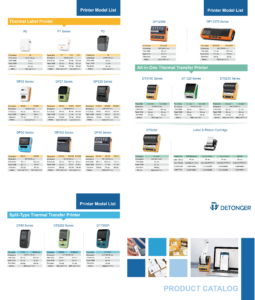
Ready to explore our comprehensive product catalog or request factory wholesale quotes?
Great content! Keep up the good work!