
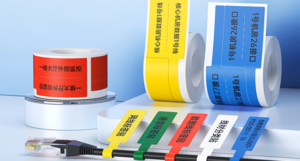
In control cabinet manufacturing, telecommunications infrastructure, data center management, and heavy industrial automation, physical wire marking forms the backbone of operational reliability and safety. Hundreds of intricate cables pass through high-density server racks and electrical junction boxes. Relying on hand-written markers or low-grade adhesive tags frequently results in illegible text, adhesive degradation, and flagging, leading to catastrophic troubleshooting delays, short circuits, and regulatory compliance failures during safety audits.
Deploying a professional wire labels printer setup in-house is an essential operational requirement for electrical contractors and industrial integration teams. These specialized printing systems deliver high-contrast, permanent, and flame-retardant cable identification markings that remain readable across decades of equipment operation. This industry solution guide analyzes wiring pain points, high-durability label materials, electrical safety standards, and hardware selection criteria.
Electrical Sector Pain Points: The High Risk of Unidentified Wiring
Panel builders, field technicians, and network engineers operate in demanding environments where traditional stationery labels quickly fail:
- Curved Surface Tension & Flagging:Standard flat adhesive paper applied around curved, small-diameter wires suffers from continuous material tension, causing the edges to lift (“flagging”) and eventually peel off.
- Thermal Volatility and Chemical Exposure:High-voltage switchgears and industrial motors generate constant internal heat. Furthermore, wiring in marine and factory automation settings faces exposure to hydraulic oils, industrial cleaning solvents, and moisture that dissolve low-grade inks and adhesives.
- Dense Cable Friction:Pulling wire bundles through tight conduits or crowded server racks subjects labels to intense physical friction, rubbing off surface printing if the ink is not fused into the substrate.
Specialized Label Materials and Extreme Durability Standards
To guarantee permanent legibility across harsh industrial lifecycles, commercial wire labeling relies on specialized synthetic substrates paired with high-performance resin thermal transfer ribbons: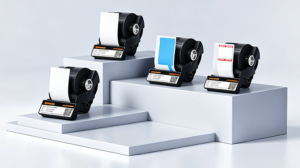
- Self-Laminating Vinyl Labels:The premier choice for cable marking. Featuring a white printable area and an integrated clear, flexible tail, the transparent film wraps completely around the wire to seal and protect the printed text from moisture, oils, UV exposure, and mechanical abrasion.
- Cross-Linked Polyolefin Heat Shrink Tubing:Industrial heat shrink markers slide directly over wires and shrink tightly when heat is applied. Designed with 2:1 or 3:1 shrink ratios, they provide permanent 360-degree insulation and identification.
- Flexible Nylon & Cloth Wrap-Arounds:Conforming tightly to curved wires and tight bends without memory retention or edge-lifting, making them ideal for high-density patch panels and telecom cables.
Strict Electrical Standardization and Safety Compliance
Modern industrial panel building mandates total transparency for circuit maintenance and regulatory safety compliance:
- UL94 Flame Retardancy Standards:Cable markers must comply with international flammability ratings (such as UL94 V-0 or UL224 VW-1) to ensure the labels do not serve as fuel sources during electrical fires.
- TIA-606-B Telecom Infrastructure Standards:Mandating clear, standardized cabling identification across telecommunications rooms, rack spaces, and patch panel ports.
- High-Density Code Scannability:Precision thermal printing engines ensure high-density 2D DataMatrix codes, alphanumeric wire IDs, and circuit diagrams maintain sharp edge contrast for handheld barcode scanners.
Hardware Selection and Efficiency Benchmarks
Selecting the ideal printing architecture depends on your facility’s daily output and field deployment needs:
- Industrial Benchtop Models vs. Rugged Portable Field Printers:For high-speed panel assembly lines running continuous batch jobs, invest in a dedicated industrial desktop thermal transfer engine equipped with automatic cutters. For field technicians servicing remote telecom towers or electrical grids, a rugged, battery-powered handheld wire printer with a rubber bumper guard is mandatory.
- Smart Serialization & Serialization Software Integration:Ensure the printer and its accompanying mobile app/PC software feature automated serialization functions (e.g., auto-incrementing wire numbers like A001–A999) to eliminate manual entry errors and accelerate cable prep time.
- Open Consumable Ecosystem:To protect long-term operational margins, select open platforms that accept standard bulk third-party rolls of self-laminating vinyl and heat shrink tubing rather than expensive chip-locked cartridges.
Secure Your Cable Infrastructure with Detonger
Failing to meet international cabling standards compromises safety and risks expensive downtime during maintenance overhauls. Equipping your panel builders and field engineers with industrial thermal transfer wire label printers and UL-certified media ensures your electrical infrastructure remains perfectly identifiable for the lifetime of the installation.
With over 16 years of unified manufacturing and R&D precision, Detonger supplies premium industrial wire marking and labeling solutions trusted across global electronics, power, and automation corridors. Our comprehensive printers deliver high-speed performance, broad software system driver integrations, and the rugged durability required for demanding industrial applications.
Ready to streamline your cable identification and request custom hardware configurations?