
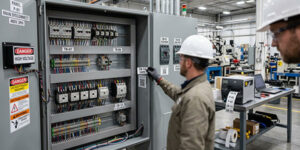
Walk into any modern data center, telecom hub, or industrial substation, and you will see thousands of tightly packed data links and high-voltage power lines. Without proper identification, managing this complex network becomes an operational nightmare. A single unmarked wire can lead to hours of tracking delays, misconnected circuits, or catastrophic downtime during emergency maintenance.
To build an organized, future-proof infrastructure, relying on low-cost masking tape or handwritten tags is a critical mistake. Industrial environments demand a dedicated cable label printer. Engineered to handle curved surfaces and survive harsh environmental stresses, these specialized systems ensure permanent legibility. Here is a comprehensive industry solution guide covering core pain points, specialized materials, and hardware selection strategies.
1. Industry Pain Points: Why Generic Labels Fail in Cabling
Network installers, electrical contractors, and facilities engineers face hostile conditions that quickly destroy standard office stationery:
- The “Flagging” Memory Effect:Standard paper or rigid plastic labels are built for flat surfaces. When wrapped tightly around a thin, curved cable, the material’s natural stiffness causes it to peel back at the edges over time.
- Thermal Expansion and Heat:Server rooms and industrial enclosures generate consistent, high thermal loads. Standard chemical adhesives melt under these conditions, causing identifying tags to slip or fall off entirely.
- Environmental Degradation:Industrial cabling often encounters airborne dust, hydraulic oils, cleaning solvents, and friction during routing, which easily smudges or erases conventional ink.
- Strict Standardization Compliance:Telecommunications infrastructure must strictly adhere to regulations like TIA-606-C, while electrical setups require compliance with national safety codes. Illegible or missing cable IDs can lead to immediate audit failures and expensive regulatory rework.
2. Specialized Label Materials and Durability Requirements
To counter these operational hazards, a commercial cable label printer uses high-performance thermal transfer technology to melt heavy-duty resin ink onto specialized substrates:
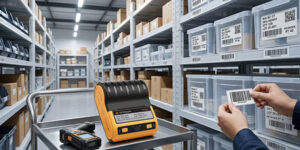
- Self-Laminating Vinyl Labels:This is the industry standard for general network and fiber-optic cabling. These labels feature a colored print area followed by a clear, flexible tail. As you wrap the label around the cable, the transparent tail overlaps the printed section, completely sealing and protecting the text from water, grease, and physical abrasion.
- Polyolefin Heat Shrink Tubes:The ultimate solution for permanent electrical panel and wire-harness identification. Technicians print onto a flattened tube, slide it over an unjoined wire, and apply a heat gun. The tube shrinks tightly around the cable casing, providing extra insulation and a permanent identifier that cannot be peeled off.
- P-Type and T-Type Flags:For ultra-thin patch cords or delicate fiber optics where wrap-around surface area is limited, flagged labels pinch together to provide a flat, prominent surface that is ideal for high-density barcode scanning.
3. Optimizing Installation Workflows and Print Efficiency
In large-scale rollouts—such as wiring a multi-story corporate headquarters or auditing an enterprise data center—field time represents a significant labor expense. Modern labeling solutions drastically optimize field workflow efficiency:
- Direct Database Import:Instead of manually entering thousands of alphanumeric combinations on a tiny keypad, engineering teams can use software to sync Excel databases directly to the printer via a PC or mobile app, mass-producing synchronized sequential serialized strings instantly.
- Advanced Cutting Options:Look for systems that support half-cut (partial cut) The printer cuts only the top label media while keeping the backing strip intact, allowing field installers to easily carry a neat strip of sequential wire markers to the rack and peel them off one by one without losing track of order.
4. Hardware Sourcing and Selection Guide
When procuring hardware for your engineering teams, evaluate these technical guidelines:
- Form Factor vs. Deployment Scale:For field engineers on the move repairing remote cell towers or electrical grids, prioritize a rugged, impact-resistant handheld printer. For high-volume assembly lines producing wire harnesses, a heavy-duty desktop configuration is more suitable.
- Cross-Platform Smart Connectivity:Choose a cable label printer equipped with robust Bluetooth and Wi-Fi capabilities. This allows field technicians to edit layouts, update safety symbols, and execute print jobs instantly on-site from an iOS or Android smartphone app.
- Open Consumable Infrastructure:To minimize long-term Total Cost of Ownership (TCO), avoid restrictive hardware ecosystems that enforce the use of high-margin, proprietary smart-cartridges. Opt for open platforms that accept high-capacity, third-party bulk label rolls.
Secure Your Infrastructure Infrastructure with Detonger
Messy cabling risks your system security and slows down critical troubleshooting loops. Equipping your technical staff with industrial-grade thermal transfer hardware and compliant substrates ensures your facility meets international safety regulations and operates at peak reliability for decades.
With over 16 years of manufacturing and R&D excellence, Detonger supplies field-ready cable labeling solutions trusted by telecom installers and power grids globally. From compact handheld Bluetooth wire markers to heavy-duty industrial printing infrastructure, our open-ecosystem devices are engineered to withstand the toughest real-world demands.
Ready to streamline your facility layout and secure factory bulk pricing?
[Ask for Industrial Labeling Solution]
Contact our hardware integration specialists today to receive tailored product sheets and custom ecosystem configurations.