
Whether you are scaling an e-commerce storefront, streamlining warehouse inventory, or setting up product packaging for a retail brand, a reliable label printer machine is a critical asset. Relying on makeshift office printers for professional tracking and branding leads to wasted hours, smeared barcodes, and high ink costs.
Investing in a dedicated labeling system pays for itself rapidly by cutting out hidden operational friction. However, with hundreds of specifications on the market, finding the right hardware for your commercial infrastructure requires careful consideration. This comprehensive buying guide breaks down everything enterprise buyers and procurement managers need to know before securing their next labeling fleet.
Understanding Label Printer Machine Types
The first technical fork in the road is deciding which printing technology fits your specific application environment. For commercial use, two primary categories dominate the industry:
- Direct Thermal Printers:These machines use heat-sensitive paper and do not require any ink, toner, or ribbon. They are incredibly cost-effective, fast, and ideal for short-to-medium lifespan applications like shipping labels, retail receipting, and food hospitality tracking.

- Thermal Transfer Printers:These systems apply heat to a carbon ribbon, melting ink onto standard paper, film, or synthetic labels. They produce highly durable, smudge-proof, and weather-resistant prints. This makes them the undisputed standard for industrial warehouse asset tags, chemical GHS compliance, and outdoor utility tracking
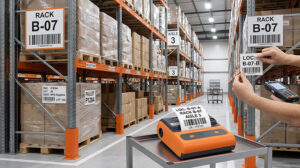
.
Crucial Technical Specs: Print Width and Connectivity
Beyond the basic printing technology, matching the hardware configuration to your facility’s workflow is paramount for operational efficiency.
Print Width Capabilities
Printers are categorized by the maximum width of the label material they can accept. A standard commercial machine generally supports up to a 4-inch print width, which perfectly accommodates the standard 4×6 e-commerce logistics face sheet. If your facility only processes small jewelry tags, pricing labels, or medical vial markings, a compact 2-inch or 3-inch variant may optimize desk space and material costs.
Seamless Connection Methods
Your label printer machine must adapt to your tech stack. Consider how your staff will interface with the equipment:
- Wired Desktop Interfacing:USB and Ethernet (LAN) setups are ideal for stationary packing desks and central warehouse hubs requiring high-volume, uninterrupted print queues.
- Wireless Mobile Workflows:Built-in Bluetooth and Wi-Fi models empower floor workers. They allow staff to generate on-the-spot price tags or inventory barcodes directly from smartphones, tablets, or mobile computers.
Consumable Compatibility and Open Ecosystems
While hardware purchase is a one-time capital expense, consumable supply lines are an ongoing operational cost. Some manufacturers build proprietary locking mechanisms or micro-chips into their media rolls, forcing buyers to purchase their high-margin, branded paper.
To keep long-term operating costs low, always prioritize open-ecosystem label printer machines. Ensure your chosen hardware accepts standard, third-party media in both roll and fan-fold configurations. This allows your procurement team to freely source raw label inventory based on the best bulk pricing available.
Bulk Procurement and Wholesale Considerations
For corporate buyers, distributors, or logistics managers looking to source multiple units across regional warehouses, buying retail-ready consumer brands limits your scalability. Sourcing label printer machines directly from a proven manufacturer offers clear business advantages:
- Direct Factory Pricing:Eliminating distributor markups lowers the initial capital expenditure.
- OEM/ODM Customization:Direct manufacturers allow you to customize firmware configurations, branding, and bundled software kits to fit your internal corporate environment or local resale market.
- Direct Engineering Support:Accessing hardware blueprints, continuous spare parts availability, and enterprise-level warranties ensures your lines never experience prolonged downtime.
Partner with Detonger for Global Labeling Excellence
Selecting a commercial label printing system requires balancing raw performance with supply chain reliability. With over 16 years of end-to-end manufacturing and R&D expertise, Detonger builds industrial and commercial-grade printers trusted by businesses across 50 countries.
From compact, high-speed bluetooth devices to rugged factory systems, we own the supply chain to ensure your operational success.
Ready to upgrade your warehouse logistics or request wholesale distribution catalog pricing?