
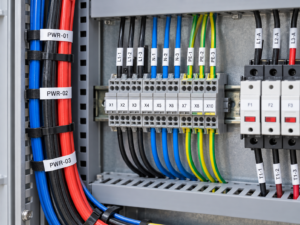
A cable label printer is an industrial-grade portable thermal device designed for network engineers, master electricians, and panel builders to generate durable, code-compliant wire markers directly at the installation job site. The most critical selection factors before purchasing include the underlying print mechanism (thermal transfer is mandatory for heat, oil, and abrasion resistance), high-resolution output (300 DPI for micro-lettering on small-gauge conductors), consumable structure (one-piece drop-in cassettes for rapid field loading), and versatile media compatibility (self-laminating wraps, flag tags, and heat shrink tubing). Buyers should initially judge their requirements by identifying their daily workspace: residential rewiring and basic data patch panels require lightweight 1.5-inch handheld units, whereas industrial switchgear, control cabinets, and substation utilities demand wider 2.5-inch thermal transfer devices equipped with automated serialization software.
The Essential Role of a Cable Label Printer in Electrical Contracting
In commercial infrastructure and low-voltage contracting, wire marking is a strictly regulated safety, compliance, and maintenance protocol governed by standards such as ANSI/TIA-606-C and the National Electrical Code (NEC). Unlabeled or poorly marked cables represent an expensive liability that increases troubleshooting downtime and creates severe hazards during maintenance.
Relying on manual handwriting with markers or consumer sticker machines leads to catastrophic failure in real-world environments. Ink smears when exposed to synthetic pull lubricants, and cheap paper tags disintegrate under conduit friction or thermal cycles inside enclosures. A specialized cable label printer circumvents these risks by fusing industrial-grade resin into rugged synthetic substrates. This ensures that circuit designations, phase IDs, and telecom run numbers remain 100% legible over decades of service life, preventing miswiring and protecting technicians from live conductors.
What to Look for Before Buying a Cable Label Printer
Investing in mobile printing hardware requires aligning the device’s technical specifications with the demanding physical conditions of construction sites and telecom closets. Decision-makers should evaluate these core parameters:
- Thermal Transfer Print Technology:Electrical runs face hydraulic oil, chemical solvents, pulling friction, and ambient UV exposure. To ensure legends never degrade, buyers must choose a thermal transfer label printer. By melting pure resin or high-grade wax-resin ribbons directly into synthetic media, the device forms a permanent chemical bond that will not wipe away.
- 300 DPI High-Resolution Output:Patch panels and industrial terminal blocks offer minimal surface area, often requiring legends on narrow 12mm to 36mm strips. Printing intricate wire schedules, terminal numbers, and scannable 2D DataMatrix codes on small wire gauges (such as 24 AWG Cat6 or thin fiber jumpers) requires a 300 DPI printhead to eliminate scanning failures and illegible text.
- One-Piece Drop-In Consumable Cassettes:Threading separate ribbon spools and loose paper cores while balancing on a ladder or inside a dark distribution closet leads to wasted labor hours and media damage. Premium units feature drop-in cassettes that integrate both the resin ribbon and synthetic labels into a single sealed cartridge, enabling one-step replacement with automatic chip calibration.
- Media Versatility:Modern telecom and electrical installations require diverse material profiles: flexible self-laminating vinyl (with transparent protective tails), P-type and T-type flag labels for fiber lines, durable wrap-around tags, and flame-retardant polyolefin heat shrink tubing. Ensure the hardware provides adjustable media guides to feed multiple thicknesses without jamming.
- Battery Autonomy and On-Site Ergonomics:A dead battery stops handover inspections. Look for devices housing 1500 mAh to 2600 mAh rechargeable lithium-ion packs, capable of sustaining 120 to 180 meters of continuous printing across a full 8-hour shift on a single USB-C charge.
Marking Method Comparison: Thermal Transfer vs. Direct Thermal vs. Manual
Review the operational differences between common cable identification techniques:
| Feature / Metric | Industrial Thermal Transfer | Direct Thermal Label Maker | Manual Pen / Tape |
| Print Technology | Heated resin ribbon melted onto synthetic media | Heat-sensitive paper darkens when heated | Direct ink deposition via pen |
| Heat & Sunlight Resistance | Exceptional (Withstands high-temperature enclosures) | Poor (Darkens or turns black under UV and heat) | Low to moderate (Fades in direct sunlight) |
| Chemical & Oil Resistance | Impervious to oils, lubricants, and solvents | Low (Fades or erases upon chemical contact) | Low (Easily smeared by grease) |
| Media Versatility | Self-laminating vinyl, PET, PVC, Heat Shrink Tubing | Standard paper and top-coated thermal labels | Vinyl electrical tape or standard card |
| Lifespan of Legend | 10 to 15+ years | 6 to 12 months | 1 to 2 years |
| Ideal Field Application | Control panels, switchgear, data centers, telecom closets | Temporary indoor office wiring, shipping boxes | Rough-in phase notes and initial pulls |
For professional, code-compliant installations requiring zero maintenance callbacks, an industrial thermal transfer cable label printer is the industry standard.
Recommended Detonger Cable Label Printers
Detonger brings 16 years of independent research, hardware engineering, and software development expertise to the marking industry. Backed by ISO9001, ISO14001, CE, FCC, and UKCA certifications, as well as 11 invention patents, Detonger supplies field-proven marking systems across 50 countries.
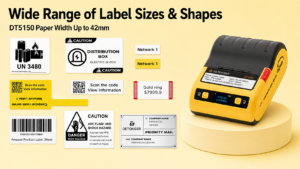
Detonger DT5150: The 1.5-Inch Toolbelt Specialist
For residential electricians, network cabling contractors, and structured telecom technicians, the Detonger DT5150 delivers precision and agility.
- Technical Specifications:Equipped with a 1.5-inch printhead available in 203 DPI and high-precision 300 DPI configurations, supporting printable widths up to 36mm. The entire unit weighs only 390g with consumables loaded, making it effortless to carry on a toolbelt pouch.
- Job-Site Engineering:Employs an integrated one-piece consumable cassette that combines the label roll and resin ribbon, enabling one-step drop-in loading. The system uses an intelligent recognition chip to automatically identify the loaded media format and push the matching template directly to your mobile device, making wrap-around cable tagging and fiber optic flag markers fast and foolproof.
Detonger DT5250: The 2.5-Inch Heavy-Duty Panel Workhorse
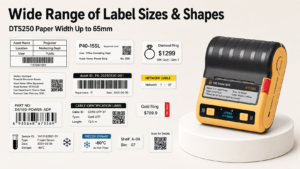
For industrial master electricians, utility substation contractors, and commercial panel builders, the Detonger DT5250 provides expanded printable width and extended battery life.
- Technical Specifications:Supports label widths up to 63mm (effective print width of 60mm–61mm) with a 300 DPI printhead and an extended 2600 mAh battery capacity.
- Job-Site Engineering:Designed specifically for multi-conductor industrial power cables, large conduit labeling, and high-density breaker panel directories. Its battery delivers up to 150 meters of continuous printing per charge, while its one-piece cassette housing supports matte silver PET, rugged PVC, and specialized wire-marking synthetics rated for up to 15 years of environmental exposure.
Streamlining Deployments with Weprint Mobile Software
Durable hardware must be paired with streamlined software to prevent manual entry errors on the job site. Detonger printers integrate natively with the proprietary Weprint software ecosystem, available for iOS, Android, and Windows PC.
Project managers can draft standardized panel schedules, wire numbering schemas, and terminal drop lists on a desktop PC and synchronize them to the cloud. Field technicians connect their smartphone to the cable label printer via Bluetooth, load the pre-formatted template, and execute on-demand batch printing. For large-scale data center builds or industrial fit-outs, Weprint allows direct one-click Excel database imports, instantly generating serialized alphanumeric runs (such as Drop-A001 through Drop-A500) without requiring tedious input on a cramped physical keyboard. Detonger also provides comprehensive multi-platform SDKs to embed automated label output directly into proprietary asset management and electrical testing applications.
Equipping Your Contracting Fleet for Lasting Compliance
Selecting the right cable label printer before stepping onto the job site protects your contracting business from failed inspections, costly rework, and field confusion. By prioritizing 300 DPI thermal transfer hardware, drop-in consumable cassettes, and mobile cloud batch printing, your crews can complete complex wire terminations rapidly and accurately.
Explore our dedicated Cable Label Printer for Wire, Electrical and Heat Shrink Labels, browse our complete Durable Wire & Cable Label Printing Solutions, or equip your fleet with specialized thermal transfer ribbons to ensure durable, compliant wire marking today.
Frequently Asked Questions (FAQs)
Q: Can a portable cable label printer handle heat shrink tubing directly from a cassette?
A: Yes. Units equipped with specialized thermal transfer print mechanisms and dedicated polyolefin heat shrink tube cassettes print directly onto continuous or flattened tubing. When heated with an industrial heat gun, the tubing shrinks securely around the wire without distorting, charring, or smudging the resin-printed text.
Q: Why are self-laminating wrap-around labels preferred over standard vinyl stickers?
A: Standard vinyl stickers leave the printed surface exposed to mechanical friction and pulling through conduits. Self-laminating labels feature a white printable area followed by a clear, transparent tail; when wrapped around a conductor, the clear portion wraps over the printed text, sealing it beneath a durable laminate layer that shields it from moisture, oil, and abrasion.
Q: How does the automatic cassette recognition chip eliminate label waste during setup?
A: Detonger DT series printers feature an integrated smart chip in every drop-in cassette. The instant the cartridge is inserted, the printer reads the exact label dimensions, media composition, and remaining length, automatically updating the Weprint app’s layout canvas. This ensures correct alignment and eliminates the need to run wasted test prints to calibrate margins.