
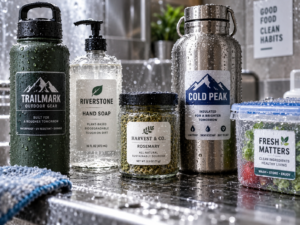
A waterproof label printer is a specialized, commercial-grade thermal device engineered for boutique brands, food and beverage packagers, and cosmetics manufacturers to produce moisture-resistant, highly durable product tags on demand. When creating product labels, the most critical hardware selection factors include the core printing mechanism (thermal transfer is absolutely mandatory to prevent smudging from refrigeration condensation and essential oils), media compatibility (handling synthetic substrates like Matte Silver PET or flexible PVC), and printhead resolution (300 DPI for rendering microscopic ingredient lists and razor-sharp brand logos). Users should initially judge their requirements by evaluating their product’s lifecycle: if you are labeling chilled craft beer, bath scrubs, or cosmetics stored in humid environments, a high-resolution thermal transfer printer paired with resin ribbons is essential to ensure your packaging remains pristine from the production line to the consumer’s home.
The Operational Cost of Fading Product Labels
For product manufacturers, the label is the face of the brand. Relying on standard office inkjet or desktop laser printers is a costly operational mistake. Water-based inkjet inks smear instantly when a customer touches a cold, wet beverage bottle, while standard paper labels dissolve, wrinkle, or tear when exposed to the humidity of a bathroom or a commercial refrigerator.
Outsourcing waterproof labels to a third-party commercial print shop is equally problematic, as it locks businesses into high Minimum Order Quantities (MOQs). If an ingredient formula changes or a seasonal flavor sells out, those pre-printed rolls become expensive wasted inventory.
Bringing a dedicated waterproof label printer in-house decentralizes your packaging workflow. By utilizing specialized industrial heat to melt pure resin into synthetic plastics, these devices create a permanent, waterproof, and oil-proof marker. Whether you are generating 50 tags for a limited-batch hot sauce or 1,000 labels for a new line of shampoos, this hardware guarantees that your branding, barcodes, and regulatory text remain 100% legible without the overhead of third-party printing delays.
Key Specifications for Waterproof Product Labeling
Consumer-grade sticker makers cannot produce retail-quality graphics, and standard office printers cannot provide the necessary environmental durability. B2B decision-makers must evaluate hardware based on these specific commercial capabilities:
- Thermal Transfer Print Technology:To achieve true, long-lasting waterproofing, you must utilize a thermal transfer label printer. Unlike direct thermal printing (which relies on chemically treated paper that can darken over time), thermal transfer uses a heated printhead to melt a solid resin ribbon onto a synthetic label. This forms an impenetrable chemical bond that actively repels water, alcohol, and cosmetic oils.
- 300 DPI High-Resolution Output:Product packaging must balance prominent branding with extensive regulatory compliance text, allergen warnings, and QR codes. When printing on small surfaces like a lip balm tube or a hot sauce bottle, a 300 DPI (Dots Per Inch) printhead guarantees that microscopic 4pt text and dense 2D matrices possess razor-sharp edge definition, eliminating scanning failures at the retail checkout.
- Flexible Synthetic Media Handling:Product bottles and jars are inherently curved. Rigid paper labels applied to tight cylinders will eventually suffer from “edge lift” (peeling corners). Your printer must support highly flexible synthetic media—such as PE, PP, or flexible PVC—that conforms tightly to curved glass and plastic packaging.
- Adjustable Print Widths:A diverse product line requires diverse label sizes. A brand might need a narrow wrap-around tag for a tincture dropper and a wide 60mm label for a large body scrub jar. The printer must feature adjustable internal media guides to firmly secure different roll widths, preventing text misalignment during batch printing.
Direct Thermal vs. Thermal Transfer for Product Packaging
Selecting the right thermal technology dictates whether your product labels survive the consumer’s environment:
| Feature / Metric | Direct Thermal Printing (3-Proof Paper) | Thermal Transfer Printing (with Resin Ribbon) |
| Print Mechanism | Heated printhead activates chemical coating | Heated printhead melts a resin ribbon onto the label |
| Water & Condensation | Moderate (Withstands light splashes) | Extreme (Survives prolonged submersion and ice buckets) |
| Oil & Chemical Tolerance | Low (Fades upon contact with oils/solvents) | Exceptional (Impervious to essential oils, lotions, and soaps) |
| Consumables Needed | 3-Proof Direct Thermal Labels only | Synthetic Labels (PET/PVC) AND a resin ribbon |
| Ideal Product Application | Short-term bakery boxes, roasted coffee bags | Cosmetics, craft beverages, bath products, frozen foods |
| Operational Cost | Lowest (Single consumable) | Moderate (Requires two separate consumables) |
If your product contains liquids, essential oils, or requires refrigeration, utilizing thermal transfer technology is the only scientifically sound choice to protect your brand’s visual integrity.
Expert Hardware Recommendations: Top Detonger Models
Selecting the appropriate unit requires matching the hardware’s print width and consumable architecture to your specific packaging sizes. Detonger provides purpose-built, highly durable hardware designed specifically for product manufacturing and retail workflows.
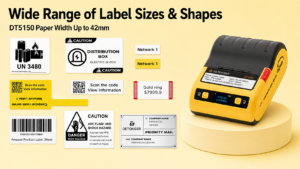
Detonger DT5150: The Compact Cosmetics & Vials Specialist
For boutique businesses producing essential oils, serums, vape juices, and small tinctures, the Detonger DT5150 is the optimal agile solution.
- Why it fits product labels:This ultra-portable 1.5-inch thermal transfer printer outputs at a high-definition 300 DPI, ensuring intricate brand logos look flawless on tiny curved vials. It utilizes an innovative one-piece consumable cassette, allowing production staff to drop in specialized synthetic label rolls and highly durable resin ribbons in a single click, producing waterproof and oil-proof tags instantly.
Detonger DT6250: The Wide-Format Beverage & Jar Workhorse
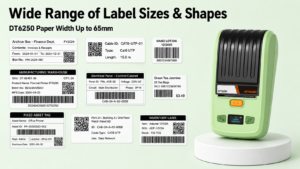
If your business packages larger items like artisan wine bottles, craft beer cans, sauce jars, or large body lotion bottles, the Detonger DT6250 offers expanded capacity.
- Why it fits product labels:Supporting label widths up to 61mm (2.5 inches), this 300 DPI thermal transfer printer easily handles wide-format synthetic tags. Its split-type architecture separates the ribbon from the label roll, drastically lowering the cost-per-print for high-volume beverage and cosmetics runs while maintaining absolute waterproof durability.
Streamlining Packaging with Weprint Software
Hardware precision must be paired with dynamic design software to execute custom packaging effectively. Detonger printers integrate natively with our proprietary Weprint software ecosystem, accessible on iOS, Android, and PC.
Weprint allows brand owners to design custom product templates incorporating diverse fonts, intricate graphics, barcodes, and dynamic QR codes linking directly to your webstore. For larger production runs, Weprint’s Excel import feature allows you to automatically batch-print serialized batch numbers, varying weights, and dynamic expiration dates without tedious manual data entry.
Investing in a dedicated waterproof label printer is a strategic maneuver that elevates your brand’s perceived value, secures your product’s compliance, and provides infinite packaging flexibility. By prioritizing thermal transfer technology and utilizing smart batch-printing software, your product labels will withstand any environment. To scale your labeling capabilities, explore our robust Industrial Label Printer for Manufacturing, Warehouse and Durable Labels collection today.
Frequently Asked Questions (FAQs)
Q: Do I need to buy special ink cartridges to print waterproof product labels?
A: No. Thermal label printers do not use liquid ink cartridges. To achieve waterproof printing, you use a thermal transfer printer equipped with a solid resin ribbon. The printhead melts the resin directly into a synthetic label material (like PET or PVC). Because there is no liquid ink to smear, the resulting label is completely impervious to water and oils.
Q: Can I print full-color graphics with a waterproof thermal printer?
A: No. Commercial thermal label printers operate in monochrome (printing in a single color, usually black, though colored resin ribbons are available). To achieve full-color waterproof packaging, brands typically purchase pre-printed colorful synthetic label rolls from a supplier, and then use their in-house thermal printer to overprint variable black text (such as batch numbers, expiration dates, and barcodes) into designated blank areas.
Q: Will these waterproof labels stick to bottles that are kept in a freezer?
A: The printed surface is fully waterproof, but for freezing environments, the adhesive is equally important. Standard adhesives will freeze, crystallize, and fall off in sub-zero temperatures. If your products are stored in commercial freezers, you must ensure you purchase synthetic label rolls equipped with a “cold-grade” or “freezer-grade” acrylic adhesive to prevent the label from physically peeling off the packaging.