
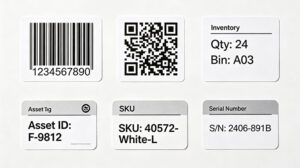
In any modern warehouse, retail store, or corporate facility, data accuracy is the foundation of operational success. Relying on manual data entry or poorly printed tags inevitably leads to missing inventory, delayed shipments, and lost revenue.
To bridge the gap between physical goods and digital tracking software, a dedicated barcode label printer is an absolute necessity. By generating scannable, high-contrast labels on demand, this equipment eliminates human error. Whether you are overhauling your warehouse inventory system or tagging IT assets, here is your comprehensive guide to selecting the right barcode and QR code printing hardware.
Print Clarity and Scanning Stability
A barcode is only useful if a scanner can actually read it. When businesses attempt to print barcodes using standard office inkjet printers, the ink often bleeds or smudges upon contact with moisture or friction. This results in “dead” labels that scanners cannot recognize, halting the entire workflow.
Professional thermal label printers solve this problem by using heat to create precise, high-contrast images. For standard 1D barcodes (like UPC or EAN), a standard 203 DPI (dots per inch) printhead provides excellent scanning stability. However, if your operations rely on dense 2D QR codes packed with detailed tracking URLs or serial numbers, upgrading to a 300 DPI printhead ensures that every tiny square is rendered with razor-sharp clarity, guaranteeing a 100% first-scan success rate.
Optimizing Inventory Management and Asset Tracking
Deploying a reliable barcode label printer transforms how you manage physical items across two primary domains:
- Inventory Management:In retail and warehousing, speed is critical. Workers can print batch barcodes to tag incoming pallets, individual stock keeping units (SKUs), and storage bins. This allows floor staff to use handheld scanners to log receipts, process picks, and update inventory levels in real-time, drastically reducing fulfillment errors.
- Fixed Asset Tracking:Beyond retail inventory, businesses must track high-value assets like laptops, machinery, tools, and office furniture. Printing durable asset tags with scannable QR codes allows IT and facilities teams to conduct rapid audits, track maintenance schedules, and prevent equipment loss.
Flexibility Across Different Label Sizes
Not all items can accommodate a standard shipping label. Your labeling hardware must be versatile enough to handle various media formats.
A high-quality commercial printer features adjustable media guides. This flexibility allows you to seamlessly switch between different label sizes. You can print tiny 1-inch x 1-inch QR codes for electronic components, 2-inch wide barcode stickers for retail product packaging, or full 4-inch wide labels for warehouse rack identification. Ensure your chosen hardware accepts standard third-party continuous rolls and die-cut labels to keep your consumable costs low.
Secure Your Tracking System with Detonger
A digital tracking system is only as reliable as the physical labels it relies on. Upgrading your facility with industrial-grade printing technology ensures that your data remains accurate and your workflows remain uninterrupted.
With over 16 years of unified manufacturing expertise, Detonger develops high-performance thermal printers built for inventory and asset management. Our open-ecosystem devices deliver the precision, speed, and durability required to keep your business running smoothly.
Ready to eliminate scanning errors and optimize your inventory tracking?
[Contact Detonger for Model Recommendation]
Our hardware specialists are ready to match you with the perfect barcode printing solution for your operational scale.