
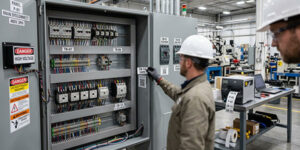
Imagine opening a server rack or a factory electrical panel only to find a chaotic “spaghetti” of unmarked cables. Troubleshooting a simple network outage or power failure can suddenly turn into hours of frustrating, costly downtime. In commercial and industrial environments, unidentified wires are not just a nuisance—they are a severe safety hazard and an operational liability.
The most effective way to organize complex electrical and telecom infrastructure is by using a professional wire label printer. Designed specifically for harsh environments and strict industry compliance, these specialized printers ensure that every cable is identified permanently. In this guide, we will break down the core pain points of industrial wire marking, the specialized materials you need, and how to select the right hardware for your field teams.
Industry Pain Points: Why Standard Labels Fail
When facility managers attempt to cut corners by using standard office labels or masking tape to mark cables, they inevitably run into failure. Industrial wiring environments face unique challenges:
- Extreme Temperatures:Cables inside server rooms or industrial machinery generate significant heat. Standard label adhesives melt, causing tags to slide off or unwrap over time.
- Chemical and Abrasion Exposure:In manufacturing plants, wires are often exposed to oils, solvents, and physical friction. Regular ink smudges and fades quickly under these conditions.
- Curved Surfaces:Standard paper labels are designed for flat surfaces. When wrapped around a thin, curved wire, the rigid material naturally “flags” or peels back at the edges due to “memory effect.”
- Compliance and Safety:Industries governed by standards like TIA-606 (for telecom) or OSHA (for electrical safety) require permanent, highly legible, and color-coded identification. Failing audits due to poor labeling can result in heavy fines.
Label Materials and Durability Requirements
To overcome these environmental hazards, a dedicated wire label printer utilizes thermal transfer technology, melting durable resin ink onto specialized substrates. Here are the three most common wire labeling materials you must understand:
- Wrap-Around Vinyl Labels:Highly flexible and resistant to oil and moisture. These labels feature a clear “tail” that wraps entirely around the wire, laminating and protecting the printed text beneath it. They are ideal for general electrical wiring and data cables.
- Heat Shrink Tubes:The ultimate solution for permanent identification. The printer prints directly onto a flattened polyolefin tube. The technician slides the tube over the wire and applies heat, causing it to shrink and permanently grip the cable. This is the gold standard for aerospace, automotive, and heavy industrial panels.
- P-Type / Flag Labels:For ultra-thin wires (like fiber optics) where there isn’t enough surface area for a wrap-around label, flag labels pinch together around the wire, leaving a readable “flag” protruding for easy barcode scanning.
Paced Workflows and Print Efficiency
In the field, electricians and IT installers are always racing against the clock. A portable wire label printer drastically improves their workflow efficiency.
Instead of waiting for an off-site office to pre-print hundreds of wire tags (which often get lost or mixed up), technicians can generate sequential numbers, barcodes, and custom warning symbols instantly at the installation site. Modern printers feature automatic cutters that partially cut continuous heat shrink tubes, allowing workers to carry a strip of labels and snap them off one by one as they wire a panel.
How to Select the Right Wire Label Printer
When outfitting your engineering team, look for these critical hardware features:
- Portability vs. Desktop:For field installations, a rugged, handheld, battery-powered printer is essential. For high-volume wire harness manufacturing facilities, a heavy-duty desktop thermal transfer printer is more appropriate.
- Smart Connectivity:Modern field workers rely on smartphones. Choose a printer with Bluetooth connectivity and a dedicated mobile app, allowing technicians to design and save complex telecom templates (like patch panel layouts) directly on their phones.
- Open Consumable Ecosystem:Avoid brands that force you into buying expensive, proprietary label cartridges. Look for printers that accept standard, bulk-roll heat shrink tubes and continuous vinyl tape to keep your long-term operating costs low.
Upgrade Your Industrial Identification with Detonger
Messy wiring slows down your operations and compromises safety. By equipping your technicians with industrial-grade printing hardware and specialized labeling materials, you guarantee compliance and lightning-fast maintenance for years to come.
With over 16 years of unified R&D and manufacturing experience, Detonger supplies robust, field-ready labeling solutions. From ultra-portable Bluetooth wire markers to high-volume industrial panel printers, our open-ecosystem devices deliver the durability and precision that professional engineers demand.
Ready to streamline your cable management and ensure total compliance?
[Ask for Industrial Labeling Solution]