
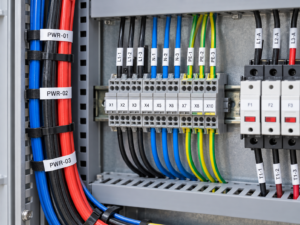
A cable label printer is a specialized, industrial-grade thermal device utilized by electrical contractors, data center technicians, and network engineers to generate durable, code-compliant identification markers. While professionals often use the terms “cable label printer” and “wire label printer” interchangeably, understanding the technical differences between identifying a massive industrial power cable versus a hair-thin fiber optic wire is critical for hardware selection. The most important purchasing factors bridge these differences: you must select a thermal transfer printer (to ensure resin is melted into the tag for oil and heat resistance), demand a 300 DPI printhead (to render micro-text on tiny wire flags), and ensure wide media compatibility (to feed both large self-laminating wraps and narrow heat shrink tubing).
Cable vs. Wire: Understanding the Terminology
To understand the difference in labeling requirements, one must look at the physical anatomy of the conductors:
- A Wireis typically a single electrical conductor, often thin and highly flexible (e.g., a 24 AWG internal panel wire or a fiber optic jumper).
- A Cableis a thick bundle of multiple wires encased in a heavy protective sheathing (e.g., a Cat6a Ethernet trunk or an armored industrial power cable).
Consequently, a “wire label printer” implies a machine capable of printing extreme micro-text on very narrow media, such as P-type flag tags or small-diameter polyolefin heat shrink tubing. A cable label printer, conversely, must handle wider media formats, such as large self-laminating vinyl wraps that require a clear tail to wrap entirely around a thick sheath.
The reality for modern electricians is that you need a single, versatile machine that masters both extremes.
Key Differences in Labeling Media
When evaluating a cable label printer, you must ensure its internal media guides and printhead can seamlessly switch between these distinct applications:
1. Wire Labeling Applications (Thin & Narrow)
- Flag Tags (P-Type and T-Type):Thin fiber optic cables do not have enough surface area for a wrap-around label. Flag labels fold around the wire and stick to themselves, creating a flat surface for a 2D QR code.
- Small Heat Shrink Tubing:Used for internal control panels, the printer must output text onto flattened tubing (e.g., 2mm to 6mm diameter) that shrinks tight around the wire when heated, requiring a high-resolution 300 DPI printhead so the text remains legible after shrinking.
2. Cable Labeling Applications (Thick & Wide)
- Self-Laminating Cable Wraps:Used for thick Cat6 drops or coaxial cables, these labels have a white printable area and a long transparent tail. The printer must accommodate widths up to 36mm or 50mm to ensure the clear tail wraps over the printed text, sealing it against abrasion and moisture.
- Rigid Tag/Tie-On Labels:For massive underground utility cables, non-adhesive thick plastic tags are printed and fastened with zip ties. The hardware must possess enough printhead pressure to transfer resin onto thick PVC tags.
Essential Features for a Universal Electrical Printer
To bridge the gap between wire and cable marking, B2B decision-makers must evaluate hardware based on these uncompromising specifications:
- Thermal Transfer Print Technology:Whether marking a tiny wire or a massive cable, direct thermal paper will fail (turning black under panel heat or fading in the sun). You must use thermal transfer technology, which melts a solid resin ribbon into the synthetic tag, creating an indestructible marker immune to hydraulic oil, pulling friction, and UV rays.
- 300 DPI Resolution:A standard 203 DPI printer will blur small characters on a 12mm wire flag. 300 DPI is strictly required to print crisp phase numbers, electrical schematics, and DataMatrix codes on small gauges.
- Drop-In Consumable Cassettes:Field technicians cannot waste time threading loose ribbons on a ladder. Look for printers that utilize one-piece cassettes (combining the resin ribbon and synthetic label), allowing for instant, foolproof reloading.
Expert Hardware Recommendations from Detonger
Selecting the appropriate unit requires matching the hardware’s print width to the largest cable you plan to mark. Detonger provides purpose-built, ISO9001-certified hardware engineered for the electrical and telecom sectors.
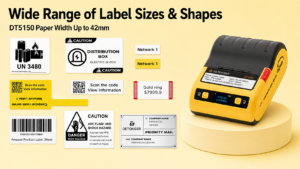
Detonger DT5150: The Agile Wire & Cable Specialist
For network installers, residential electricians, and IT technicians, the Detonger DT5150 1.5-inch All-in-One Thermal Transfer Printer is the ultimate toolbelt companion.
- Why it excels:Outputting at 300 DPI, it ensures micro-text on tiny fiber flags remains razor-sharp. Supporting printable widths up to 36mm, it effortlessly transitions from printing narrow wire heat shrink tubing to standard Cat6 self-laminating cable wraps. Its one-piece consumable cassette incorporates a smart recognition chip, instantly setting the correct label margins on your smartphone app.
Detonger DT5250: The Heavy-Duty Industrial Cable Printer
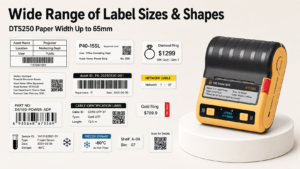
For master electricians, substation engineers, and industrial panel builders dealing with massive power trunks, the Detonger DT5250 offers a wider 2.5-inch capacity.
- Why it excels:Accommodating label widths up to 63mm, this heavy-duty printer can generate large wrap-around markers for multi-conductor industrial cables and prominent breaker panel directories. Equipped with a 2600 mAh battery, it can sustain 150 meters of continuous printing, keeping your crew operational throughout massive commercial rough-ins.
Automating the Workflow with Weprint Software
A rugged cable label printer requires intelligent software to eliminate manual typing errors. Detonger hardware integrates natively with the proprietary Weprint app, available on iOS, Android, and PC.
Weprint allows project managers to create serialized wire numbering schemas (e.g., L1-01 to L1-99) or import complex cable directories directly from Excel. Field technicians simply connect via Bluetooth, load the template, and batch-print hundreds of compliant markers in minutes. The software automatically formats the data for self-laminating wraps or flag tags, ensuring the text lands perfectly in the printable zone.
Equip your electrical team with hardware that masters both micro-wires and massive cables. Explore our dedicated Cable Label Printer for Wire, Electrical and Heat Shrink Labels collection, or deploy complete Durable Wire & Cable Label Printing Solutions to safeguard your contracting business from failed inspections today.
Frequently Asked Questions (FAQs)
Q: Can one printer handle both heat shrink tubing and standard adhesive cable wraps?
A: Yes, provided it is an industrial thermal transfer printer with adjustable media guides, such as the Detonger DT5150. You simply swap the consumable cassette from a self-laminating label cartridge to a polyolefin heat shrink tubing cartridge. The printer will automatically calibrate to the new media format.
Q: Why do my printed wire labels smear when I pull the cable through conduit?
A: You are likely using an inkjet printer, a direct thermal label maker, or a wax ribbon. To survive conduit friction and pulling lubricants, you must use a thermal transfer printer equipped with a pure resin ribbon. Resin permanently fuses into synthetic materials (like vinyl or PET), creating a scratch-proof and chemical-proof bond.
Q: What is the best way to label very thin fiber optic wires?
A: Thin wires lack the surface area for wrap-around adhesive labels. The best solution is a P-type or T-type “flag label.” You wrap the center of the label around the wire, and the two ends fold together to create a flat “flag” protruding from the wire. This provides a flat, readable surface for a 2D barcode or text, requiring a 300 DPI printer for clarity.