
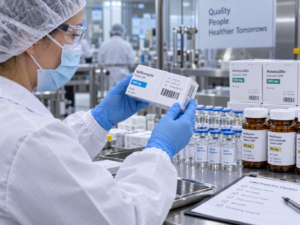
A lab tube label printer is a specialized, high-resolution thermal printing device engineered for clinical researchers, phlebotomists, and biobank managers to generate durable, scannable identification markers for small specimen containers. The most critical selection factors for small sample labels are the printhead resolution (300 DPI is strictly mandated to ensure micro-barcodes scan perfectly on tiny curved surfaces) and the core print technology (thermal transfer is essential to prevent text from dissolving when exposed to laboratory solvents). Users should initially judge their requirements by evaluating the size of their vials and the storage environment. If you are labeling 1.5ml or 2ml microcentrifuge tubes destined for liquid nitrogen storage (-196°C) or autoclave sterilization, investing in a portable 300 DPI thermal transfer printer paired with flexible cryogenic labels is an absolute necessity to prevent catastrophic sample loss.
The Unique Challenge of Small Sample Labels
In a clinical or research laboratory, the integrity of a biological sample is entirely dependent on its label. When dealing with Eppendorf tubes, PCR vials, and small cryovials, traditional labeling methods immediately fail.
Handwritten marker ink smudges instantly when exposed to common lab chemicals like isopropyl alcohol, xylene, or dimethyl sulfoxide (DMSO). Furthermore, applying standard office labels to small-diameter tubes results in “edge lift”—the stiff paper attempts to flatten out, eventually peeling off the curved glass or plastic.
A dedicated lab tube label printer resolves these critical vulnerabilities. By utilizing thermal transfer technology, the printer fuses industrial-grade resin directly into a highly flexible synthetic substrate (such as specialty PET or polypropylene). This creates a permanent, waterproof, and chemical-proof marker that wraps securely around the tightest curves of a tiny vial, ensuring your 2D DataMatrix codes and patient IDs remain permanently affixed and 100% legible.
Essential Specifications for Micro-Vial Labeling Hardware
Procuring hardware for small sample identification requires an uncompromising focus on precision and material compatibility. B2B decision-makers and lab managers must evaluate devices based on these specific clinical criteria:
- 300 DPI High-Resolution Printhead:You cannot fit a standard 1D linear barcode on a 1.5ml test tube. Small sample labels require dense 2D codes (like QR or DataMatrix) and micro-text (often 4pt or 5pt font) compressed into a 12mm x 25mm space. A 300 DPI (Dots Per Inch) resolution is the absolute minimum requirement to ensure these tiny black-and-white modules possess the razor-sharp edges required by optical scanners.
- Thermal Transfer Print Technology:Direct thermal paper turns completely black when exposed to heat (like an autoclave) and degrades in extreme cold. Your hardware must be a thermal transfer label printer. This mechanism melts a solid resin ribbon onto a synthetic label, forming an impenetrable chemical bond that withstands both harsh solvents and cryogenic freezing.
- Precision Media Sensors:Small sample labels are often die-cut closely together on the roll, or occasionally utilize transparent materials so technicians can observe fluid levels. The printer must feature advanced transmissive and reflective sensors to calibrate these tiny gaps perfectly, preventing misaligned prints.
- Portable and Sterile Form Factor:Dragging racks of unlabeled vials across the lab to a centralized desktop printer increases the risk of cross-contamination and mixing errors. Compact, battery-powered devices allow technicians to print and apply labels directly inside a biosafety cabinet or at the patient’s bedside.
Printing Technologies in the Laboratory: Direct Thermal vs. Thermal Transfer
To understand why thermal transfer is the benchmark for clinical sample tracking, compare how the two primary printing technologies react to laboratory environments:
| Feature / Metric | Direct Thermal Printing | Thermal Transfer Printing (with Resin) |
| Print Mechanism | Heat-sensitive paper darkens when heated | Heated printhead melts a resin ribbon onto the label |
| Consumables Needed | Direct thermal labels only | Synthetic labels (PET/Cryo) AND a resin ribbon |
| Chemical Resistance | Zero (Erased instantly by alcohol, xylene) | Extreme (Impervious to harsh laboratory solvents) |
| Temperature Tolerance | Poor (Turns black in heat, fades in extreme cold) | Exceptional (Survives autoclaves and liquid nitrogen) |
| Micro-Barcode Sharpness | Moderate (Edges may bleed over time) | Excellent (Archival-quality crispness) |
| Ideal Lab Application | Visitor badges, temporary pharmacy bags | PCR vials, Eppendorf tubes, cryovials, slide labels |
For any biological sample requiring long-term archival storage, freezing, or chemical processing, thermal transfer technology is the only scientifically sound choice.
Expert Recommendations: Top Detonger Printers for Small Labels
Selecting the appropriate unit requires matching the hardware’s print width and consumable architecture to the unique demands of micro-vial tagging. Detonger provides purpose-built, ISO9001-certified hardware specifically optimized for the healthcare and research sectors.
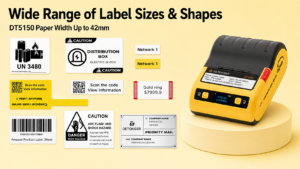
Detonger DT5150: The Ultimate Small Sample Specialist
For phlebotomists, genetic researchers, and clinical technicians dealing exclusively with small vials, the Detonger DT5150 is the industry’s most agile portable solution.
- Why it fits lab tubes:This highly compact 1.5-inch printer is equipped with a high-definition 300 DPI printhead, guaranteeing that the smallest DataMatrix codes scan flawlessly on 12mm and 15mm tube labels. Crucially, it utilizes an innovative one-piece consumable cassette. Lab staff can swap out the resin ribbon and synthetic label roll in a single, sterile step without ever touching or threading the delicate ribbon material, significantly reducing particulate contamination in cleanroom environments.
Detonger DT6250: For Comprehensive Laboratory Tagging
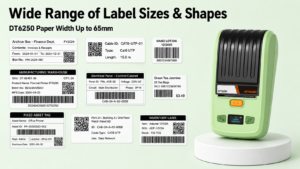
If your laboratory manages both tiny microcentrifuge tubes and larger chemical reagent bottles or comprehensive patient charts, the Detonger DT6250 offers a wider 2.5-inch print capacity.
- Why it fits lab tubes:Supporting label widths up to 61mm at 300 DPI, this versatile device handles both small cryogenic vial labels and large GHS-compliant warning tags for chemical storage. Equipped with an extended 2600 mAh battery, it can process massive batch-printing jobs during large-scale clinical trials without requiring a mid-shift recharge.
Eliminating Errors with Weprint Software Integration
Hardware precision is useless without intelligent software to prevent manual data entry errors. Detonger printers integrate natively with our proprietary Weprint software ecosystem, accessible on iOS, Android, and Windows PC.
Weprint empowers lab managers to design standardized clinical templates with locked data fields, ensuring all required patient identifiers and 2D barcodes are included. Technicians can import daily testing manifests directly from Excel, allowing them to automatically batch-print hundreds of serialized test tube labels in minutes. Furthermore, Detonger provides robust multi-platform SDKs, enabling hospital IT departments to embed automated label generation directly into their Laboratory Information Management Systems (LIMS) or Electronic Health Records (EHR).
Equipping your clinical team with a dedicated lab tube label printer eliminates misidentified samples, ensures HIPAA compliance, and accelerates testing workflows. To upgrade your sample tracking infrastructure, explore our comprehensive Medical & Lab Label Printing Solutions today.
Frequently Asked Questions (FAQs)
Q: Can I use standard paper labels for test tubes stored in a -80°C freezer?
A: No. Standard paper labels and standard acrylic adhesives become brittle, lose their tack, and fall off when exposed to deep-freeze conditions. You must use specialized cryogenic labels (formulated from specific flexible polymers) paired with a pure resin ribbon in a thermal transfer printer. This ensures the label remains securely wrapped around the small tube without peeling.
Q: Why do the barcodes on our small 1.5ml tubes frequently fail to scan?
A: Scanning failures on highly curved micro-vials are typically caused by two factors: low print resolution or improper label material. If you use a 203 DPI printer, the tiny squares in a 2D QR or DataMatrix code blur together. Upgrading to a 300 DPI printhead is required. Additionally, if the label material is too stiff, it causes “edge lift,” distorting the barcode’s surface so the optical scanner cannot read it.
Q: How do we prevent cross-contamination when changing printer ribbons inside a biosafety cabinet?
A: Traditional thermal transfer printers require manually threading loose ribbons around open spools, which can shed particulates. To maintain a sterile environment, use a device like the Detonger DT5150 that employs a sealed, one-piece consumable cassette. This allows you to drop in both the label roll and the ribbon in a single click without exposing the internal mechanics.