
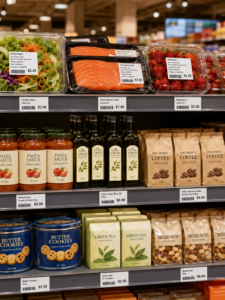
A price labels printer is a compact, high-efficiency thermal device designed for retail managers, supermarket owners, and small businesses to generate clear, scannable price tags and barcode labels on demand. The most important selection factors include print technology (direct thermal is usually best for short-term retail), supported label width (typically 2 to 3.3 inches for shelf tags), battery mobility for on-the-floor tagging, and seamless software integration for bulk updates. Users should initially judge their needs by calculating their daily print volume and deciding whether they need to print right at the store shelf or in a back office. For rapidly changing retail environments, a portable direct thermal printer integrated with inventory software is the most cost-effective and agile choice, allowing staff to update pricing instantly and accurately.
The Role of a Price Labels Printer in Modern Retail
In a fast-paced retail environment, accurate pricing and clear barcodes are the lifeblood of your operations. Manually writing price tags or relying on centralized back-office laser printers is inefficient and prone to human error. A dedicated price labels printer empowers floor staff to react immediately to flash sales, inventory changes, and shelf restocks.
By utilizing a portable device, employees can walk down the supermarket aisle or boutique floor, scan a product’s barcode with a mobile app, and instantly print a new, highly legible price tag. This decentralized approach eliminates the disconnect between the back-office database and the physical store shelf, ensuring that customers always see the correct price, thereby reducing checkout disputes and improving the overall shopping experience.
Essential Selection Criteria for Retail Labeling
When evaluating hardware to manage your store’s pricing, consumer-grade label makers will not withstand daily commercial use. B2B decision-makers should focus on the following critical specifications:
- Hardware Mobility and Battery Life:Retail staff are constantly on the move. A lightweight, portable design is crucial. Look for devices equipped with high-capacity lithium-ion batteries (1500 mAh to 2600 mAh) that can last through a busy 8-hour shift without needing a recharge.
- Print Width Flexibility:Different products require different tag sizes. A jewelry store might need a tiny 15mm tag, while a supermarket shelf edge requires a wider 50mm to 80mm label to display the product name, barcode, retail price, and promotional price. Ensure the printer has adjustable baffles to handle various widths.
- Print Resolution (DPI):While 203 DPI is standard and sufficient for bold prices and basic text, a 300 DPI printhead is highly recommended if your tags feature small QR codes, intricate brand logos, or dense product ingredients.
- Software and Batch Processing:A retail printer is only as useful as its software. Your device must connect via Bluetooth or Wi-Fi to a smartphone or tablet and support bulk data imports. The ability to pull an Excel sheet of today’s price changes and print them in batch is essential for saving time.
Direct Thermal vs. Thermal Transfer for Retail Pricing
To make an informed purchasing decision, it is vital to understand which printing technology aligns best with your retail sector.
| Feature / Metric | Direct Thermal Printing | Thermal Transfer Printing |
| Print Mechanism | Heat-sensitive paper darkens when heated | Heated printhead melts a ribbon onto the label |
| Consumables Needed | Direct thermal labels only | Synthetic labels AND a resin/wax ribbon |
| Label Durability | Moderate (Sufficient for indoor retail) | Extremely High (Water, scratch, chemical resistant) |
| Lifespan of Print | 6 to 12 months | 5 to 10+ years |
| Operational Cost | Lower (No ribbons to buy) | Higher (Requires two separate consumables) |
| Ideal Retail Application | Grocery shelf tags, clothing tags, bakery labels | High-end jewelry tags, outdoor garden center labels |
For the vast majority of retail scenarios (supermarkets, convenience stores, boutiques), direct thermal is the undisputed winner due to its lower cost and operational simplicity. Prices change frequently, so a tag only needs to last a few months. However, if you are selling jewelry or outdoor plants, thermal transfer is required.
Expert Recommendations: Top Detonger Retail Printers
Selecting the specific hardware model requires matching the machine’s capabilities to your store’s physical layout and inventory type. Detonger, an established manufacturer with 16 years of R&D experience and global ISO/CE certifications, offers purpose-built solutions for the retail sector.
Detonger DP27 Series: The Agile 2-Inch Solution
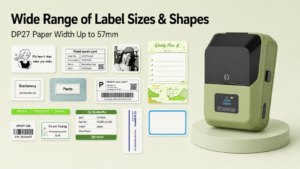
For small businesses, boutiques, and pharmacies, the Detonger DP27 Series is an outstanding portable choice. This 2-inch direct thermal printer supports label widths up to 57mm.
- Why it fits retail:Weighing only 292g, it is incredibly comfortable for staff to carry all day. It is available in both 203 DPI and a high-definition 300 DPI version (DP27P), which is perfect for printing scannable barcodes on small cosmetics or clothing swing tags. Its built-in TFT screen allows users to easily monitor the printer’s status on the floor.
Detonger DP300 Series: The Supermarket Workhorse
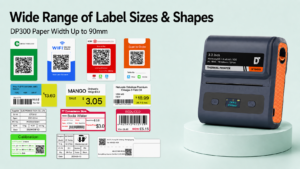
If you manage a supermarket or a large retail chain with wide shelf-edge tracking profiles, the Detonger DP300 Series offers a wider 3.3-inch print capacity.
- Why it fits retail:It accommodates label widths from 25mm up to 90mm. This allows store managers to print large, highly visible “Clearance” or “Sale” tags that grab customer attention. Equipped with dual 2600 mAh batteries, it can handle massive batch printing jobs during store-wide pricing updates without faltering.
Optimizing Your Retail Workflow with Smart Software
The secret to maximizing the ROI of a price labels printer lies in software integration. Detonger hardware pairs seamlessly with our proprietary Mercury Shop App, a software ecosystem developed specifically for retail price tag management.
Mercury Shop allows store managers to import commodities specifications and prices in bulk directly via Excel. Instead of typing out individual prices, staff can simply scan a product’s barcode with their phone, retrieve the updated price from the database, and print the new label instantly. Furthermore, we offer a wide variety of customizable label rolls, including transparent labels, colored promotional tags, and standard white shelf paper, ensuring your store’s branding remains consistent.
Elevate Your Store’s Pricing Accuracy Today
Upgrading your retail labeling system is a strategic move that immediately reduces pricing errors, saves hundreds of labor hours, and enhances the visual professionalism of your store shelves. By prioritizing portable hardware, selecting the appropriate print width, and leveraging intelligent batch-printing software like Mercury Shop, your team can manage inventory effortlessly.
Ready to streamline your retail operations? Explore our highly-rated Portable Label Printer and Handheld Label Maker for Small Business collection, or discover our high-efficiency thermal label printer lineup to find the perfect fit for your dynamic pricing needs.
Frequently Asked Questions (FAQs)
Q: Do I need to buy ink or toner for a retail price tag printer?
A: No. A direct thermal price labels printer uses heat to activate specially treated chemical paper, meaning you never have to buy, replace, or clean messy ink cartridges or toners. You only need to purchase the thermal label rolls.
Q: Can I connect a portable label maker directly to my store’s POS (Point of Sale) system?
A: Yes. Advanced printers like the Detonger series provide comprehensive SDKs (Software Development Kits) for Windows, iOS, and Android. This allows your IT team to integrate the printer directly into your existing POS or inventory management system for automated, real-time price printing.
Q: What kind of label material is best for grocery or refrigerated items?
A: For items stored in refrigerators or freezers (like dairy, meat, or beverages), standard thermal paper may absorb moisture and degrade. You should utilize synthetic thermal labels (such as waterproof PP or top-coated thermal paper) paired with a freezer-grade adhesive to ensure the tag remains attached and readable in cold, damp conditions.