
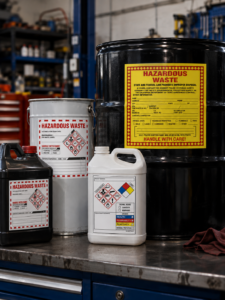
A GHS compliant label printer is an industrial-grade device designed for chemical manufacturers, warehouse managers, and safety officers to produce durable, highly regulated identification tags for hazardous materials. The Globally Harmonized System (GHS) mandates strict formatting for chemical labels, meaning the most important selection factor is the printer’s ability to create chemical-resistant, fade-proof text and pictograms that survive harsh environments and maritime transport (such as BS5609 standards). Users should initially judge their needs by assessing their chemical containers’ sizes and environmental exposure. If you are shipping large IBC totes or drums overseas, a wide-format thermal transfer printer paired with resin ribbons is mandatory for extreme durability. Conversely, for temporary hazardous waste tracking within a controlled facility, a portable direct thermal unit may suffice.
The Critical Role of a GHS Compliant Label Printer
In the chemical and manufacturing industries, labeling is not merely about inventory management; it is a strict legal requirement. GHS labels must display specific warning pictograms, signal words, hazard statements, and precautionary instructions. When standard paper labels are exposed to industrial solvents, harsh weather, or prolonged UV light, they degrade rapidly.
A professional GHS compliant label printer solves this by utilizing specialized thermal printing technologies that bond industrial ink to synthetic substrates like PET or PVC. This ensures that even if a chemical drum is submerged in seawater or exposed to corrosive leaks, the hazard information remains completely legible, preventing workplace accidents, environmental disasters, and severe regulatory fines.
Key Selection Criteria for a GHS Compliant Label Printer
When procuring hardware for chemical compliance, consumer-grade devices will fail. B2B decision-makers must evaluate the following critical specifications to ensure safety and compliance:
- Print Technology & Chemical Resistance:For true GHS and BS5609 compliance (required for maritime chemical transport), you must use Thermal Transfer technology. This method uses a heated printhead to melt a pure resin ribbon onto a synthetic label, creating an indestructible bond that resists acetone, xylene, and extreme weather.
- Wide-Format Print Capacity:GHS labels require significant space for multiple languages, precautionary statements, and hazard pictograms. While 4-inch (104mm) printers work for small jugs, large 55-gallon drums and IBC totes legally require larger labels. Ensuring your printer supports widths up to 8 inches (210mm+) is critical.
- High Print Resolution (300 DPI):Chemical labels contain dense, small-font text and intricate hazard pictograms. A 300 DPI printhead guarantees that every precautionary instruction and complex barcode is sharp and error-free, preventing misinterpretation by handlers.
- Pre-Printed Color Compatibility:Since GHS requires red diamond pictograms, your monochrome thermal printer must feature highly accurate transmissive and reflective sensors to correctly align and print black text inside pre-printed red diamond label rolls.
Thermal Transfer vs. Direct Thermal for Chemical Labeling
To ensure you select the appropriate GHS compliant label printer for your specific phase of the supply chain, compare the two primary printing methods:
| Feature / Metric | Direct Thermal Printing | Thermal Transfer Printing |
| Print Mechanism | Heat-sensitive paper darkens | Melts a resin ribbon onto the label |
| Consumables Needed | Direct thermal labels only | Synthetic labels AND a resin ribbon |
| Chemical & UV Resistance | Low to Moderate (Fades quickly) | Extremely High (Survives harsh solvents) |
| BS5609 Compliance | No (Cannot survive maritime conditions) | Yes (When paired with certified labels/ribbons) |
| Print Lifespan | 6 to 12 months | 10+ years |
| Ideal GHS Application | Short-term hazardous waste transport | Permanent chemical drum labeling, ocean freight |
For permanent, legally compliant chemical manufacturing and distribution, thermal transfer is the only viable option. Direct thermal is reserved strictly for short-term, internal hazardous waste tracking.
Expert Recommendations: Top Detonger Industrial Printers
Selecting the correct hardware involves matching machine parameters to your facility’s operational demands. Detonger, an established manufacturer with 16 years of R&D experience and global CE/FCC certifications, provides purpose-built hardware for the most demanding industrial sectors.
The Detonger 8-Inch Thermal Label Printer: For Large-Scale Compliance
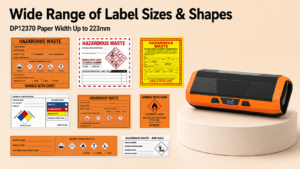
For facilities handling massive IBC totes and 55-gallon chemical drums, the Detonger 8 Inch Thermal Label Printer is the ultimate compliance tool.
- Why it fits GHS:It supports a massive print width of 216mm/219mm, easily accommodating the large 4″x4″ or 6″x6″ formats required for bulk chemical transport. Uniquely, it is a portable unit equipped with three 2500 mAh batteries, allowing warehouse staff to print massive hazardous waste labels directly on the loading dock, significantly reducing the risk of applying the wrong label to a dangerous container.
The Detonger DT5330 & DP40 Series: For Agile Industrial Tagging
If you require extreme permanence for smaller containers via thermal transfer, the Detonger DT5330 (3.3-inch print width) utilizes high-performance thermal transfer ribbons to bond hazard data onto synthetic silver PET or PVC, ensuring resistance to chemical spills.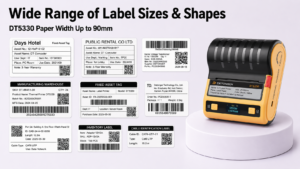
For agile, short-term hazardous waste tracking, the portable Detonger DP40 Series (4-inch direct thermal) offers a 104mm print width. It is perfect for on-the-go waste management tagging before incineration or local disposal, ensuring internal compliance without the setup time of industrial desktop printers.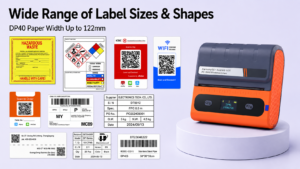
Streamlining GHS Compliance with Weprint Software
Hardware must be supported by intelligent software to mitigate human error in chemical labeling. Detonger printers integrate seamlessly with our proprietary Weprint software.
Weprint allows safety officers to design standardized GHS templates featuring the required hazard statements and pictograms and save them to a secure cloud. Floor workers can then use a mobile app (iOS/Android) to connect to their GHS compliant label printer via Bluetooth, select the correct chemical profile, and print instantly. For bulk chemical processing, the software supports Excel data imports, allowing for the rapid batch generation of serialized chemical drums. We also offer specialized Hazardous Waste Identification Management Software APIs for deep integration into your facility’s ERP system.
Secure Your Chemical Supply Chain
Investing in the right GHS compliant label printer is a vital risk management strategy. By prioritizing thermal transfer technology for durability, ensuring wide-format 8-inch support for large drums, and utilizing smart software to eliminate manual data entry errors, you protect your workers and shield your enterprise from massive regulatory fines.
To future-proof your facility’s safety protocols, explore our complete Manufacturing & Industrial Labeling Industrial Label Printing Solutions ecosystem, or upgrade your central shipping hub by reviewing our heavy-duty Industrial Label Printer for Manufacturing, Warehouse and Durable Labels today.
Frequently Asked Questions (FAQs)
Q: Can a thermal printer produce the red diamonds required for GHS labels?
A: Standard industrial thermal printers are monochrome (printing in black). To achieve GHS compliance, chemical manufacturers purchase label rolls that are pre-printed with the blank red GHS diamonds. The thermal printer then uses its precise sensors to align and print the black pictograms, hazard statements, and barcodes exactly inside and around those red diamonds.
Q: What does BS5609 compliance mean, and does the printer itself get certified?
A: BS5609 is a stringent international standard for printed labels used on chemical containers transported by sea, ensuring they survive at least three months submerged in salt water. The printer hardware itself is not certified; rather, it is the combination of the specific synthetic label material, the pure resin ribbon, and the thermal transfer printing process that achieves the BS5609 certification.
Q: How do portable printers handle the heavy data requirements of chemical labels?
A: Modern portable industrial printers bypass internal memory limits by connecting via Bluetooth or Wi-Fi to a smartphone or industrial tablet. The heavy lifting (database access, template formatting, and GHS logic) is processed on the mobile device or Weprint app, which then sends the fully rendered, high-resolution graphic directly to the printer for immediate output.