
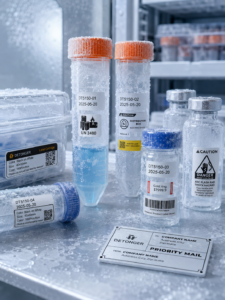
A lab tube label printer is a specialized thermal printing device designed to create highly durable, chemical-resistant identification markers for test tubes, vials, and cryogenic storage. It is essential for laboratory technicians, medical researchers, and pharmaceutical managers who require flawless, long-term specimen tracking. The most important selection factor is the print technology—specifically, thermal transfer—which ensures labels can withstand extreme temperatures (such as liquid nitrogen) and harsh solvents (like xylene or alcohol). Users should initially judge their needs by assessing their sample storage environment and the physical dimensions of their vials. If you are freezing biological samples at -196°C or autoclaving instruments, you must invest in a high-resolution thermal transfer printer paired with synthetic labels to guarantee that your barcodes and critical patient data remain legible throughout the specimen’s entire lifecycle.
Why Healthcare and Research Facilities Require Specialized Labeling
In the medical and pharmaceutical sectors, a compromised label is more than an inconvenience—it is a critical failure that can lead to misdiagnoses, ruined clinical trials, and severe regulatory penalties. When standard office labels or handwritten markers are exposed to the rigorous workflows of a modern laboratory, they quickly degrade. Centrifuge friction, cryogenic freezing, autoclave sterilization, and exposure to isopropyl alcohol will instantly erase standard ink or blacken direct thermal paper.
A professional lab tube label printer eliminates these risks. By utilizing industrial-grade printing mechanisms, these devices bond specialized resin to synthetic substrates, creating a permanent marker that becomes an integral part of the vial. For modern B2B healthcare enterprises, deploying these specialized devices at the point of care or within the sample processing area is a baseline requirement for maintaining GLP (Good Laboratory Practice) and HIPAA compliance.
Essential Criteria for Choosing a Lab Tube Label Printer
Evaluating hardware for clinical and research environments requires a strict focus on durability, precision, and compliance. B2B decision-makers should focus on the following critical specifications before making a purchase:
1. Print Technology and Cryogenic Survival
The primary mandate for a laboratory printer is label survivability. You must select a thermal transfer label printer. Unlike direct thermal technology (which relies on heat-sensitive paper that turns black in warm environments or fades in the cold), thermal transfer uses a heated printhead to melt a solid resin ribbon onto a synthetic label (such as PET or specialized cryogenic substrates). This creates a waterproof, chemical-proof, and temperature-resistant bond capable of surviving liquid nitrogen storage (-196°C) and autoclave sterilization (+121°C).
2. High Print Resolution (300 DPI Minimum)
Lab tubes, Eppendorf microcentrifuge tubes, and PCR vials offer an incredibly small surface area for labeling. Standard 203 DPI printers simply cannot produce legible text at the 4pt or 5pt font sizes required for these containers. Furthermore, laboratories rely heavily on 2D barcodes (like DataMatrix or QR codes) to store dense patient or sample data. A 300 DPI lab tube label printer is absolutely mandatory to ensure these tiny, high-density codes scan flawlessly on the first try, preventing data loss.
3. Hardware Portability and Form Factor
Consider where the labeling occurs. If technicians are moving between patient bedsides, phlebotomy stations, and cleanrooms, a stationary desktop printer creates a workflow bottleneck. Opting for a lightweight, battery-powered portable unit allows staff to print and apply labels exactly where the sample is drawn, drastically reducing the risk of cross-contamination or applying the wrong label to a specimen. Look for devices with high-capacity batteries (e.g., 1500 mAh to 2600 mAh) to last through long hospital shifts.
4. Software and LIMS Integration
A laboratory printer must communicate effortlessly with your existing software infrastructure. The hardware should feature robust SDKs and APIs that allow it to integrate directly into your Laboratory Information Management System (LIMS) or Electronic Health Records (EHR). For smaller clinics, the printer should offer an intuitive mobile app supporting direct Excel imports to facilitate the batch printing of serialized patient IDs.
Direct Thermal vs. Thermal Transfer in the Laboratory
To fully understand why standard retail printers fail in healthcare environments, compare the two primary printing technologies:
| Feature / Metric | Direct Thermal Printing | Thermal Transfer Printing |
| Print Mechanism | Heat-sensitive paper darkens when heated | Heated printhead melts a resin ribbon onto the label |
| Consumables Needed | Direct thermal labels only | Synthetic labels (PET/PVC) AND a resin ribbon |
| Chemical Resistance | Zero (Erased by alcohol, xylene, solvents) | Extreme (Impervious to harsh lab chemicals) |
| Temperature Tolerance | Poor (Turns black in heat, fades in extreme cold) | Exceptional (Survives autoclaves and liquid nitrogen) |
| Print Lifespan | 6 to 12 months (in controlled indoor environments) | 10+ years (archival quality for clinical trials) |
| Ideal Healthcare Use | Visitor badges, short-term pharmacy bags, receipts | Cryovials, test tubes, blood bags, slide labels |
For any application involving long-term sample storage or chemical exposure, a thermal transfer lab tube label printer is the only scientifically sound choice.
Expert Recommendations: Top Detonger Printers for Laboratories
Selecting the right hardware requires matching technical specifications to your specific clinical environment. Detonger, an established manufacturer with 16 years of R&D experience, global ISO/CE certifications, and 11 invention patents, offers purpose-built hardware for the most demanding medical sectors.
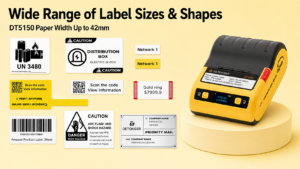
Detonger DT5150: The Ultimate 1.5-Inch Clinical Solution
For phlebotomists, researchers, and lab technicians dealing with standard blood tubes and microcentrifuge vials, the Detonger DT5150 is the ideal portable choice.
- Why it fits the lab:This highly mobile 1.5-inch printer is available in a high-definition 300 DPI configuration, guaranteeing that even the smallest DataMatrix codes print perfectly on 12mm or 15mm tube labels. It utilizes an innovative one-piece consumable cassette, meaning lab staff can swap out resin ribbons and synthetic PET labels in a single, sterile step without ever touching the delicate ribbon material.
Detonger DT5250: For Comprehensive Medical Tagging
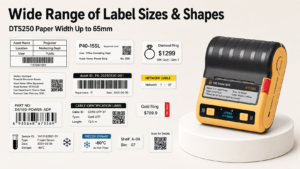
If your laboratory also manages larger assets, chemical reagent bottles, or comprehensive patient charts, the Detonger DT5250 offers a wider 2.5-inch print capacity.
- Why it fits the lab:Supporting label widths up to 61mm, this device can handle both tiny vial labels and larger warning tags for medical equipment. Equipped with a high-capacity 2600 mAh battery, it can process massive batch-printing jobs during large-scale clinical trials without needing to be tethered to a wall outlet.
Securing Sample Integrity with Weprint Software
Even the best lab tube label printer requires intelligent software to prevent human error. Detonger hardware integrates seamlessly with our proprietary Weprint software ecosystem.
Available on Windows, iOS, and Android, Weprint allows lab managers to design standardized clinical templates and share them via the cloud. Technicians can import daily testing manifests directly from Excel, allowing them to batch-print hundreds of serialized test tube labels in seconds. Furthermore, our flexible SDKs allow hospital IT departments to embed Detonger printing capabilities directly into their proprietary medical systems.
Elevate Your Laboratory’s Tracking Accuracy Today
Investing in a high-quality, 300 DPI thermal transfer printer is a strategic decision that protects the integrity of your biological samples, eliminates scanning errors, and ensures strict regulatory compliance. By prioritizing chemical-resistant consumables and intelligent mobile software, your laboratory can operate with total confidence.
Ready to eliminate sample tracking errors in your facility? Explore our highly-rated Portable Label Printer and Handheld Label Maker for Small Business collection, or discover our comprehensive, enterprise-grade Medical & Lab Label Printing Solutions to find the perfect specialized hardware for your clinical workflows.
Frequently Asked Questions (FAQs)
Q: Do I need special labels for tubes stored in liquid nitrogen?
A: Yes. Standard paper and basic plastic labels will become brittle, lose adhesion, and fall off at -196°C. You must use specialized cryogenic labels (typically made of specific synthetic polymers) paired with a resin ribbon in a thermal transfer printer to ensure the label remains firmly attached and legible.
Q: Why do my barcodes keep failing to scan on small Eppendorf tubes?
A: Scanning failures on small vials are almost always caused by low print resolution. If you are using a standard 203 DPI printer, the tiny squares in a 2D QR or DataMatrix code will blur together. Upgrading to a 300 DPI printer ensures the crisp edge definition required for scanners to read micro-barcodes on curved tube surfaces.
Q: Is it safe to use a portable label printer in a sterile cleanroom environment?
A: Portable printers can be used in cleanrooms, but they must be managed properly. Because Detonger’s DT series uses a sealed, one-piece consumable cassette, there is minimal dust or particulate generation compared to traditional printers. However, the exterior of the printer should be wiped down with approved cleanroom sanitizers before entering the sterile environment.