
A waterproof label printer is an essential commercial and industrial thermal device engineered for e-commerce brands, third-party logistics (3PL) providers, and freight dispatchers to generate moisture-resistant, scannable shipping labels. When comparing a waterproof label printer to a standard thermal printer, the most critical differences lie in substrate compatibility (the ability to process “three-proof” coated direct thermal paper or synthetic thermal transfer media) and hardware durability. Users should initially judge their fulfillment environment: if your outbound packages are routinely exposed to rain on loading docks, snow during last-mile delivery, or condensation inside refrigerated trailers, upgrading from a standard desktop printer to a high-capacity waterproof printing solution is mandatory to prevent barcode failure and costly shipping delays.
The High Cost of Standard Thermal Printing in Logistics
In standard office environments, a basic direct thermal printer using economy-grade paper is sufficient for temporary receipts or indoor filing. However, when deployed in the rigorous shipping and logistics sector, standard thermal printing creates massive supply chain vulnerabilities.
Economy direct thermal paper lacks a protective top-coating. When a raindrop hits a standard shipping label, or when a delivery driver handles it with wet gloves, the paper absorbs the moisture. The printed barcode instantly softens, blurs, or tears upon friction. If an automated sorting conveyor or a courier’s optical scanner cannot read the barcode, the package is immediately flagged for manual intervention. This leads to missed delivery guarantees, misrouted freight, and expensive relabeling surcharges from carriers like UPS, FedEx, or DHL.
A dedicated waterproof label printer eliminates these weather-induced bottlenecks. By utilizing optimized printhead heat to activate high-grade “three-proof” (waterproof, oil-proof, scratch-proof) direct thermal paper—or by using thermal transfer technology to melt resin onto synthetic films—these devices output indestructible waybills. Your tracking codes remain 100% legible, ensuring seamless package transit from the warehouse to the customer’s doorstep, regardless of the weather.
Waterproof Label Printer vs Standard Thermal Printer: Core Differences
To secure the highest return on investment for your dispatch operations, B2B decision-makers must understand the technical distinctions between standard and waterproof label generation:
| Feature / Metric | Standard Thermal Printer (Economy Paper) | Direct Thermal Printer (with 3-Proof Waterproof Paper) | Thermal Transfer Printer (Resin on Synthetic Film) |
| Water & Rain Resistance | Zero (Paper degrades and tears instantly) | High (Water beads off the protective chemical top-coat) | Extreme (Survives total, prolonged submersion) |
| Oil & Friction Resistance | Poor (Scuffs easily during transit) | Moderate to High (Resists warehouse grease and handling) | Exceptional (Impervious to industrial chemicals) |
| Primary Logistics Use Case | Indoor warehouse bin locations, short-term routing | Standard e-commerce shipping, courier waybills (4×6) | Heavy machinery ocean freight, outdoor chemical drum transit |
| Consumable Cost | Lowest | Highly Cost-Effective | Moderate (Requires ribbons) |
| Output Speed | Fast | Very Fast (Optimized for high-volume dispatch) | Moderate |
For over 95% of e-commerce and standard courier shipping scenarios, utilizing a high-speed direct thermal printer loaded with premium 3-proof waterproof label rolls provides the perfect balance of operational speed, low consumable cost, and necessary weather protection.
Top Detonger Hardware for Waterproof Shipping
Selecting the appropriate unit requires matching the hardware’s print width and capacity to your daily order volume. Detonger brings 16 years of independent research, global ISO/CE/FCC certifications, and 11 invention patents to the logistics sector.
Detonger DP40 Series: The 4-Inch Waterproof Shipping Champion
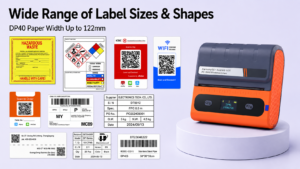
For fast-growing e-commerce fulfillment centers and 3PL warehouses, the Detonger DP40 Series is the ultimate mobile solution for courier waybills.
- Why it excels in shipping:This 4-inch direct thermal printer supports media widths up to 114mm (with a 104mm effective print width), perfectly accommodating the industry-standard 4×6 inch (100x150mm) shipping format. When paired with Detonger’s 3-proof direct thermal rolls, it produces razor-sharp, waterproof 203 DPI barcodes that survive rain and snow. Powered by dual 2600 mAh batteries, warehouse staff can execute massive batch-printing jobs directly at the pallet or loading dock without being tethered to a packing desk.
Detonger DT7330 & DT6250: For Extreme Logistics & Ocean Freight
If your logistics operations involve shipping heavy industrial equipment, automotive parts, or chemical drums that will face severe outdoor weathering or maritime transport, you must upgrade to thermal transfer technology.
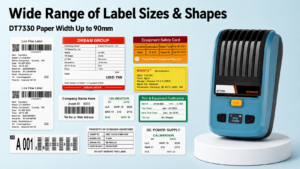
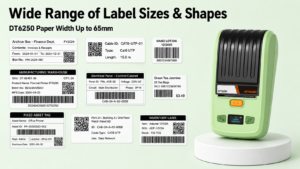
- Why they excel in shipping:The 3-inch Detonger DT7330 and 2.5-inch Detonger DT6250 split-type thermal transfer printers separate the ribbon from the label roll. This allows dispatchers to load heavy-duty synthetic PET labels and pure resin ribbons. The resulting labels are not just waterproof—they are virtually indestructible, surviving saltwater exposure, UV rays, and heavy abrasion during cross-border freight transit.
Accelerating Dispatch with Weprint Software Integration
Industrial-grade hardware must be driven by intelligent software to eliminate fulfillment bottlenecks. Detonger printers integrate natively with our proprietary Weprint software ecosystem, accessible on iOS, Android, and Windows PC.
Weprint eliminates the friction of manual address typing. Warehouse supervisors can connect the software directly to e-commerce order databases. Using the platform’s Excel batch-import function, operators can upload daily dispatch spreadsheets—containing tracking IDs, recipient addresses, and routing codes—and batch-print hundreds of serialized waterproof shipping labels in minutes via Bluetooth. For enterprise operations, Detonger supplies full-featured SDKs and APIs to integrate DP40 printing capabilities directly into custom WMS (Warehouse Management Systems) or TMS platforms.
Upgrading to a dedicated waterproof label printer is a strategic maneuver that protects your supply chain against scanning failures, routing delays, and weather-related customer disputes. Explore our high-efficiency Shipping Label Printer for E-commerce, Warehouse and Logistics line, equip your mobile staff with our versatile Thermal Label Printer collection, or optimize your entire facility with our Efficient Warehouse Label Printing solutions today.
Frequently Asked Questions (FAQs)
Q: Do I need a thermal transfer printer to make my shipping labels waterproof?
A: Not necessarily. For standard e-commerce and courier shipping (like FedEx, UPS, USPS), a direct thermal printer paired with premium “three-proof” (waterproof, oil-proof, scratch-proof) top-coated label rolls is perfectly sufficient to survive rain and snow during transit. Thermal transfer (using a resin ribbon) is only required for extreme cases, such as long-term outdoor storage or ocean freight.
Q: Why do my current thermal shipping labels turn black when exposed to heat or friction?
A: You are likely using standard, economy-grade direct thermal paper without a protective top-coat. Friction from sorting conveyor belts or extreme heat inside a delivery truck can activate the chemical layer on cheap paper, causing it to darken. Switching to high-quality 3-proof direct thermal labels prevents this issue while providing waterproof protection.
Q: Can a 4-inch waterproof shipping printer like the DP40 also print smaller inventory tags?
A: Yes. Advanced logistics printers like the Detonger DP40 feature adjustable internal media guides. While they are wide enough to output 4×6 inch waybills, you can easily slide the guides inward to print narrower 2-inch or 3-inch waterproof barcodes for warehouse bin locations, pallet IDs, or product packaging.