
A lab tube label printer is a precision thermal printing device specifically engineered for biomedical researchers, clinical diagnosticians, and biobank managers to generate high-density 2D QR code identifiers on micro-centrifuge tubes and cryovials. Unlike linear barcodes that require considerable horizontal width, 2D QR codes and DataMatrix codes store complex patient records, protocol parameters, and specimen tracking numbers in a compact square matrix. The most critical selection factors for micro-sample identification include a 300 DPI high-resolution printhead to render microscopic code modules without bleeding, thermal transfer technology to withstand chemical solvents and cryogenic temperatures down to -196°C, and flexible synthetic label stock formulated to eliminate edge lift on tight curved tubes.
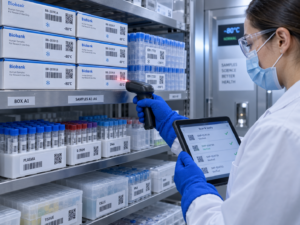
The Advantage of QR Codes in Specimen Identification
Linear 1D barcodes have long served hospital laboratories, but their data density presents severe physical limitations on 0.5ml, 1.5ml, or 2.0ml sample vials. A standard 1D barcode requires sufficient horizontal span for scanning, making it difficult to wrap around narrow test tubes without overlapping text or hiding portions of the code.
Adopting 2D QR codes and DataMatrix codes resolves this bottleneck. A 2D matrix can store up to 50 times more data within a tiny 10mm x 10mm surface area. Technicians can encode specimen IDs, draw dates, volume levels, and LIMS database records directly on the side or top cap of a micro-vial. To produce these dense matrices reliably, clinical departments depend on a dedicated lab tube label printer equipped with micro-step motor controls and fine-pitch printheads. This prevents scanning failures, streamlines automated optical plate reading, and protects patient privacy by replacing overt text with encrypted digital strings.
Critical Hardware Specifications for QR Code Sample Tracking
Producing microscopic 2D codes that survive harsh clinical handling requires meeting specific mechanical and technological thresholds:
- 300 DPI High-Resolution Printhead:Standard 203 DPI printers are built for broad shipping barcodes and cannot generate the micro-dots needed for tiny QR code matrices. At lower resolutions, individual data modules bleed into neighboring cells, rendering the code unreadable by 2D camera imagers. A 300 DPI printhead produces sharp, high-contrast module boundaries required for rapid scanning under automated readers.
- Thermal Transfer Print Mechanism:Laboratories routinely handle aggressive reagents such as isopropyl alcohol, ethanol, xylene, and dimethyl sulfoxide (DMSO). Direct thermal paper dissolves or darkens instantly under these chemicals or during autoclave cycles. A dedicated thermal transfer label printer uses heated print elements to fuse durable resin ribbon directly into synthetic facestocks, ensuring the QR code remains indelible.
- Cryogenic and Curved-Surface Substrates:Tubes placed in -80°C freezers or liquid nitrogen dewars undergo intense thermal contraction. Paper labels quickly crack, lose tack, or unwrap. High-performance printers must handle specialized cryogenic polypropylene or flexible PET substrates coated with high-tack acrylic adhesives that bend around a 5mm radius without “edge lift.”
- Contamination-Free Media Loading:Inside sterile cleanrooms, PCR hoods, and biosafety cabinets, loose ribbon spools can shed static dust or particulate contamination. Systems utilizing sealed, all-in-one consumable cassettes allow operators to swap label stock and resin ribbons in a single step without touching the internal print mechanism.
Comparison: Direct Thermal vs. Thermal Transfer for Lab Sample QR Codes
| Performance Metric | Direct Thermal Printing | Thermal Transfer Printing (Resin Ribbon) |
| Imaging Technology | Heat-sensitive chemical paper coating | Solid resin melted into synthetic substrate |
| Micro-QR Code Edge Sharpness | Moderate (thermal bleed on small cells) | Exceptional (clean, high-contrast matrix cells) |
| Solvent Resistance (Alcohol, Xylene) | Zero (immediate blackening or erasure) | High (impervious to clinical solvent wipes) |
| Extreme Temperature Range | Fails above 50°C and below -20°C | Resists autoclaves (+121°C) and liquid nitrogen (-196°C) |
| Adhesive Stability on Curved Tubes | Low to moderate (stiff paper peels off) | High (flexible cryo-grade synthetics stay flat) |
| Recommended Clinical Use | Temporary patient wristbands, outpatient receipts | Cryovials, microcentrifuge tubes, deep-well plates |
Recommended Detonger Models for Laboratory QR Tube Labeling
Detonger leverages 16 years of independent research, global ISO9001 quality certifications, and proprietary thermal transfer engineering to deliver robust specimen labeling solutions.
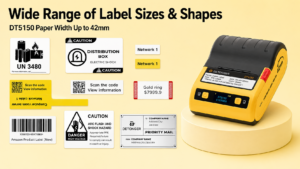
Detonger DT5150: The Micro-Vial & Cleanroom Specialist
For molecular diagnostic suites, clinical testing benches, and biobanks processing 0.5ml to 2.0ml sample vials, the Detonger DT5150 1.5-inch All-in-One Thermal Transfer Printer delivers compact precision.
- Why it excels for QR tube tags:The DT5150 features an ultra-sharp 300 DPI printhead configured to output micro-QR codes down to 8mm x 8mm without dot merging. Its drop-in consumable cassette integrates the resin ribbon and synthetic cryo-label roll into a sealed cartridge, eliminating manual ribbon alignment and minimizing cleanroom airborne particles. Field technicians and lab researchers can generate serialized specimen tags directly at biosafety workstations via Bluetooth connectivity.
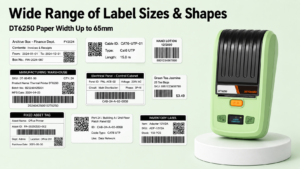
Detonger DT6250: Multi-Format Laboratory Workhorse
For facilities managing mixed containers—ranging from small PCR tubes and blood collection tubes to large media bottles and slide cassettes—the Detonger DT6250 provides wider capability.
- Why it excels for QR tube tags:Offering an expanded print width up to 61mm (2.5 inches) at 300 DPI, the DT6250 allows managers to create multi-panel identification tags. Technicians can output a label featuring an extensive human-readable sample manifest, linear accessioning barcode, and high-density 2D QR code on a single durable synthetic tag. Its split-architecture media bay accommodates high-capacity continuous rolls for extended diagnostic runs.
Streamlining Lab Workflows with WePrint Software
A high-precision lab tube label printer requires versatile design software to eliminate error-prone manual typing. Detonger hardware interfaces directly with the WePrint software ecosystem across iOS, Android, and Windows platforms.
WePrint enables laboratory supervisors to establish standardized sample label templates with locked layout dimensions, compliant error-correction levels (ECC200 / QR Level H), and dynamic text bindings. Technicians can import daily testing manifests directly from Excel (.xlsx) or CSV files, instantly batch-printing consecutive QR codes tied to sample IDs. For hospital enterprises and contract research organizations (CROs), Detonger provides multi-platform SDKs that integrate hardware operations directly into existing LIMS or EHR networks, automating label triggers when samples are logged into the testing queue.
Deploying a specialized lab tube label printer eliminates handwriting ambiguity, prevents cryogenic sample loss, and ensures full chain-of-custody compliance throughout biological storage lifecycles. Explore Detonger’s specialized Medical & Lab Label Printing Solutions and advanced Thermal Transfer Label Printer collection to optimize your specimen tracking infrastructure.
Frequently Asked Questions (FAQs)
Q: Why is 300 DPI considered mandatory for QR code sample labels on test tubes?
A: Test tubes offer minimal flat surface area, typically requiring QR codes smaller than 12mm x 12mm. A 203 DPI printer creates larger individual ink dots (approximately 0.125mm per dot), which causes adjacent dots in dense matrix cells to bleed together and round off the cell corners. A 300 DPI printhead delivers smaller, precise dots (around 0.084mm), preserving the sharp contrast and crisp geometry necessary for 2D barcode imagers and smartphone cameras to decode the matrix instantly.
Q: Can QR code labels printed on these machines survive liquid nitrogen immersion?
A: Yes, provided you pair a thermal transfer printer with specialized cryogenic label materials (such as flexible cryo-polypropylene) and a pure resin ribbon. The thermal transfer process binds the resin into the synthetic substrate, while the specialized low-temperature adhesive prevents brittleness and adhesive failure down to -196°C.
Q: How does a one-piece cassette design benefit laboratory cleanrooms?
A: Traditional desktop thermal transfer printers require operators to thread loose ribbon rolls around open guide bars, exposing the printer’s interior and shedding microscopic carbon particulates. An all-in-one cassette, like that in the Detonger DT5150, seals the ribbon and label roll together inside a single cartridge. It installs in a single step with zero manual threading, reducing the risk of cleanroom contamination and eliminating ribbon creasing errors.