
A plant label printer engineered for potted plants is an essential on-demand thermal printing system designed for commercial greenhouse growers, wholesale nurseries, garden centers, and boutique plant shops to produce durable, moisture-resistant botanical markers and retail pricing tags. Unlike standard flat-surface packaging, labeling potted plants presents severe physical and environmental challenges: potting soil contains abrasive minerals and moisture, automated bottom-watering and overhead irrigation saturate container sidewalls, liquid fertilizer salts cause chemical leaching, and direct solar UV radiation rapidly bleaches standard inks. The decisive technical selection criteria for potted plant labeling include true thermal transfer technology running pure resin ribbons (mandatory to resist water submersion, potting chemicals, and UV exposure), an ultra-sharp 300 DPI printhead (to render fine botanical typography, Latin taxonomic names, and high-density 2D QR codes legibly), and versatile media handling capable of feeding rigid plastic pot stakes, self-locking wrap tags, and waterproof pot stickers. Nursery operations managers and botanical retailers must evaluate their watering workflows: if your business experiences dissolved pot labels, unreadable barcodes during retail checkout, or faded plant stakes in outdoor garden beds, deploying a dedicated thermal transfer plant printer is an essential operational upgrade to safeguard botanical traceability and accelerate retail turnover.
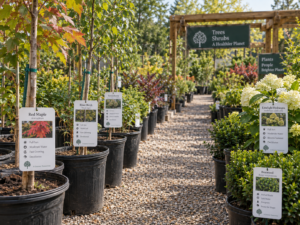
The Physical and Chemical Hazards of Labeling Potted Plants
In commercial nursery operations and consumer plant retail, an unreadable, bleached, or peeling plant marker breaks botanical traceability and disrupts retail transactions. When growers and plant shops rely on standard office desktop inkjet printers, consumer tape labelers, or handwriting on plastic sticks with permanent markers, multiple physical failure modes emerge:
- Overhead Misting and Soil Moisture Delamination:Potted plants require frequent watering via overhead misting booms, sub-irrigation flood tables, or manual hand watering. Paper-based stickers and uncoated cardstock tags absorb moisture immediately, causing wood pulp fibers to swell, bubble, and disintegrate into wet mush. Water-based desktop inkjet inks bleed instantly into illegible colored streaks.
- Fertigation and Fungicide Chemical Leaching:Commercial growers inject concentrated macro-nutrients (nitrogen, phosphorus, potassium salts) and apply chemical pesticide drenches directly to potting soil. Inferior printing inks break down, smear, or fade when exposed to corrosive fertilizer runoff and chemical residues.
- Solar Radiation and Grow-Light Fading:Potted plants sit in open nursery display yards, glass greenhouses, or under high-output indoor LED grow lights. Non-UV-stabilized inks and felt-tip marker lines fade completely within weeks under intense solar UV exposure, leaving cultivars, light requirements, and pricing unidentifiable.
- Direct Thermal Solar Blackening:Direct thermal paper relies on a heat-activated chemical coating. When potted plants are staged outdoors under summer sunlight exceeding 35°C, ambient solar heat activates the chemical coating across the entire label, turning it solid black and permanently destroying plant care instructions and barcodes.
- The Inefficiency of Manual Marker Handwriting:Writing botanical cultivars, watering icons, and retail prices on plastic pot sticks by hand is slow, labor-intensive, and prone to severe handwriting errors.
Deploying a commercial plant label printer resolves these physical vulnerabilities. Utilizing controlled thermal transfer energy, the machine melts solid resin ribbons into non-porous synthetic plastic media (such as rigid styrene stakes, flexible vinyl wraps, or heavy-gauge polypropylene film). The resulting image forms a scratch-proof, waterproof bond that withstands daily irrigation, chemical fertilizers, and prolonged solar exposure across multi-season growing cycles.
Core Hardware Specifications for Potted Plant Labeling
Producing permanent, water-resistant markers that adhere securely to curved nursery pots or slide smoothly into abrasive soil mixes requires hardware built to specific mechanical and optical tolerances:
1. Thermal Transfer Printing with Pure Resin Ribbon Compatibility
Potted plant labeling strictly requires a dedicated thermal transfer label printer capable of driving pure resin or premium wax-resin ribbons. The heated printhead melts solid resin polymers directly into synthetic plastic facestocks, creating an impermeable graphic barrier impervious to irrigation water, soil microorganisms, liquid fertilizers, and intense UV exposure. Direct thermal printing is unsuited for humid greenhouses or outdoor nursery yards.
2. 300 DPI Ultra-High Resolution Output
Potted plant tags must condense extensive care information into narrow, compact footprints: botanical Latin names, common names, sun exposure icons, watering frequencies, USDA hardiness zones, and machine-readable 2D QR codes share limited surface area on a 15mm to 30mm stake. A 203 DPI printhead utilizes larger 0.125mm dots that can cause small 3pt to 5pt typography to blur and dense 2D codes to fail optical verification. A 300 DPI (Dots Per Inch) printhead delivers fine 0.084mm dot pitch, ensuring razor-sharp typography and crisp barcode quiet zones for instant scanning at garden center checkout counters.
3. Pliable and Rigid Horticultural Media Compatibility
Potted plant merchandising utilizes three distinct physical marking formats:
- Rigid Plastic Pot Stakes & Soil Sticks (Styrene/PVC):Non-adhesive plastic stakes pushed directly into peat, perlite, or soil substrates must be thick enough to resist bending. The printer requires heavy-duty feed rollers and high-torque stepper motors to transport these rigid media without slipping.
- Waterproof Adhesive Pot Stickers:Thin, flexible synthetic label rolls (white BOPP or PET) paired with high-tack, moisture-resistant acrylic adhesives formulated to bond tightly to rough, ribbed plastic nursery pots and terracotta containers without peeling when wet.
- Self-Locking Loop-Lock Tags:Flexible synthetic tags that wrap around sturdy shrub stems or top-growth foliage without restricting stem expansion.
4. Precision Optical Sensors for Notched Stakes and Die-Cut Tags
Horticultural pot stakes frequently feature physical notches, feed holes, or reflective black marks rather than standard adhesive liner gaps. The printer must feature sensitive, adjustable transmissive and reflective optical sensors to calibrate each tag’s top-of-form boundary precisely, preventing text and barcodes from drifting across cut lines during high-volume batch runs.
Technical Comparison: Potted Plant Labeling Technologies
| Performance Metric | Hand-Applied Felt-Tip Marker | Direct Thermal (3-Proof Paper) | Dedicated Thermal Transfer Plant Printer |
| Imaging Technology | Solvent ink hand-applied | Heated printhead on chemical coating | Pure resin ribbon melted into synthetic plastic |
| Required Consumables | Marker pen + plastic stick | Direct thermal roll only (inkless) | Synthetic pot stakes/labels + resin ribbon |
| Water, Misting & Soil Mud Tolerance | Moderate (smudges under daily water) | Low (softens and curls over time) | Extreme (completely impervious to misting and mud) |
| Fertilizer & Pesticide Resistance | Poor (washes off with chemical drench) | Poor (chemical contact causes staining) | Exceptional (impervious to nutrient salts and sprays) |
| UV & Sunlight Stability | Poor (fades completely within 2–4 weeks) | Fails completely (turns solid black in sun) | Archival (remains sharp across multi-season cycles) |
| Digital Barcode & QR Capability | None (cannot handwrite scannable codes) | Moderate (barcodes degrade in weeks) | Superior (crisp 300 DPI 1D/2D machine-readable codes) |
| Production Speed | Extremely slow (manual bottleneck) | Fast | High-throughput batch printing directly from ERP |
| Recommended Potted Application | Casual hobby gardening | Short-term indoor checkout price tags | Commercial plug pots, 1-5 gallon nursery containers |
Recommended Detonger Models for Potted Plant Labeling
Detonger leverages 16 years of independent research, global ISO9001/CE certifications, and 11 invention patents to deliver reliable thermal hardware suited for commercial horticulture and durable plant tagging.
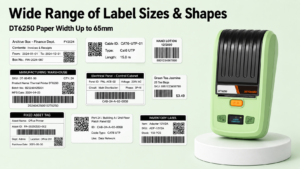
Detonger DT6250: Multi-Format Commercial Nursery Workhorse
For large wholesale nurseries, commercial propagation greenhouses, and high-volume container potting lines, the Detonger DT6250 2.5-inch Thermal Transfer Printer provides industrial-grade throughput.
- Why it excels for potted plants:Supporting media widths up to 61mm (2.5 inches) at a sharp 300 DPI resolution, the DT6250 easily feeds thick, non-adhesive plastic pot stakes, plug tray sticks, and wide loop-lock tags. Its split-type consumable bay separates the ribbon supply from the label roll, allowing nursery managers to load cost-effective bulk rolls of durable synthetic media and wax-resin ribbons. Its high-torque drive mechanism feeds rigid plastic stakes smoothly without slipping or jamming.
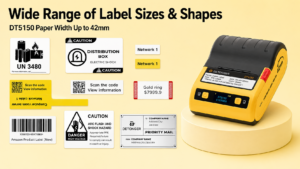
Detonger DT5150: The Compact Boutique Plant Shop Specialist
For boutique indoor plant shops, succulent crafters, and greenhouse propagation benches requiring compact, high-precision markers, the Detonger DT5150 1.5-inch All-in-One Thermal Transfer Printer delivers benchtop agility.
- Why it excels for potted plants:Featuring an ultra-sharp 300 DPI printhead, the DT5150 outputs microscopic 2D QR codes, cultivar registration numbers, and fine botanical care details on narrow synthetic tags down to 15mm. Its sealed, all-in-one consumable cassette integrates the resin ribbon and synthetic media into a single drop-in cartridge, allowing operators to swap tag types in seconds without manual ribbon threading or exposing the printhead to soil dust. Built-in Bluetooth enables staff to print plant tags directly at potting benches via smartphone or tablet.
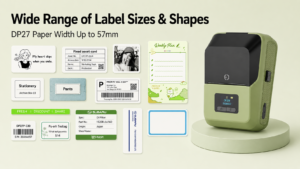
Detonger DP27 Series: Agile Direct Thermal Retail Counter Option
For garden center gift shops, dry seed displays, and short-cycle retail potting counters that do not face direct water misting, the Detonger DP27 Series (including the 300 DPI DP27P configuration) provides an inkless, lightweight alternative.
- Why it excels for potted plants:Weighing just 292g, this mobile 2-inch unit enables staff to print dynamic price tags, clearance stickers, and batch dates directly at the retail counter via Bluetooth, keeping consumable overhead to an absolute minimum.
Automating Plant Care Data with WePrint Software
A commercial-grade plant label printer requires intelligent software to eliminate manual data entry errors and streamline crop tracking. Detonger hardware integrates natively with the WePrint application across iOS, Android, and Windows PC.
WePrint simplifies potted plant labeling through specialized features:
- Inventory & ERP Database Binding:Growers can export potting schedules, batch manifests, and cultivar databases directly from Excel (.xlsx) or CSV spreadsheets. WePrint automatically maps database columns (cultivar name, pot size, retail price, potting date) to custom stake templates, batch-printing hundreds of serialized tags in minutes.
- Dynamic QR Code Generation:The software easily encodes web URLs directly into 2D QR codes, enabling retail buyers to scan a pot stake with a smartphone to view plant care guides, repotting tutorials, and fertilizer recommendations.
- Botanical Symbol & Icon Libraries:WePrint includes libraries of standardized horticultural pictograms (sun exposure, watering frequency, USDA hardiness zones, and pet toxicity warnings), allowing nursery staff to assemble professional, informative care stakes without graphic design experience.
Deploying a dedicated plant label printer protects your commercial crop investment, streamlines garden center retail checkout, and keeps vital botanical data intact through every irrigation cycle. Explore Detonger’s specialized Portable Label Printer and Handheld Label Maker for Small Business collection, or discover our high-durability Industrial Label Printer for Manufacturing, Warehouse and Durable Labels lineup to upgrade your potted plant labeling infrastructure today.
Frequently Asked Questions (FAQs)
Q: What is the most effective label format for potted nursery plants?
A: For nursery pots filled with loose potting soil, a rigid plastic pot stake (PVC or styrene) inserted directly into the soil is the most versatile format. It remains fully visible above foliage, avoids contact with pot sidewall adhesives, and can be retrieved and inspected easily. For smooth plastic nursery containers or hanging baskets, a waterproof BOPP synthetic sticker applied to the outer pot sidewall provides a clean, permanent retail display that will not fall out during transport.
Q: Why do plant labels printed with standard direct thermal printers turn black in garden centers?
A: Direct thermal paper utilizes a heat-sensitive chemical coating. When direct thermal labels are placed outdoors under intense summer sunlight, high ambient temperatures, or supplemental greenhouse grow lights, radiant solar heat and UV radiation activate the chemical layer across the entire tag, turning it solid black and destroying all text and barcodes. For potted plant environments, always select a thermal transfer printer equipped with a pure resin ribbon and synthetic media.
Q: How does a plant label printer handle automated watering and liquid fertilizer?
A: When printing with a thermal transfer printer loaded with a pure resin ribbon and synthetic plastic stakes or BOPP labels, the heated printhead fuses the solid resin polymers directly into the surface layer of the plastic. This creates an impermeable, chemical-resistant bond that will not smear, dissolve, or peel away when subjected to overhead misting booms, automated flood tables, liquid fertilizer salts, or pesticide drenches.