
A waterproof label printer engineered for outdoor applications is an essential industrial thermal printing system designed for utility contractors, telecom field crews, solar farm technicians, horticultural operations, and outdoor asset managers. Creating scannable, permanent markers for exterior equipment introduces severe mechanical and environmental hazards: relentless ultraviolet (UV) solar radiation, torrential rain, frost-thaw cycles, high humidity, airborne dust, and chemical runoff rapidly degrade low-grade materials. The decisive technical selection criteria for outdoor printing hardware include thermal transfer printing technology utilizing pure resin ribbons (mandatory to cross-link with non-porous synthetic substrates), an optical resolution of 300 DPI (to maintain sharp legibility on micro-barcodes and regulatory text over years of weathering), and broad media compatibility with durable synthetic facestocks like Matte Silver PET, vinyl, and cross-linked polyolefin. Field operations managers must evaluate their environmental exposures: if your exterior assets face years of sun-bleaching, temperature swings from -40°C to +80°C, or seasonal storm exposure, deploying an industrial thermal transfer printer configured for outdoor labels is the only reliable way to prevent barcode degradation and maintain asset traceability.
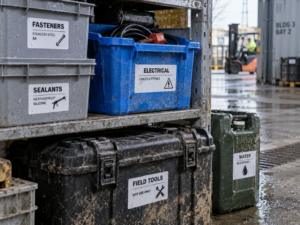
The Physical and Chemical Failure Modes of Outdoor Labeling
Exposing identifying markers to unconditioned outdoor environments exposes standard office and consumer labels to immediate degradation:
- UV Photodegradation and Sun-Bleaching:Solar radiation contains high-energy ultraviolet wavelengths that break the chemical bonds of standard organic dyes, desktop inkjet inks, and wax ribbons. Non-UV-stabilized legends fade within weeks, leaving utility disconnects and telecom boxes completely unmarked.
- Direct Thermal Solar and Heat Blackening:Direct thermal paper relies on a heat-activated chemical coating. When attached to outdoor electrical panels, metal HVAC units, or pipeline junction boxes exposed to direct sunlight, ambient solar radiation activates the entire chemical facestock, turning the label solid black and obliterating all barcodes and text.
- Thermal Cycling and Adhesive Embrittlement:Exterior equipment undergoes daily temperature expansion and contraction cycles. Ordinary water-based adhesives freeze, crystallize, and lose tack during winter freezes, causing rigid labels to pop off curved conduits, painted metal cases, and rough wooden utility poles.
- Moisture Delamination and Windblown Abrasion:Standard cellulose paper absorbs rainwater and morning dew, turning to pulp and disintegrating under heavy precipitation. Windblown grit and airborne sand act as a continuous abrasive blasting media, wearing down low-durability print layers within months.
Deploying a commercial-grade waterproof label printer resolves these physical vulnerabilities. Utilizing controlled thermal transfer energy, the machine melts high-molecular-weight pure resin ribbons into durable synthetic facestocks (such as Matte Silver PET, heavy-gauge vinyl, or UV-resistant polypropylene). This forms an indelible, cross-linked chemical bond that withstands continuous rain, sub-zero freezes, sandstorms, and up to a decade of solar exposure.
Core Hardware Specifications for Outdoor Label Printers
Generating permanent, weather-resistant outdoor tags demands hardware built around specific mechanical, optical, and thermal tolerances:
1. Thermal Transfer Print Architecture with Pure Resin Ribbons
Direct thermal printing is disqualified for outdoor infrastructure. Your field operations require a dedicated thermal transfer label printer capable of driving pure resin ribbons. Pure resin formulas contain cross-linking polymer binders that melt into synthetic substrates, forming an impervious graphic barrier that repels water, engine oils, agricultural runoff, and intense UV exposure without fading or running.
2. 300 DPI Ultra-High Resolution Output
Outdoor tags frequently consolidate complex regulatory warnings, high-density 2D QR codes, and microscopic serial numbers into compact spaces (such as small valve tags or narrow electrical breaker markers). A 203 DPI printhead utilizes larger 0.125mm dots that can cause dense 2D codes to blur and micro-text below 6pt to become jagged. A 300 DPI (Dots Per Inch) printhead delivers fine 0.084mm dot pitch, preserving crisp rectangular cell geometry and distinct quiet zones for rapid smartphone and industrial imager verification.
3. Compatibility with Heavy-Duty Outdoor Substrates
Outdoor labeling requires specific synthetic media capable of enduring mechanical stress:
- Matte Silver PET (Polyester):Highly resistant to UV radiation, thermal expansion, and tearing; provides a clean metallic aesthetic for machinery rating plates and solar combiner boxes.
- Flexible Vinyl & PVC:Highly conformable substrates that stretch and adhere flush to curved utility poles, uneven conduit surfaces, and rough textured metal housings without edge-flagging.
- High-Tack Solvent Acrylic Adhesives:Formulated specifically to bond across broad temperature ranges (-40°C to +120°C) without embrittlement, moisture emulsification, or thermal shearing.
4. Field Mobility and High-Capacity Battery Power
Outdoor maintenance teams cannot carry heavy server blades or disconnect utility cables to bring them inside an office for labeling. A portable, ruggedized printer equipped with a high-capacity lithium-ion battery (1200 mAh to 2600 mAh) and Bluetooth connectivity allows field technicians to design and print serialized weather-resistant tags right at the utility trench, tower base, or solar array.
Technical Comparison: Outdoor Labeling Technologies
| Performance Metric | Direct Thermal (Standard Paper) | Thermal Transfer (Wax/Resin Blend) | Thermal Transfer (Pure Resin + Synthetic PET/Vinyl) |
| Imaging Technology | Heated printhead on chemical coating | Heated printhead melts wax/resin blend | Solid pure resin melted into synthetic plastic |
| Required Consumables | Direct thermal roll only (inkless) | Paper/synthetic roll + wax/resin ribbon | Synthetic label rolls + pure resin ribbon |
| Water, Rain & Snow Tolerance | Fails completely (paper turns to mush) | Moderate (handles light rain; degrades under immersion) | Extreme (completely impervious to rain, snow, and ice) |
| Sunlight & UV Stability | Fails in weeks (turns pitch black in sun) | Moderate (fades after 6 to 12 months) | Archival (resists fading across 5 to 10+ years) |
| Extreme Temperature Range | Fails above 45°C (darkens rapidly) | -10°C to +60°C | -40°C to +120°C (maintains full adhesion and legibility) |
| Surface Abrasion Resistance | Poor (scratches turn gray/black) | Moderate (light scuffing resistance) | Exceptional (withstands windblown sand and gravel) |
| Primary Outdoor Application | Short-term garden nursery sales checkout | Covered loading docks, sheltered staging | Solar panels, utility poles, telecom vaults, outdoor valves |
Recommended Detonger Models for Outdoor Waterproof Labeling
Detonger leverages 16 years of independent research, global ISO9001/CE certifications, and 11 invention patents to deliver reliable thermal hardware suited for durable synthetic labeling.
Detonger DT5150: The Portable Field Toolbelt Specialist
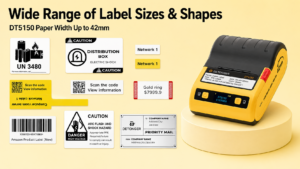
For utility linemen, telecom field engineers, and solar installation technicians working outdoors, the Detonger DT5150 1.5-inch All-in-One Thermal Transfer Printer delivers benchtop precision in a handheld footprint.
- Why it excels for outdoor labels:Featuring a 300 DPI printhead, the DT5150 outputs microscopic 2D DataMatrix codes, wiring schematics, and sequential serial numbers on weather-resistant Matte Silver PET and flexible vinyl up to 36mm wide. Its sealed, all-in-one consumable cassette integrates the pure resin ribbon and synthetic media into a single drop-in cartridge. Technicians can swap materials in seconds with zero manual ribbon threading, protecting the internal printhead from windblown dust and moisture. Powered by long-life battery technology and Bluetooth connectivity, technicians can batch-print durable tags on-site via smartphone or tablet.
Detonger DT6250: Multi-Format Exterior Infrastructure Workhorse
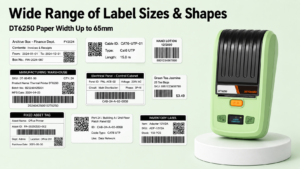
For industrial manufacturing yards, pipeline contractors, and agricultural facilities requiring wider outdoor tags, the Detonger DT6250 2.5-inch Thermal Transfer Printer provides expanded capacity.
- Why it excels for outdoor labels:Supporting media widths up to 61mm (2.5 inches) at 300 DPI, the DT6250 provides ample printable area for complex outdoor warning signs, multi-line pipeline flow identifiers, and high-density QR asset tags. Its split-type consumable architecture separates the ribbon roll from the label roll, substantially reducing ongoing consumable overhead during large-scale exterior infrastructure installations.
Detonger DP27 Series: Agile Direct Thermal Solution for Sheltered Outdoor Retail
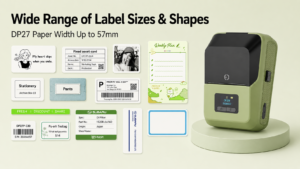
For outdoor garden centers, seasonal farmers’ markets, and sheltered construction staging areas requiring quick, temporary labels, the Detonger DP27 Series (featuring the 300 DPI DP27P configuration) provides an inkless, lightweight option.
- Why it excels for outdoor labels:Weighing just 292g, this mobile 2-inch unit enables staff to print dynamic price tags, clearance stickers, and batch dates on water-resistant “three-proof” paper directly in the field via Bluetooth, keeping consumable costs minimal for short-cycle needs.
Automating Outdoor Asset Tagging with WePrint Software
A commercial waterproof label printer requires intelligent software to eliminate manual transcription errors and guarantee standard barcode verification. Detonger hardware integrates natively with the WePrint application across iOS, Android, and Windows PC.
WePrint optimizes outdoor workflows through purpose-built capabilities:
- Direct Database & Spreadsheet Synchronization:Technicians can import hardware manifests, pole numbers, and valve registers directly from Excel (.xlsx) or CSV files on their mobile devices. WePrint maps database columns to custom outdoor templates, batch-printing serialized barcode tags in minutes.
- Dynamic 2D Barcode & QR Code Engine:Generates compliant 1D barcodes and 2D QR codes with customizable Error Correction Levels (ECC Level L, M, Q, or H). Configuring Level H ensures codes remain scannable even if up to 30% of the label surface is scratched or partially covered with mud.
- Standardized Safety Symbol Libraries:Includes built-in vector libraries for international safety symbols, high-voltage warnings, and environmental hazard icons, allowing field operators to assemble regulatory warning markers without third-party design tools.
Deploying a dedicated waterproof label printer protects physical infrastructure against identification loss, prevents costly field audit errors, and ensures outdoor equipment remains traceable across its operational lifespan. Explore Detonger’s specialized Cable Label Printer for Wire, Electrical and Heat Shrink Labels collection, or discover our high-durability Industrial Label Printer for Manufacturing, Warehouse and Durable Labels lineup to equip your field teams with professional-grade outdoor marking tools today.
Frequently Asked Questions (FAQs)
Q: Can I use direct thermal labels for outdoor equipment?
A: No. Direct thermal labels use a heat-sensitive chemical paper coating that reacts to heat and light. Exposure to ambient sunlight, outdoor heat, or UV radiation will turn the label completely black within weeks, destroying all barcodes and text. Outdoor applications require a thermal transfer printer loaded with pure resin ribbon and synthetic PET or vinyl media.
Q: How long can a thermal transfer label survive outdoors?
A: A high-grade synthetic label (such as Matte Silver PET or UV-stabilized vinyl) printed with a pure resin ribbon on an industrial thermal transfer printer can survive outdoors for 5 to 10+ years. It remains resistant to fading, rain, snow, temperature swings from -40°C to +120°C, and abrasion from windblown dirt.
Q: What adhesive should I use for labels applied to cold metal in winter?
A: Standard water-based adhesives freeze and fail when applied in cold weather. For cold-weather outdoor applications, use synthetic labels coated with a high-tack, solvent-based acrylic adhesive. These adhesives maintain flexible bonding power down to -40°C, preventing labels from cracking or peeling away from metal housings and conduit pipes.