
A lab tube label printer configured for variable sample data is an essential thermal printing instrument engineered for clinical diagnostic laboratories, genomics research cores, biorepositories, and contract research organizations (CROs) to produce on-demand, machine-readable specimen markers. Unlike fixed batch printing or simple sequential numbering, handling variable sample data requires dynamically rendering disparate data fields—such as patient accession codes, varying aliquot volumes, protocol identifiers, time-sensitive draw stamps, and encrypted 2D matrices—on an individual vial basis. The decisive hardware selection criteria for variable data tube marking include an ultra-sharp 300 DPI printhead to eliminate module bridging as variable strings expand, thermal transfer technology to survive deep cryogenic storage down to -196°C and solvent baths, and seamless bidirectional database/LIMS connectivity. Laboratory operations managers should evaluate their accessioning workflows: if your facility processes high-throughput, non-uniform biological specimens destined for automated liquid handlers, ultra-low temperature freezers, or chemical assays, deploying a dedicated variable-data thermal transfer tube printer is mandatory to eliminate transcription errors, maintain sample custody, and pass regulatory laboratory audits.
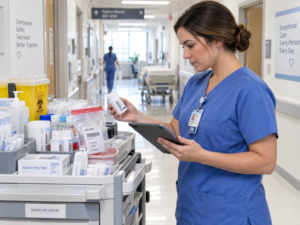
The Operational Stakes of Variable Data Tube Identification
In high-complexity molecular biology, clinical chemistry, and biobanking, each sample aliquot carries a unique set of metadata that dictates its downstream handling. When processing hundreds of microcentrifuge tubes, cryovials, or cell-culture vessels, relying on fragmented or inflexible marking methods introduces critical operational liabilities:
- Transcription Bottlenecks and Manual Entry Errors:Forcing technicians to manually transcribe variable patient IDs, collection dates, and protocol codes with laboratory marker pens creates severe human error risks. In variable-data environments, transposed digits or illegible handwriting result in lost specimens, incorrect diagnostic reporting, and compromised clinical trials.
- Thermal Bleed and Variable 2D Matrix Degradation:In variable data workflows, alphanumeric string lengths fluctuate constantly (e.g., transitioning from a simple 8-character ID to a 32-character encrypted LIMS URL). As data density expands, the corresponding 2D DataMatrix or QR code automatically adds rows and columns of microscopic modules. On standard 203 DPI desktop printers, these shrinking square cells bleed together, resulting in scan failures under automated plate readers and handheld imagers.
- Direct Thermal Incompatibility with Chemical Solvents:Standard direct thermal labels rely on a heat-sensitive chemical coating. When exposed to histological solvents (xylene, toluene), decontamination wipe-downs (70% ethanol, isopropanol), or autoclave sterilization (+121°C), direct thermal coatings immediately dissolve or turn pitch black, permanently erasing critical variable patient markers.
- Cryogenic Adhesive Delamination:When biological aliquots are plunged into vapor-phase or liquid-phase nitrogen (-196°C), standard paper labels become brittle, crack, and pop off curved glass or polypropylene tubes due to differential thermal contraction.
Deploying a commercial lab tube label printer eliminates these vulnerabilities. Utilizing controlled thermal transfer energy, the machine melts solid pure resin ribbons directly into cryogenic synthetic films (such as flexible polypropylene or thin Matte Silver PET). This creates an archival chemical bond that keeps variable 2D barcodes, multi-line text, and clinical timestamps crisp and scannable through boiling water baths, sub-zero freezers, and aggressive centrifugation.
Core Hardware Specifications to Evaluate Before Purchasing
Processing variable, high-density specimen data across small cylindrical tubes requires hardware engineered to precise optical, mechanical, and electrical standards:
1. 300 DPI Ultra-High Resolution Printhead
Microcentrifuge tubes (0.5ml, 1.5ml, 2.0ml) and cryovials provide minimal printable surface area, often restricted to 10mm x 25mm or 12mm x 20mm. Fitting multi-tiered variable metadata—such as variable alphanumeric accession numbers alongside dense 2D DataMatrix or QR codes—demands a 300 DPI (Dots Per Inch) printhead. The microscopic 0.084mm dot pitch preserves clean cell geometry and crisp quiet zones, preventing module bridging even when variable text strings expand to maximum character limits.
2. Thermal Transfer Printing with Pure Resin Ribbon Compatibility
Survival in clinical laboratory environments requires a dedicated thermal transfer label printer capable of running pure resin ribbons. Pure resin chemically fuses into synthetic plastic facestocks, creating an indelible graphic layer completely impervious to DMSO, xylene, bleach, 70% ethanol, and extreme temperature cycling from -196°C to +121°C.
3. Pliable Cryogenic Substrates (Anti-Flagging on Curved Walls)
Cylindrical vials with diameters as small as 8mm to 11mm exert continuous outward spring-back tension on rigid label stocks. A reliable lab tube printer must smoothly feed ultra-flexible synthetic materials—such as thin cryogenic polypropylene (PP) or flexible polyester—paired with low-temperature, high-tack acrylic adhesives formulated to bond tightly around tight curvatures without edge lifting or flagging.
4. Precision Optical Sensors for Die-Cut & Micro-Label Alignment
Variable data jobs cannot afford label creep or boundary drift. The printer requires sensitive, adjustable transmissive (gap) and reflective (black mark) optical sensors to calibrate the top-of-form boundary for every single tube label, ensuring variable barcodes never drift across perforations or die margins during continuous batch runs.
5. Onboard Buffer Memory and Rapid Graphic Rasterization
Unlike static printing where a printer repeats a single cached image, variable data printing requires rendering a brand-new raster image and unique 2D vector graphic for every consecutive label. The printer must feature a fast internal 32-bit RISC processor and ample onboard SDRAM buffer memory to continuously stream and process dynamic datasets without mechanical pauses or buffer underruns.
Technical Comparison: Laboratory Tube Marking Technologies
| Evaluation Parameter | Manual Handwritten Marker | Direct Thermal (Standard Paper) | Dedicated Variable-Data Thermal Transfer Lab Printer |
| Variable Data Input Method | Slow manual pen writing | Keyboard / Basic driver input | Automated Excel/CSV import & LIMS API integration |
| Micro-2D Barcode Sharpness | N/A (cannot handwrite 2D codes) | Moderate (thermal bleed on dense micro-codes) | Superior (razor-sharp 300 DPI module boundaries) |
| Ethanol & Solvent Tolerance | Zero (wiped off instantly by alcohol) | Zero (erased or blackened by solvents) | Extreme (completely impervious to xylene, DMSO, ethanol) |
| Cryogenic & Autoclave Stability | Poor (smudges when thawed) | Fails completely (turns black in heat/autoclave) | Archival quality (stable from -196°C liquid nitrogen to +121°C) |
| Curved Tube Adhesion | N/A | Poor (stiff paper flags off small tubes) | Exceptional (flexible cryo-film hugs micro-tubes securely) |
| Ideal Laboratory Use Case | Non-critical temporary notes | Short-term room-temperature outpatient forms | Cryovials, microcentrifuge tubes, PCR plates, biobanks |
Recommended Detonger Models for Variable Laboratory Tube Printing
Detonger leverages 16 years of independent research, global ISO9001 quality certifications, and 11 invention patents to deliver reliable thermal hardware tailored for healthcare, life sciences, and laboratory compliance.
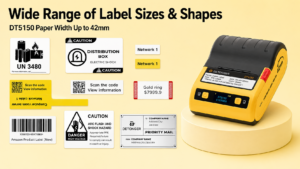
Detonger DT5150: The Micro-Vial & Cleanroom Benchtop Specialist
For molecular diagnostics suites, genetic testing cores, and cleanroom bio-repositories processing 0.5ml to 2.0ml cryovials, the Detonger DT5150 1.5-inch All-in-One Thermal Transfer Printer delivers benchtop and mobile precision.
- Why it excels for variable tube data:Equipped with a precision 300 DPI printhead, the DT5150 outputs microscopic 2D DataMatrix codes, variable accession strings, and timestamps on narrow labels down to 15mm wide. Its sealed, all-in-one consumable cassette integrates the pure resin ribbon and synthetic cryogenic label roll into a single cartridge. Laboratory personnel can swap media in seconds with zero manual ribbon threading, preventing printhead contamination from cleanroom airborne particles. Built-in Bluetooth enables technicians to generate variable sample tags directly inside biosafety cabinets or at the accessioning station.
Detonger DT6250: Multi-Format High-Throughput Laboratory Workhorse
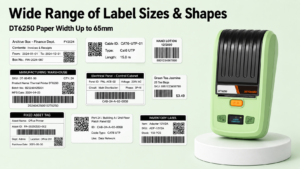
For central clinical laboratories, hospital pathology cores, and high-throughput screening hubs managing mixed containers—including blood collection tubes, chemical reagent bottles, and culture flasks—the Detonger DT6250 provides expanded media versatility.
- Why it excels for variable tube data:Supporting label widths up to 61mm (2.5 inches) at 300 DPI, the DT6250 provides ample printable area for complex multi-field layouts—such as variable patient demographic panels alongside linear 1D barcodes and high-density 2D tracking matrices. Its split-type consumable design separates the ribbon supply from the label roll, substantially reducing ongoing consumable overhead during large-scale clinical trial intake runs.
Automating Variable Sample Data with WePrint Software
A dedicated lab tube label printer requires intelligent software to eliminate manual data entry errors and streamline sample accessioning. Detonger hardware integrates natively with the WePrint application across iOS, Android, and Windows PC.
WePrint simplifies laboratory data workflows through specialized features:
- Direct Excel & CSV Spreadsheet Binding:Technicians can import daily accession manifests containing hundreds of unique sample rows directly into the app. WePrint dynamically maps database columns to text fields and 2D QR/DataMatrix objects, rendering customized variable tags in seconds without manual re-typing.
- Dynamic 2D Barcode Generation:As the software parses consecutive rows of variable data, it dynamically recalculates and renders unique 2D DataMatrix and QR code vectors in real time, eliminating the need to pre-generate thousands of static image files.
- Automated Timestamping & Aliquot Serialization:The software allows supervisors to configure automated incrementation rules for aliquot sub-numbers (e.g., -A1, -A2, -A3) alongside real-time sample processing timestamps.
- Open SDK & LIMS System Integration:For automated robotic liquid handlers, diagnostic analyzers, and enterprise hospital networks, Detonger provides multi-platform SDKs that allow IT teams to send variable print commands directly from central Laboratory Information Management Systems (LIMS) or Electronic Health Records (EHR).
Deploying a purpose-built lab tube label printer protects biological assets against custody chain failures, eliminates handwriting ambiguity, and ensures full compliance with clinical regulatory standards throughout the testing lifecycle. Explore Detonger’s specialized Medical & Lab Label Printing Solutions, or discover our high-durability Thermal Transfer Label Printer lineup to upgrade your laboratory specimen labeling infrastructure today.
Frequently Asked Questions (FAQs)
Q: How does a lab tube label printer dynamically generate unique 2D barcodes for variable data?
A: When connected to Detonger’s WePrint software, you do not need to pre-generate individual barcode images. You simply design your tube label template and link the 2D DataMatrix or QR code element to a specific column in your uploaded Excel (.xlsx) or CSV accession manifest (such as the Sample ID column). As the printer processes the file, WePrint dynamically computes and prints the unique vector barcode for every row in real time.
Q: Why do variable 2D barcodes printed on micro-tubes fail to scan if printed at 203 DPI?
A: Microcentrifuge tubes provide very narrow surface space (often under 12mm wide). When variable data strings grow in length, the 2D DataMatrix algorithm must compress more information into the same physical space by generating smaller module squares. A 203 DPI printer creates relatively large dots (0.125mm), which causes the microscopic square cells to bleed together. A 300 DPI printhead uses smaller dots (0.084mm), preserving the sharp geometric cell separation required by automated laboratory scanners.
Q: Can I use direct thermal labels for sample tubes stored in liquid nitrogen dewars?
A: No. Direct thermal labels are strictly unsuited for cryogenic storage. Direct thermal paper uses a heat-activated chemical coating that degrades, darkens, or fades when subjected to cryogenic temperatures (-196°C) or rapid freeze-thaw cycles. In addition, routine laboratory wipe-downs with ethanol or isopropanol will instantly dissolve direct thermal markings. Cryogenic sample tubes require a thermal transfer printer equipped with a pure resin ribbon and specialized low-temperature polypropylene or PET film.