
A waterproof label printer engineered for synthetic PET (polyethylene terephthalate) film is an indispensable industrial thermal printing system designed for chemical processors, electronics manufacturers, automotive assembly plants, and outdoor asset management teams to produce permanent, impervious identification markers. Polyethylene terephthalate represents the benchmark substrate for demanding environments due to its exceptional dimensional stability, high tensile strength, and resistance to tearing. However, printing on non-porous synthetic PET introduces distinct mechanical and thermal challenges: ink ribbons formulated for paper fail to adhere, lower-grade printheads cause module blurring, and improper tension controls cause smooth synthetic liners to slip. Selecting the right hardware requires balancing three decisive technical specifications: thermal transfer technology running high-temperature pure resin ribbons (essential to achieve a permanent molecular bond that survives solvent baths and outdoor weather), optical resolution (300 DPI to render micro-typography and dense 2D matrices cleanly without thermal bleed), and precision media feed mechanisms calibrated for stiff synthetic films. Operations directors must evaluate their environmental risks: if your product or asset tags encounter motor oils, alcohol wipe-downs, continuous autoclave heat, or years of solar UV radiation, deploying a dedicated thermal transfer printer configured for PET labels is the only way to eliminate unreadable barcodes and ensure long-term regulatory compliance.

Why Standard Printing Methods Fail on Synthetic PET
Polyethylene terephthalate (PET)—commonly deployed as Matte Silver PET, Gloss White PET, or clear polyester—possesses an ultra-smooth, non-porous surface that rejects standard inks and light heat:
- Ink Flaking and Solvent Dissolution:Standard wax or wax-resin ribbons designed for paper cannot penetrate the tight molecular structure of PET. When handled, rubbed, or wiped with cleaning agents like isopropyl alcohol or degreasers, inferior inks smudge, peel, or wipe off entirely. Similarly, water-based inkjet inks and desktop laser toners lack the chemical bond needed to anchor to PET, scratching off under light fingernail friction.
- Direct Thermal Incompatibility:Direct thermal paper cannot match the durability profile of synthetic PET. Direct thermal coatings turn completely black when exposed to engine bay heat, electrical cabinets, or outdoor sunlight, rendering serial numbers and barcodes illegible. PET applications require true thermal transfer printing with specialized ribbons.
- Static Accumulation and Media Slippage:Synthetic films act as electrical insulators. As non-porous PET rolls pass through feed rollers at high speeds, static electricity accumulates rapidly, attracting airborne contaminants and causing lateral media walking. Without high-torque feed stepper motors and antistatic grounding brushes, the labels slip, resulting in jagged lines and registration errors.
Deploying an industrial-grade waterproof label printer resolves these physical vulnerabilities. Utilizing controlled thermal transfer energy, the machine applies focused heat (typically between 70°C and 110°C at the microscopic heating element) to melt solid resin polymers directly into the surface treated layer of the PET film. This process forms an indelible, cross-linked chemical bond that resists complete water submersion, mechanical abrasion, and aggressive industrial solvents across a 5- to 15-year operational lifespan.
Core Hardware Specifications for Waterproof PET Label Printing
Processing stiff, non-porous synthetic PET rolls requires hardware built around specific mechanical and optical tolerances:
1. Thermal Transfer Print Architecture with Pure Resin Ribbon Compatibility
Printing on PET requires a dedicated thermal transfer label printer capable of driving pure resin ribbons. Unlike wax blends, pure resin formulas contain high-molecular-weight polymers that cross-link directly with polyester films under heat. The resulting legend forms an impenetrable layer that repels hydraulic fluids, brake cleaners, brake fluids, acetone, and boiling water without degrading.
2. 300 DPI Ultra-High Resolution Printhead
PET labels are predominantly selected for micro-tagging: rating plates on circuit boards, electronic component identifiers, and compact machinery nameplates often measure less than 20mm x 10mm. Fitting multi-tiered regulatory text, safety certification marks (CE, UL, FCC), and dense 2D DataMatrix or QR codes into these narrow footprints requires a 300 DPI (Dots Per Inch) printhead. The 0.084mm dot pitch prevents micro-modules from blurring together, ensuring 100% first-pass read rates under industrial optical scanners.
3. Adjustable Printhead Pressure and Anti-Wrinkle Mechanism
PET facestocks are substantially stiffer than paper, while the ultra-thin polyester backing of pure resin ribbons is prone to diagonal stretching. If printhead pressure is unbalanced, the ribbon wrinkles across the platen roller, producing characteristic diagonal white void lines through printed barcodes. Commercial PET printers must feature adjustable printhead pressure toggles and rigid platen mechanics to keep the ribbon and film flat and synchronized.
4. Precision Optical Sensors for Reflective Liners
Matte Silver PET and metallic polyester tags often feature highly reflective surfaces or specialized metallic timing marks. The printer requires sensitive, adjustable transmissive (gap) and reflective (black mark) optical sensors that can penetrate translucent synthetic liners or calibrate against metallic backings, preventing vertical label drift during continuous batch runs.
Technical Comparison: Substrates and Thermal Print Methods
| Performance Metric | Direct Thermal (3-Proof Paper) | Thermal Transfer (Wax/Resin + Paper) | Thermal Transfer (Pure Resin + Synthetic PET) |
| Substrate Material | Chemically coated cellulose paper | Coated paper or light synthetic | Polyethylene terephthalate (PET) film |
| Imaging Chemistry | Heat-activated chemical leuco dyes | Melted wax/resin blend | High-polymer pure resin fused to PET |
| Water & Submersion Tolerance | Moderate (resists splashes; softens in water) | Moderate (paper absorbs moisture over time) | Extreme (completely impervious to water and salt spray) |
| Solvent & Chemical Resistance | Zero (erased instantly by alcohol or oils) | Low to Moderate (light smudging under cleaners) | Exceptional (impervious to alcohols, fuels, xylene) |
| High Temperature Limit | Fails above 50°C (rapidly darkens) | Softens around 60°C to 70°C | Resists continuous heat up to 150°C (short bursts to 200°C) |
| Tensile Strength & Tear Resistance | Low (tears easily by hand) | Moderate (paper tears under mechanical stress) | Maximum (virtually impossible to tear by hand) |
| Expected Outdoor Lifespan | Less than 6 months (turns dark/fades) | 1 to 2 years (indoor/light outdoor) | 5 to 15+ years (permanent industrial durability) |
| Primary Target Application | Retail price tags, short-cycle shipping | File folders, dry indoor carton routing | Automotive nameplates, IT assets, PCB rating tags |
Recommended Detonger Models for Waterproof PET Labeling
Detonger leverages 16 years of independent research, global ISO9001/CE certifications, and 11 invention patents to deliver reliable thermal hardware suited for durable synthetic labeling.
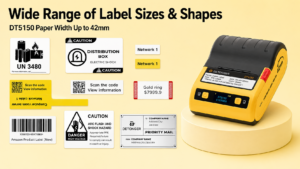
Detonger DT5150: The Compact 300 DPI PET Specialist
For IT infrastructure managers, electronics manufacturers, and biomedical technicians tagging server blades, circuit boards, and laboratory instruments, the Detonger DT5150 1.5-inch All-in-One Thermal Transfer Printer delivers benchtop and mobile precision.
- Why it excels for PET labels:Outputting at a sharp 300 DPI, the DT5150 renders microscopic 2D DataMatrix codes, regulatory compliance marks, and fine typography down to 3pt on narrow Matte Silver PET labels down to 15mm. Its sealed, all-in-one consumable cassette integrates the pure resin ribbon and synthetic PET label rolls into a single drop-in cartridge. Operators can swap media in seconds without manual ribbon threading, protecting the printhead from airborne dust and metal shavings. Integrated Bluetooth allows field technicians to print permanent rating plates directly at the equipment chassis.
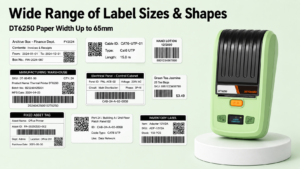
Detonger DT6250: Multi-Format Industrial PET Workhorse
For manufacturing plants, warehouse rack labeling, and heavy equipment nameplates requiring wide-format PET tags, the Detonger DT6250 2.5-inch Thermal Transfer Printer provides expanded capacity.
- Why it excels for PET labels:Supporting media widths up to 61mm (2.5 inches) at 300 DPI, the DT6250 provides ample printable area for complex, multi-field industrial rating plates featuring corporate branding, electrical schematics, serial numbers, and high-density barcodes. Its split-type consumable bay separates the ribbon supply from the label roll, substantially reducing per-label consumable costs during high-volume enterprise asset intake.
Automating PET Label Production with WePrint Software
A dedicated waterproof label printer requires versatile design and database software to eliminate transcription errors. Detonger hardware integrates natively with the WePrint application across iOS, Android, and Windows PC.
WePrint simplifies industrial PET labeling workflows through purpose-built features:
- Direct Excel & CSV Database Synchronization:Plant engineers can export asset registers, part numbers, and serial lists from ERP platforms (such as SAP, Siemens MES, or Jira). WePrint automatically maps database columns to custom PET label templates, generating hundreds of unique, serialized rating plates in minutes without manual data entry.
- Compliance Symbol & Icon Libraries:The software includes pre-loaded vector libraries of international regulatory logos (CE, UL, RoHS, WEEE, FCC) and electrical hazard pictograms, enabling operators to construct certified equipment nameplates without third-party graphic design software.
- Dynamic 2D Barcode Engine:WePrint automatically generates compliant 1D barcodes (Code 128, GS1) and high-density 2D matrices (QR codes, DataMatrix) with verified quiet zones and customizable error correction levels.
Investing in a purpose-built waterproof label printer configured for PET substrates protects your physical property against identification failure, simplifies asset tracking audits, and ensures complete compliance across global supply chains. Explore Detonger’s specialized Barcode Label Printer for Warehouse, Inventory and Asset Tracking collection, or discover our high-durability Industrial Label Printer for Manufacturing, Warehouse and Durable Labels lineup to equip your facility with professional-grade marking solutions today.
Frequently Asked Questions (FAQs)
Q: Can I print on Matte Silver PET labels using a direct thermal label printer?
A: No. Direct thermal printers do not use ribbons; they rely on heat-sensitive chemical paper facestocks. Synthetic PET films do not have a heat-activated chemical coating. If you run a synthetic PET roll through a direct thermal printer, the printhead will apply heat to the bare plastic, transferring zero image and resulting in a completely blank label. Printing on PET strictly requires a thermal transfer printer equipped with a pure resin ribbon.
Q: Why do pure resin ribbons smudge or scratch off some PET labels?
A: Resin ribbon smearing on PET typically stems from two issues: mismatched ribbon chemistry or insufficient printhead temperature. Pure resin requires higher heat energy than wax to melt and cross-link properly. If the printer’s darkness (burn temperature) setting is too low or the print speed is set too high, the resin will only sit on the surface rather than fuse into the PET coating. Increasing the print darkness in your printer driver or WePrint software typically solves the problem.
Q: Are PET labels waterproof enough for outdoor machinery and marine equipment?
A: Yes. Synthetic PET (polyethylene terephthalate) is completely waterproof, dimensionally stable, and naturally resistant to saltwater, rain, and UV degradation. When printed with a high-grade pure resin ribbon on an industrial thermal transfer printer, the resulting label can survive outdoors for 5 to 10+ years without peeling, fading, or losing barcode legibility.