
A handheld label maker engineered for barcode and QR code generation is an indispensable mobile thermal printing tool designed for IT system administrators, telecom technicians, warehouse inventory auditors, and retail operations teams to create scannable, serialized tracking markers directly at the point of work. Unlike entry-level consumer labelers built solely for human-readable text on office drawers, an enterprise-grade mobile barcode printer must generate machine-readable optical patterns conforming to strict dimensional standards. The critical technical benchmarks for field barcode production include an ultra-sharp 300 DPI printhead to eliminate dot-matrix bridging in dense 2D DataMatrix and QR code cells, dual-mode imaging flexibility (thermal transfer for archival asset durability and direct thermal for rapid inventory turnover), ergonomic battery endurance, and seamless smartphone/tablet database synchronization via Bluetooth. Field technicians and operations directors must evaluate their scanning workflows: if your business experiences barcode misreads on warehouse shelving, scuffed tracking labels on enterprise IT racks, or manual data entry bottlenecks, deploying a professional handheld label maker is an essential operational upgrade to guarantee 100% first-pass scan reliability.
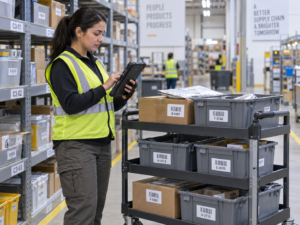
The Operational Risk of Degraded Barcodes in Mobile Workflows
In automated supply chains, smart data centers, and modern retail environments, an unreadable barcode immediately breaks digital traceability. When field personnel attempt to mark assets, cables, or inventory using low-resolution desktop printers or consumer-grade tape labelers, multiple operational hazards arise:
- Micro-Module Bridging and Scanning Rejection:Linear 1D barcodes (like Code 128) rely on precise bar-to-space width ratios, while 2D QR codes and DataMatrix symbols pack encoded URLs or serial numbers into microscopic square cells. When printed on low-resolution hardware, thermal heat blooming causes dark dots to expand into adjacent white cells and intrude into the required barcode quiet zones, triggering read failures on industrial scanners and mobile PDAs.
- Adhesive Delamination and Surface Friction:In dynamic field settings—such as network server rooms, machinery staging bays, and industrial pallet racks—labels undergo mechanical vibration, rough handling, and exposure to airborne grease. Substandard paper tags tear, smudge, and peel away, leaving expensive equipment unidentifiable.
- Heat Blackening from Ambient Equipment Temperatures:Economy direct thermal paper facestocks utilize heat-sensitive chemical coatings. When attached to heat-generating equipment such as IT blade servers, network switches, or power distribution units (PDUs), continuous heat exposure turns the entire label solid black, permanently destroying barcodes and serial numbers.
- The Inefficiency of Manual Data Entry:Using mechanical keypads to type long serial strings, MAC addresses, or product SKUs character by character invites transcription errors and wastes billable engineering hours.
Deploying a commercial handheld label maker resolves these physical and digital liabilities. By pairing mobile convenience with industrial thermal transfer or direct thermal technology, field technicians can import external spreadsheets, generate verified 1D/2D barcodes, and print durable synthetic markers on the spot.
Core Hardware Specifications for Handheld Barcode Labeling
Generating precision optical markers in mobile environments requires hardware built around rigorous mechanical and optical standards:
1. 300 DPI High-Resolution Printhead
While 203 DPI suffices for large 4×6 inch logistics cartons, field marking on narrow network patch cables, micro-vials, and compact IT hardware demands a 300 DPI (Dots Per Inch) printhead. The finer 0.084mm dot pitch renders crisp vertical walls on linear barcode stripes and sharp rectangular geometry on micro-QR modules down to 10mm x 10mm, ensuring instant recognition under camera imagers and laser scanners.
2. Thermal Transfer vs. Direct Thermal Versatility
Field operators require imaging technology matched to the environmental lifespan of the asset:
- Direct Thermal (DT):Ideal for short-cycle, indoor applications such as retail price adjustments, cross-dock carton sorting, and inventory bin moves. It uses heat-reactive paper without ink or ribbons, keeping consumable costs minimal.
- Thermal Transfer (TT):Mandatory for durable infrastructure such as IT assets, telecom cables, and chemical containers. A thermal transfer label printer uses a heated printhead to melt solid pure resin into durable synthetic films (such as Matte Silver PET or flexible polyolefin). This creates permanent markings immune to rubbing alcohol, motor oils, moisture, and multi-year indoor/outdoor aging.
3. Sealed Drop-In Consumable Cassettes
In tight telecom closets, active construction zones, or outdoor utility vaults, technicians cannot waste billable time threading loose ribbons around tiny internal gears. Modern handheld units utilize sealed, all-in-one consumable cartridges that integrate both the resin ribbon and synthetic media into a single drop-in cassette. This allows one-handed reloading in seconds while shielding the printhead from airborne copper shavings and job-site dust.
4. Bluetooth Connectivity and Local Field Operation
Field technicians require wireless agility. Low-latency Bluetooth Low Energy (BLE) connects the printer directly to iOS, Android, and Windows devices. Technicians can design labels using touchscreens, import Excel spreadsheets, and execute print jobs locally in basements, metal electrical vaults, or remote utility sites without requiring an active internet connection.
5. Ergonomics and Shift-Long Battery Endurance
A mobile tool must not cause user fatigue during multi-hour tagging sessions. The hardware should weigh under 400 grams and feature a high-capacity lithium-ion battery (1200 mAh to 2600 mAh) paired with universal USB Type-C charging. This ensures full-shift operation and allows technicians to recharge devices via power banks, laptops, or service van power outlets.
Technical Comparison: Handheld Barcode Labeling Technologies
| Operational Metric | Consumer Keypad Label Maker | Mobile Direct Thermal Handheld | Mobile Thermal Transfer Handheld |
| Printhead Resolution | Typically 180 DPI (blurry barcodes) | 203 DPI to 300 DPI (sharp 1D/2D) | 300 DPI Ultra-High Precision |
| Supported Barcode Types | Primitive 1D barcodes, no 2D codes | Full 1D & 2D (QR, DataMatrix, PDF417) | Full 1D & dense micro-2D matrices |
| Data Input Method | Slow manual typing on rubber buttons | Mobile touchscreen, Excel/CSV sync | Mobile touchscreen, Excel/CSV sync |
| Environmental Durability | Low to Moderate (laminated tape) | Low to Moderate (heat & UV sensitive) | Extreme (water, oil, solvent & heat resistant) |
| Tamper-Evident VOID Support | No | No | Full support (Silver PET & VOID security) |
| Cable & Wire Marking Support | Flat adhesive flags only | Flat paper adhesive tags | Flexible vinyl wraps & heat shrink tubing |
| Primary Target Application | Office folders, household organization | Retail pricing, temporary warehouse bins | IT racks, telecom patch cords, industrial assets |
Recommended Detonger Handheld Hardware
Detonger leverages 16 years of independent hardware research, global ISO9001/CE certifications, and 11 invention patents to deliver reliable mobile thermal printing hardware tailored for enterprise workflows.
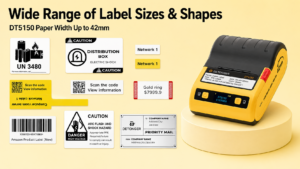
Detonger DT5150: The High-Precision Thermal Transfer Specialist
For IT infrastructure engineers, telecom installers, field electricians, and laboratory technicians requiring indestructible barcodes on narrow media, the Detonger DT5150 1.5-inch All-in-One Thermal Transfer Printer delivers benchtop precision in a handheld footprint.
- Why it excels for barcodes and QR codes:Featuring an ultra-sharp 300 DPI printhead, the DT5150 renders microscopic 2D DataMatrix codes, high-density QR codes, and linear barcodes on synthetic labels up to 36mm wide. Its sealed, all-in-one consumable cassette integrates pure resin ribbon and synthetic media (including Matte Silver PET, flexible cable wraps, and heat shrink tubing) into a single drop-in cartridge. Bluetooth connectivity allows technicians to batch-print serialized barcode tags directly at server cabinets or electrical panels.
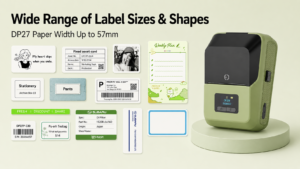
Detonger DP27 Series: The Agile Direct Thermal Champion
For retail store associates, supermarket floor staff, dry food packagers, and warehouse inventory clerks needing fast, ribbonless barcode printing, the Detonger DP27 Series (including the 300 DPI DP27P configuration) provides an inkless, lightweight solution.
- Why it excels for barcodes and QR codes:Weighing just 292g, this mobile 2-inch unit fits comfortably in an apron pocket or on a belt clip. Supporting direct thermal media up to 57mm wide, it is ideal for on-the-spot retail UPC tagging, warehouse shelf-edge barcoding, and clearance pricing. Operating without ink or ribbons, it keeps consumable overhead to an absolute minimum while delivering crisp, scan-ready barcodes on demand.
Automating Mobile Barcode Workflows with WePrint Software
A commercial handheld label maker requires intuitive software to eliminate transcription errors and streamline batch production. Detonger mobile printers integrate natively with the WePrint application across iOS, Android, and Windows PC.
WePrint transforms mobile barcode generation through specialized capabilities:
- Dynamic 1D & 2D Barcode Engine:Generates standard linear barcodes (Code 128, Code 39, EAN-13, UPC-A) and 2D matrices (QR Code, DataMatrix) with verified quiet zones and customizable error correction levels (ECC Level L, M, Q, H). Configuring Level H allows QR codes to remain 100% scannable even if up to 30% of the label surface is scratched or partially covered by dirt.
- Direct Excel & CSV Spreadsheet Binding:Technicians can import hardware manifests or inventory lists directly from their smartphone. WePrint automatically binds database columns to template barcode elements, batch-printing serialized barcode tags via Bluetooth in minutes without manual data entry.
- Automated Serialization Counters:For field technicians registering equipment during physical audits, WePrint provides automated counters with customizable step values, prefixes, suffixes, and zero-padding (e.g., CORP-IT-0001 through CORP-IT-9999).
- Open Developer SDKs:For organizations using proprietary enterprise apps, Detonger provides multi-platform SDKs, allowing corporate IT teams to embed mobile barcode printing commands directly into internal warehouse management or asset tracking software.
Selecting the right portable label printer and handheld label maker for small business comes down to matching the imaging mechanism to your scanning and durability demands. Explore Detonger’s specialized Barcode Label Printer for Warehouse, Inventory and Asset Tracking collection, or discover our high-durability Industrial Label Printer for Manufacturing, Warehouse and Durable Labels lineup to equip your field workforce with professional-grade barcode printing tools today.
Frequently Asked Questions (FAQs)
Q: Can a handheld label maker print both 1D linear barcodes and 2D QR codes?
A: Yes. Modern handheld label makers paired with software like Detonger’s WePrint app can generate both standard 1D linear barcodes (such as Code 128, Code 39, and UPC/EAN) and 2D matrices (such as QR codes and DataMatrix). The app automatically calculates standard bar-to-space ratios, quiet zones, and error-correction levels to guarantee immediate scanning with smartphones and industrial imagers.
Q: Why do small QR codes printed on traditional label makers fail to scan?
A: Traditional consumer label makers typically feature low print resolutions (180 to 203 DPI) and use coarse dot-matrix technology. When a 2D QR code is scaled down to fit on a narrow cable tag or micro-vial, the low resolution causes individual black module dots to bleed together and round off cell corners. A professional 300 DPI handheld label maker utilizes microscopic 0.084mm heating elements that keep square cells sharp, geometric, and distinct, ensuring instant scan recognition.
Q: Can I use a Bluetooth handheld label maker to batch-print barcodes from an Excel file?
A: Yes. Using Detonger’s WePrint app, you can upload an Excel (.xlsx) or CSV file directly to your smartphone or tablet. The software allows you to map a specific column (such as Asset Tag ID or Serial Number) to the barcode object on your label template. The handheld printer will then batch-print unique, serialized barcode labels row by row via Bluetooth without requiring manual character entry.