
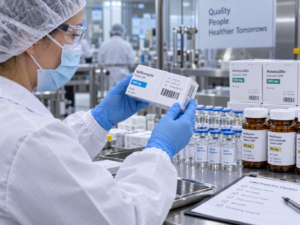
A lab tube label printer is a high-resolution, commercial-grade thermal device utilized by clinical laboratories, biobanks, and research facilities to generate scannable, chemical-resistant barcode markers for specimen containers. The most critical selection factors for implementing an automated tracking system include printhead resolution (300 DPI is strictly required to scan micro-2D barcodes on highly curved vials) and thermal transfer technology (to ensure data withstands extreme cryogenic freezing and harsh chemical solvents). Facilities must evaluate their specific LIMS (Laboratory Information Management System) and storage protocols: tagging 1.5ml Eppendorf tubes destined for -196°C liquid nitrogen necessitates a high-precision thermal transfer unit to prevent catastrophic data loss and sample misidentification during long-term archiving.
The Critical Need for Barcode Sample Tracking
In clinical diagnostics and medical research, the integrity of a biological sample is tied directly to its chain of custody. Relying on handwritten text or standard office labels introduces severe operational vulnerabilities. Marker ink dissolves instantly when a technician wipes a tube with isopropyl alcohol, and paper labels peel off when exposed to the moisture of a standard freezer.
Transitioning to an automated barcode tracking system eliminates human error. By utilizing a dedicated lab tube label printer, technicians can generate high-density 2D DataMatrix codes or standard 1D linear barcodes that encapsulate patient IDs, collection times, and batch numbers. These serialized barcodes allow optical scanners and automated diagnostic machines to instantly route and process the specimen, drastically accelerating throughput and ensuring strict HIPAA compliance by removing visible patient names from the vial exterior.
Hardware Specifications for Micro-Vial Barcoding
Procuring hardware for small sample identification requires an uncompromising focus on precision mechanics. B2B decision-makers must evaluate devices based on the following specific clinical criteria:
- 300 DPI High-Resolution Printheads:You cannot fit a standard linear barcode on a 1.5ml or 2ml microcentrifuge tube. Small sample labels require dense 2D codes compressed into spaces as small as 12mm x 25mm. A 300 DPI (Dots Per Inch) resolution guarantees that these microscopic black-and-white modules possess razor-sharp edge definition, preventing optical scanner failures.
- Thermal Transfer Print Technology:To survive autoclaves, centrifuges, and chemical baths (such as xylene or DMSO), your hardware must be a thermal transfer label printer. This mechanism melts a solid resin ribbon onto a synthetic label, forming an impenetrable chemical bond that withstands both harsh solvents and cryogenic freezing.
- Compact & Sterile Form Factor:Medical labeling should occur at the point of care or inside a biosafety cabinet to prevent cross-contamination. Portable, battery-powered hardware allows technicians to print barcode labels instantly at the workbench, eliminating the risk of mixing up unlabeled vials while walking to a centralized desktop printer.
Comparing Thermal Print Technologies in the Lab
Understanding how different printing methods react to laboratory environments is crucial for securing your sample data:
| Feature / Metric | Direct Thermal Printing | Thermal Transfer Printing (with Resin) |
| Print Mechanism | Heat-sensitive paper darkens when heated | Heated printhead melts a resin ribbon onto the label |
| Consumables Needed | Direct thermal labels only | Synthetic labels (PET/Cryo) AND a resin ribbon |
| Chemical Resistance | Zero (Erased instantly by alcohol, xylene) | Extreme (Impervious to harsh laboratory solvents) |
| Temperature Tolerance | Poor (Turns black in heat, fades in extreme cold) | Exceptional (Survives autoclaves and liquid nitrogen) |
| Micro-Barcode Sharpness | Moderate (Edges may bleed over time) | Excellent (Archival-quality crispness for 2D codes) |
| Ideal Lab Application | Visitor badges, temporary pharmacy bags | PCR vials, Eppendorf tubes, cryovials, slide labels |
For any biological sample requiring long-term archival storage or chemical processing, thermal transfer technology is the only scientifically sound choice.
Expert Hardware & Software Integration from Detonger
Selecting the appropriate unit involves matching the hardware’s capabilities to your daily sample volume. Detonger provides purpose-built, ISO9001-certified hardware engineered specifically for the healthcare and research sectors.
Detonger DT5150: The Micro-Vial Specialist
For phlebotomists and genetic researchers dealing exclusively with small vials, the Detonger DT5150 is the optimal agile solution. Outputting at 300 DPI, it ensures flawless barcode scanning on tiny curved surfaces. It utilizes a sealed, one-piece consumable cassette, allowing lab staff to swap out the resin ribbon and synthetic label roll in a single step without threading delicate ribbons, drastically reducing particulate contamination in cleanroom environments.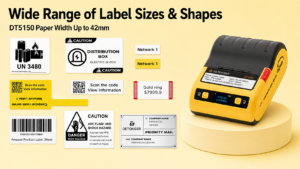
Automating Output with Weprint Software
Hardware precision must be paired with intelligent software. Detonger printers integrate natively with the proprietary Weprint ecosystem, accessible on iOS, Android, and PC. Lab managers can design standardized clinical templates with locked data fields, ensuring all required 2D barcodes are uniform. By importing testing manifests directly from Excel, technicians can automatically batch-print hundreds of serialized test tube labels in minutes. Furthermore, Detonger provides robust multi-platform SDKs, enabling hospital IT departments to embed automated barcode label generation directly into their existing Laboratory Information Management Systems (LIMS).
Equipping your clinical team with a specialized lab tube label printer prevents misidentified samples, secures sensitive patient data, and streamlines high-throughput testing. Upgrade your specimen tracking infrastructure by exploring our comprehensive Medical & Lab Label Printing Solutions today.