
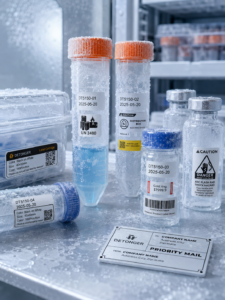
A waterproof label printer is an industrial-grade thermal device engineered to produce moisture, oil, and weather-resistant identification tags. It is designed for nursery owners, outdoor equipment manufacturers, food packagers, and warehouse managers who require extreme label durability. The most important selection factors include the underlying print technology (thermal transfer is essential for total submersion resistance), label material compatibility (such as synthetic PET or PVC), and print resolution (300 DPI for sharp, scannable barcodes). Users should initially judge their needs by assessing environmental exposure: if your products will face heavy rain, chemical solvents, or extended outdoor UV exposure, you must choose a thermal transfer device paired with resin ribbons to ensure your tracking barcodes never fade, smudge, or peel.
Why Harsh Environments Demand a Specialized Waterproof Label Printer
Standard office printers and consumer-grade sticker machines are fundamentally incompatible with outdoor or harsh indoor environments. Inkjet prints run and smear the moment they are exposed to condensation, while standard direct thermal paper turns black under UV light or disintegrates when wet.
Deploying a professional waterproof label printer completely eliminates these operational hazards. By utilizing specialized thermal technology to bond industrial pigments onto synthetic, non-porous substrates, these devices create a permanent marker. Whether you are tagging potted plants in a highly humid greenhouse, labeling frozen food packaging subject to heavy condensation, or tagging heavy machinery stored outdoors, this hardware ensures your branding and barcodes remain 100% legible, maintaining supply chain integrity and regulatory compliance.
Key Selection Criteria for Durable Labeling
To ensure your investment yields truly waterproof results, B2B decision-makers must evaluate hardware based on material compatibility, print mechanics, and software integration.
- Print Technology (The Core of Durability):True waterproofing requires a thermal transfer label printer. This technology uses a heated printhead to melt a solid resin ribbon directly into the surface of a synthetic label. Unlike direct thermal printing, which relies on chemical reactions in the paper, thermal transfer creates an impenetrable layer that repels water, oil, and alcohol.
- Substrate and Consumable Compatibility:Your chosen waterproof label printer must reliably feed and print on industrial-grade label rolls. Look for hardware that supports Matte Silver PET, PVC, and PP (polypropylene) synthetics. Furthermore, the printer must accommodate pure resin ribbons, which provide the highest level of moisture and scratch resistance.
- High Print Resolution (300 DPI):Waterproof labels are often subjected to mud, frost, or physical abrasion. Starting with a 300 DPI (Dots Per Inch) print resolution ensures that your QR codes and barcodes have extremely sharp edge definition, giving optical scanners the best possible chance of reading the code even if the label surface is dirty or partially obscured.
- Hardware Mobility and Software Ecosystem:In nurseries or lumber yards, forcing workers to return to a desk to print tags destroys efficiency. Portable devices with high-capacity batteries and seamless smartphone connectivity allow staff to print rugged labels directly at the point of application.
Direct Thermal vs. Thermal Transfer for Moisture Resistance
To make an informed purchasing decision, it is crucial to understand how different printing methods handle moisture.
| Feature / Metric | Direct Thermal (Top-Coated Paper) | Thermal Transfer (Resin Ribbon on PET) |
| Print Mechanism | Heat-sensitive paper darkens when heated | Heated printhead melts a resin ribbon onto the label |
| Water Resistance | Moderate (Withstands light splashes/condensation) | Extreme (Survives total prolonged submersion) |
| UV & Weathering | Low (Fades or turns black in direct sunlight) | Excellent (Remains legible outdoors for years) |
| Consumables Needed | 3-Proof Direct Thermal Labels only | Synthetic Labels AND thermal transfer ribbons |
| Ideal Application | Refrigerated logistics, temporary outdoor tagging | Plant nurseries, outdoor asset tracking, marine use |
If your labels will face prolonged exposure to the elements or full submersion, thermal transfer is the only scientifically sound choice.
Expert Recommendations: Top Detonger Models
Selecting the appropriate hardware requires matching the machine’s capabilities to your environmental conditions and required label dimensions. Detonger, an established manufacturer with 16 years of independent R&D experience, global ISO/CE/FCC certifications, and 11 invention patents, offers specialized hardware for durable labeling.
Detonger DT5250: The 2.5-Inch Durability Champion
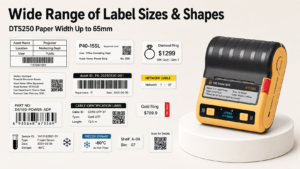
For nurseries, cosmetics brands, and fixed asset tracking, the Detonger DT5250 All-in-One Thermal Transfer Printer is the optimal portable solution.
- Why it fits waterproof labeling:This device is specifically engineered to print on highly durable synthetic materials like Silver PET and PVC. Outputting at a crisp 300 DPI, it ensures dense barcodes remain scannable even when exposed to heavy rain or wiping. Its innovative one-piece consumable cassette pre-loads the resin ribbon and synthetic label together, completely removing the hassle of threading delicate ribbons in harsh field environments.
Detonger DT5330: For Wide-Format Industrial Tagging
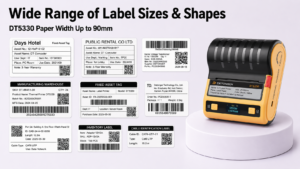
If your outdoor equipment or bulk chemical drums require larger warning labels, the Detonger DT5330 offers a wider 3.3-inch print capacity.
- Why it fits waterproof labeling:Accommodating wider synthetic labels, this printer guarantees that large QR codes, brand logos, and detailed outdoor maintenance logs are permanently fused to the substrate. Equipped with a high-capacity 2600 mAh battery, it empowers field engineers and warehouse staff to execute massive batch-printing jobs entirely wirelessly.
Empowering Production with Weprint Software
Rugged hardware must be paired with intelligent data processing. Detonger printers integrate seamlessly with our proprietary Weprint software ecosystem, available on mobile and PC.
Weprint allows operations managers to design custom, weather-proof labels incorporating dynamic dates, complex tables, and high-density 2D barcodes. The software supports direct Excel data imports, enabling you to automatically batch-print hundreds of serialized asset tags or plant identification markers in minutes. For enterprise clients, we provide robust SDK and API access, allowing developers to embed our printing protocols directly into your proprietary ERP or inventory systems.
Investing in a dedicated waterproof label printer is a strategic move that eliminates the massive costs associated with ruined labels, unreadable barcodes, and lost inventory. By prioritizing thermal transfer technology, selecting synthetic substrates, and utilizing smart software for bulk generation, your operations will withstand any environment. To future-proof your facility’s tracking capabilities, explore our complete Industrial Label Printer for Manufacturing, Warehouse and Durable Labels ecosystem today.
Frequently Asked Questions (FAQs)
Q: Do waterproof labels require a special type of ribbon?
A: Yes. If you are using a thermal transfer printer, you must use a pure resin ribbon to achieve true waterproofing. Wax ribbons will smudge, and wax-resin blends offer only moderate resistance. Pure resin melts into synthetic labels (like PET or PVC) at a high temperature, creating a bond that is impervious to water, oil, and chemicals.
Q: Can I make regular direct thermal paper labels waterproof with a spray coating?
A: While aftermarket acrylic sprays can provide a temporary moisture barrier, they are highly impractical for commercial use. The spray degrades the barcode’s contrast, slows down operational efficiency, and eventually peels. Utilizing dedicated synthetic thermal labels is the only reliable, scalable method for waterproof labeling.
Q: How long do thermal transfer waterproof labels last outdoors?
A: When a high-quality resin ribbon is paired with a durable synthetic substrate (like PET or polyester), the resulting label can easily withstand direct sunlight, rain, and extreme temperature fluctuations for 5 to 10 years without fading or losing adhesion.