
A bottle label printer engineered for commercial packaging is an indispensable thermal printing system designed for specialty beverage makers, cosmetic formulators, apothecary brands, and condiment producers to output durable, scannable product identifiers on demand. Selecting the optimal hardware requires aligning three decisive technical factors: print technology (thermal transfer is critical for oil, solvent, and condensation resistance), printhead resolution (300 DPI is required to render fine ingredient typography, batch numbers, and high-density barcodes without bleeding), and substrate compatibility (the ability to feed flexible synthetic films like PET, PP, or PVC that conform to tight radii without edge lifting). Brand operators should first evaluate their filling and distribution conditions: if containers undergo cold refrigeration, frequent handling, or direct contact with fatty oils, deploying a dedicated thermal transfer system paired with durable resin ribbons is mandatory to prevent label degradation and regulatory compliance failures.

The Operational Risk of Inadequate Bottle Labeling
In retail food, personal care, and craft beverage markets, the container label is both the primary aesthetic driver and a legal document carrying ingredient declarations, allergen statements, and dynamic lot numbers. Relying on basic office inkjet printers or desktop laser sheets introduces severe packaging liabilities. Water-based ink smears immediately when bottles are exposed to wet hands, ice buckets, or refrigerator condensation, while standard paper facestocks absorb moisture, bubble, and peel away from cylindrical glass or plastic surfaces.
Outsourcing packaging labels entirely to commercial print shops brings its own operational bottlenecks, primarily in the form of high Minimum Order Quantities (MOQs) and rigid turnaround cycles. When a formula tweak occurs, a seasonal variant is launched, or variable net weights and expiration dates must be added, pre-printed rolls often become obsolete scrap.
Integrating a commercial bottle label printer into your production facility decentralizes packaging workflows. By using controlled thermal transfer energy to fuse solid resin into specialized synthetic films, brand owners can produce 20 tags for a pilot batch or 2,000 tags for a full production run on demand. This flexibility cuts consumable waste, eliminates third-party lead times, and ensures mandatory FDA or cosmetic labeling elements remain sharp and indelible throughout the product’s shelf life.
Core Hardware Specifications for Bottle Product Labels
Producing packaging labels that conform to round surfaces and endure tough consumer environments requires hardware built around specific mechanical standards:
- 300 DPI High-Resolution Output:Bottle labels typically present tight typographic hierarchies. Brand names and logos share minimal surface area with 4pt or 5pt ingredient lists, certification icons, and 2D QR codes. A 203 DPI printhead produces visible stepping on micro-fonts and curved vector lines. A 300 DPI printhead maintains clean letterforms and sharp barcode boundaries, ensuring scannability at retail checkouts and automated logistics sorters.
- Thermal Transfer Print Architecture:For containers exposed to refrigeration, moisture, or greasy formulations, direct thermal paper is inadequate because it darkens under ambient heat and degrades when wet. A true thermal transfer label printer uses a heated printhead to melt a pure resin ribbon directly into synthetic films, creating an impermeable graphic layer immune to moisture, alcohol wipes, and essential oils.
- Conformable Synthetic Substrates:Cylindrical glass vials, plastic squeeze bottles, and cosmetic jars present continuous surface tension that causes stiff paper labels to experience “edge lift.” Commercial bottle printers must handle pliable synthetic media—such as flexible polyethylene (PE), polypropylene (PP), and Matte Silver PET—coated with aggressive acrylic adhesives that stay flat along curved surfaces.
- Accurate Media Calibration Sensors:Packaging labels often feature pre-printed full-color brand graphics, clear film windows (“no-label look”), or unique die-cut shapes. The printer requires sensitive transmissive (gap) and reflective (black mark) sensors to register the exact starting cut of every label, preventing text drift during extended batch runs.
Direct Thermal vs. Thermal Transfer for Bottle Packaging
| Evaluation Metric | Direct Thermal Printing (3-Proof Media) | Thermal Transfer Printing (Resin Ribbon) |
| Print Mechanism | Thermal elements darken chemical paper coating | Heated printhead melts solid resin onto synthetic film |
| Consumable Setup | Direct thermal label roll only (no ribbon) | Synthetic label rolls + resin ribbon |
| Condensation & Water Immersion | Moderate (resists brief splashes; softens in ice) | Extreme (impervious to prolonged ice buckets & moisture) |
| Oil & Solvent Resistance | Low (fades or turns black on oil exposure) | Exceptional (withstands plant oils, alcohol, and cleansers) |
| Edge-Lift Resistance on Curves | Poor to moderate (standard paper is relatively stiff) | High (flexible synthetic facestocks hug curved contours) |
| Recommended Application | Dry spice jars, short-life cold brew, bakery jars | Essential oils, cosmetic serums, craft beer, artisan spirits |
Recommended Detonger Models for Bottle Label Printing
Detonger leverages 16 years of independent research, global ISO9001/CE certifications, and 11 invention patents to deliver reliable thermal hardware suited for commercial packaging and product labeling.
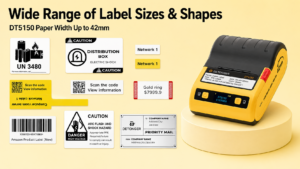
Detonger DT5150: Compact Precision for Dropper Bottles and Cosmetic Vials
For small-batch apothecary brands, essential oil makers, serum producers, and vape e-liquid packagers working with 10ml to 50ml bottles, the Detonger DT5150 1.5-inch All-in-One Thermal Transfer Printer offers an agile, high-precision footprint.
- Why it excels for bottle labels:Equipped with a 300 DPI printhead, the DT5150 outputs crisp micro-text, regulatory symbols, and compact QR codes on labels up to 36mm wide. Its sealed, all-in-one consumable cassette integrates the resin ribbon and synthetic label roll into a single cartridge, allowing operators to swap substrates in seconds with zero manual ribbon threading or cleanroom contamination.
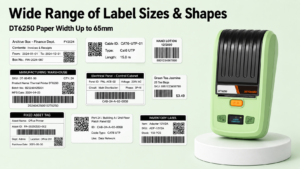
Detonger DT6250: Versatile Wide-Format Workhorse for Beverage and Sauce Bottles
For craft beverage producers, artisan hot sauce makers, kombucha brewers, and large-format cosmetic packaging (such as 250ml to 500ml shampoo or lotion bottles), the Detonger DT6250 delivers expanded media capability.
- Why it excels for bottle labels:Supporting label widths up to 61mm (2.5 inches) at 300 DPI, the DT6250 provides ample printable area for multi-column ingredient panels, nutrition fact tables, and primary brand typography. Its split-type consumable structure separates the ribbon supply from the label roll, substantially reducing per-label printing costs during high-volume production shifts.
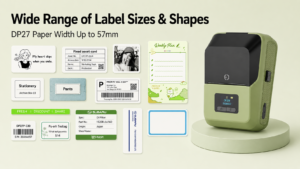
Detonger DP27 Series: Rapid Direct Thermal Solution for Dry Goods
For dry pantry packaging, short-cycle beverage containers, or temporary promotional bottle collars that do not face extreme humidity or oil spills, the Detonger DP27 Series (featuring the 300 DPI DP27P configuration) provides an inkless, direct thermal alternative.
- Why it excels for bottle labels:Weighing just 292g, this mobile 2-inch unit enables shop workers to print dynamic price tags, flavor markers, and batch codes directly at the filling or packing station via Bluetooth, keeping consumable overhead to a minimum.
Streamlining Packaging Batches with WePrint Software
A commercial bottle label printer requires versatile design and database software to eliminate transcription errors. Detonger hardware interfaces natively with the WePrint application across iOS, Android, and Windows PC.
WePrint simplifies bottle labeling workflows through purpose-built features:
- Dynamic Batch Code & Expiry Sequencing:Floor managers can lock static design elements (logos, net volume, contact info) while setting automated incrementation rules for lot numbers, production dates, and best-by dates.
- Excel & CSV Database Binding:When packing diverse product lines with variable scent profiles, ingredients, or barcodes, operators can import external product matrices directly into the app. WePrint populates the template fields automatically, letting staff batch-print serialized sets in minutes without manual data entry.
- Barcode & QR Code Generation:The software generates compliant 1D EAN/UPC retail codes as well as 2D QR codes linking consumers directly to lab test results (COAs), user instructions, or online brand stores.
Deploying a purpose-built bottle label printer protects your brand presentation, maintains regulatory compliance across distribution channels, and gives you total agility over your packaging runs. Explore Detonger’s specialized Portable Label Printer and Handheld Label Maker for Small Business collection, or discover our high-durability Industrial Label Printer for Manufacturing, Warehouse and Durable Labels lineup to upgrade your packaging infrastructure today.
Frequently Asked Questions (FAQs)
Q: Can a thermal bottle label printer print in full color for branded packaging?
A: Commercial thermal printers are monochrome devices that print using a single ribbon color (most commonly black, though single-color resin ribbons such as white, red, or blue are available). To achieve high-impact full-color packaging affordably, brands often purchase pre-printed label rolls with colored background artwork from an external converter, then use their in-house thermal printer to print variable black elements—such as barcodes, batch codes, net weights, and ingredient lists—directly into designated blank panels.
Q: Why do my bottle labels keep lifting at the edges after application?
A: Edge lift typically occurs because the label face material is too rigid for the bottle’s diameter, or the adhesive lacks sufficient initial tack. Cylindrical containers generate continuous peel stress on a label’s borders. To eliminate this issue, switch to a flexible synthetic facestock (such as thin PE or flexible PP) paired with an aggressive acrylic adhesive designed specifically for curved glass or plastic surfaces, and ensure the bottle surface is clean and dry prior to application.
Q: Can I use direct thermal labels on beer bottles or chilled wine bottles?
A: It is strongly discouraged. Chilled bottles generate heavy condensation when brought to room temperature, and ice buckets expose labels to prolonged water submersion. Standard direct thermal labels absorb water, tear easily, and may turn black or fade when handled. For chilled beverages, always select a thermal transfer printer loaded with pure resin ribbon and synthetic waterproof media.