
A heat shrink label printer is an essential industrial thermal printing system engineered for electrical contractors, panel builders, telecom specialists, and aerospace technicians to generate permanent wire and cable identification sleeves. Unlike adhesive-backed vinyl wire wraps or flag tags that can flag, unpeel, or collect grime in hot, vibrating electrical enclosures, heat shrink tubing slips directly over bare conductors or crimped lugs. When heated with an industrial heat gun, the sleeve contracts into an insulated, friction-locked identification marker. Selecting the best machine for wire identification requires balancing key technical specifications: thermal transfer technology (mandatory to prevent heat degradation during recovery), a 300 DPI high-resolution printhead (to maintain crisp, legible text across tiny wire gauges), robust feeding mechanics for flattened polyolefin tubing, and seamless software-driven serialization. Electrical project managers should evaluate their wiring schedules: if your installations face high-density terminal blocks, continuous motor vibration, or extreme operating temperatures, choosing a dedicated thermal transfer tube printer is the only way to ensure regulatory compliance and pass electrical inspections.

The Critical Risk of Substandard Wire Marking
In industrial control panels, switchgear, and commercial aircraft harnesses, wire identification errors create severe financial and safety liabilities. Electrical inspection authorities require every circuit conductor, phase, and terminal point to be clearly traceable against engineering schematics.
Relying on traditional marking methods creates continuous operational vulnerabilities:
- Adhesive Flag and Wrap Degradation:Standard adhesive vinyl wire wraps rely on pressure-sensitive adhesives. Inside hot control panels or automotive engine bays, sustained ambient heat (often exceeding 60°C to 80°C) and airborne oil mists soften the adhesive. Over time, labels unwrap, slide down vertical wire bundles, or collect conductive dust, creating inspection failures and short-circuit hazards.
- Direct Thermal Incompatibility:Direct thermal printing uses heat-sensitive chemical paper facestocks. When an electrician applies a heat gun (typically operating at 250°C to 350°C) to recover a tube around a wire, direct thermal material turns pitch black across the entire sleeve, instantly obliterating the circuit numbers.
- Handwritten Marker Inconsistency:Using industrial permanent markers directly on tubing is slow, lacks standardization, and rubs off when wiped with cleaning solvents, transformer oils, or hydraulic fluids.
Deploying a purpose-built heat shrink label printer resolves these issues entirely. Utilizing controlled thermal transfer energy, the machine melts a solid pure resin ribbon directly into the porous surface of cross-linked polyolefin tubing. When the heat gun contracts the sleeve around the conductor, the printed legends shrink proportionally without flaking, cracking, smearing, or fading. The resulting marker provides 600V-rated electrical insulation alongside an indelible alphanumeric identifier.
Core Hardware Specifications to Prioritize
Printing on flattened, non-adhesive polyolefin tubing presents mechanical demands that standard label makers cannot handle. When sourcing commercial hardware, electrical teams should evaluate these core parameters:
- Thermal Transfer Print Architecture (Pure Resin Ribbon Compatibility):Direct thermal technology is disqualified for wire marking. Your hardware must be a dedicated thermal transfer label printer capable of driving pure resin ribbons. Pure resin chemically fuses into polyolefin polymers, forming an indelible graphic layer impervious to heat guns, diesel fuels, lubricating oils, and aggressive brake-cleaner solvents.
- 300 DPI High-Resolution Output:Wire sleeves frequently condense multi-line data—terminal block IDs, circuit designations, wire gauges, and 2D DataMatrix codes—onto sleeve heights as narrow as 4mm to 9mm. A standard 203 DPI printhead produces coarse character stepping that becomes illegible once the tube deforms during shrinking. A 300 DPI printhead delivers crisp letterforms down to 3pt and sharp barcode quiet zones, ensuring instant scannability with optical imagers.
- High-Torque Drive Motors and Anti-Slip Feed Guides:Flattened continuous heat shrink rolls are thick, stiff, and heavy compared to standard paper. A reliable wire marking printer requires high-torque stepper motors, heavy-duty rubber platen rollers, and adjustable internal media baffles to keep the tubing centered without skewing, jamming, or slipping during extended batch runs.
- Field Portability and One-Piece Cassettes:Commercial electricians working on scaffolding, inside substations, or in utility trenches cannot waste billable hours manually threading fragile ribbons around delicate gears. Portable units with drop-in, sealed consumable cassettes—containing both the continuous polyolefin tube roll and the resin ribbon—allow staff to swap tubing sizes in seconds without exposing the print mechanism to copper filings or job-site dust.
Comparing Wire Identification Technologies
| Wire Marking Method | Temperature & Heat Resistance | Vibration & Mechanical Slippage | Chemical & Solvent Tolerance | Primary Application |
| Heat Shrink Tubing (Polyolefin) | Extreme (-55°C to +135°C; resists heat gun activation) | Zero slippage (contracts tightly around conductor) | Exceptional (impervious to oils, fuels, and alcohol) | Industrial control panels, aerospace, switchgear |
| Self-Laminating Vinyl Wraps | Moderate to High (clear tail protects printed area) | Moderate (adhesive can soften under cabinet heat) | High (clear laminate repels oil and moisture) | Cat6 network cables, coaxial lines, pre-terminated lines |
| P-Type / T-Type Flag Labels | Moderate (flag remains exposed to friction) | Low (can snag and tear in dense harness bundles) | Moderate (susceptible to heavy chemical washdowns) | Fiber optic jumpers, ultra-thin diagnostic wiring |
| Direct Thermal Paper Stickers | Fails completely (turns solid black above 50°C) | Poor (adhesive dries out; paper tears easily) | Zero (erased instantly by cleaning alcohol or oils) | Temporary indoor carton routing, general shipping |
Recommended Detonger Models for Wire Identification
Detonger leverages 16 years of independent hardware research, global ISO9001/CE certifications, and 11 invention patents to deliver rugged thermal printing hardware tailored for electrical infrastructure and harness manufacturing.
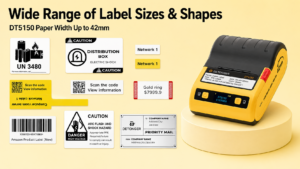
Detonger DT5150: The Portable Toolbelt Specialist for Panel Builders
For industrial electricians, telecom technicians, and control panel wiremen working on site, the Detonger DT5150 1.5-inch All-in-One Thermal Transfer Printer delivers compact, field-ready precision.
- Why it excels for wire identification:Equipped with a 300 DPI printhead, the DT5150 renders razor-sharp wire IDs, electrical schematics, and micro-barcodes on flattened polyolefin heat shrink tubing up to 36mm wide. Its all-in-one consumable cassette integrates the resin ribbon and tubing roll into a sealed cartridge, allowing technicians to swap between heat shrink sleeves and self-laminating cable wraps in seconds. Powered by long-life battery technology and Bluetooth connectivity, electricians can print serialized wire markers directly inside the control cabinet.
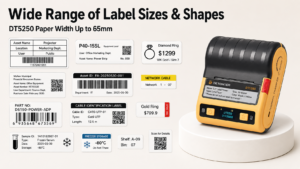
Detonger DT5250: The Industrial Harness Workhorse
For switchgear manufacturing facilities, automation machine builders, and power substation contractors handling heavier gauge conductors and high daily volume, the Detonger DT5250 provides expanded capacity.
- Why it excels for wire identification:Supporting media widths up to 63mm (2.5 inches) at 300 DPI, the DT5250 easily feeds heavy-gauge 3:1 and 2:1 shrink ratio tubing for thick multi-conductor industrial power cables and battery feeds. Its high-torque drive mechanism feeds thick continuous tubing without feeding slippage, while its robust internal architecture easily sustains 10-hour installation shifts.
Automating Wire Schedules with WePrint Software
The best heat shrink label printer requires intelligent design and database software to eliminate manual typing bottlenecks and miswiring errors. Detonger hardware integrates natively with the WePrint application across iOS, Android, and Windows PC.
WePrint streamlines electrical labeling workflows through dedicated features:
- Rule-Based Serialization:Technicians can configure dynamic sequential wire numbering rules (such as TB1-001 through TB1-500) with customized step values, leading zeros, and phase prefixes.
- Excel Wire Schedule Import:For enterprise panel projects, engineers can import complete wire run lists directly from Excel spreadsheets. WePrint automatically maps conductor source, destination, and wire ID columns into pre-calibrated heat shrink templates.
- Adjustable Sleeve Length & Cut Indicators:The software allows operators to calibrate individual sleeve lengths to fit terminal spacing perfectly, minimizing tube waste during high-volume assembly runs.
Investing in the best heat shrink label printer protects your electrical infrastructure against short circuits, simplifies troubleshooting, and ensures complete compliance with electrical inspection standards. Explore Detonger’s specialized Cable Label Printer for Wire, Electrical and Heat Shrink Labels collection, or discover our comprehensive Durable Wire & Cable Label Printing Solutions to equip your team with professional-grade marking tools today.
Frequently Asked Questions (FAQs)
Q: Can I print on heat shrink tubing with a standard direct thermal printer?
A: No. Direct thermal printers rely on heat-sensitive chemical paper that darkens when exposed to heat. The moment you apply an industrial heat gun to shrink the sleeve over a conductor, the heat activates the chemical coating across the entire tube, turning it solid black and destroying all wire numbers. Heat shrink tubing requires a thermal transfer printer equipped with a pure resin ribbon.
Q: What is the difference between a 2:1 and 3:1 shrink ratio for heat shrink tube printing?
A: The shrink ratio describes how much the tubing contracts relative to its original expanded diameter. A 2:1 shrink ratio recovers to 50% of its supplied diameter, which is ideal for standard uniform wires. A 3:1 shrink ratio contracts to one-third of its original size. This higher ratio provides greater versatility, allowing the sleeve to slide easily over large terminal connectors and lugs while still recovering tightly around a smaller conductor gauge.
Q: How do I ensure printed text does not crack or flake off after heating the tube?
A: To prevent cracking, you must use cross-linked polyolefin tubing engineered for thermal transfer printing, paired with a high-temperature pure resin ribbon. The thermal transfer process binds the resin into the porous surface of the tubing at a molecular level, allowing the printed legend to shrink proportionally with the tube during heat recovery without peeling, flaking, or smearing.