
A thermal transfer label printer is an industrial-grade thermal hardware system engineered for e-commerce brands, freight forwarders, 3PL fulfillment centers, and export manufacturers to produce high-durability, scannable shipping waybills. In high-velocity dispatch environments, the central question logistics directors face is whether the added hardware investment and dual-consumable workflow (ribbon plus label facestock) justify moving away from standard, inkless direct thermal (DT) machines. The decisive answer depends on your transit environment, package lifespan, and cargo destination: if your shipments encounter cross-border customs delays, high-temperature container holds, ocean spray, or rough chemical handling, deploying a thermal transfer printer is not just worth the investment—it is essential insurance against misrouted cargo, courier relabeling penalties, and failed first-pass scans.
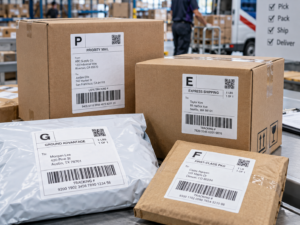
The True Cost of Inadequate Shipping Labels
In modern distribution, an unreadable barcode halts an entire supply chain. When shipping waybills are printed on economy materials that degrade in transit, the financial fallout extends far beyond the price of a label:
- Solar Heat and Blackening in Transit:Standard direct thermal labels use a heat-activated chemical coating. Inside delivery vans, cargo holds, or open asphalt cross-dock yards where temperatures frequently exceed 45°C to 50°C, direct thermal stock turns dark or solid black, completely erasing barcodes and delivery addresses.
- Moisture, Rain, and Friction Smears:Water-based shipping tags or cheap uncoated thermal papers break down under heavy precipitation, cold-chain condensation, and high-speed conveyor belt friction. Softened paper fibers bleed ink, ruining barcode quiet zones and forcing distribution hubs to manually divert packages for exception processing.
- Carrier Relabeling Fees and Chargebacks:Major logistics carriers (FedEx, UPS, DHL, Maersk) levy steep administrative surcharges for packages requiring manual re-barcoding or address lookups. In cross-border trade, an unreadable customs declaration or hazardous material tag can hold an entire ocean container at port for weeks.
Investing in a dedicated thermal transfer label printer bypasses these vulnerabilities entirely. By melting a pigmented polymer ribbon directly into the label facestock, the system creates an archival, abrasion-proof graphic layer that remains razor-sharp through rain, sunlight, friction, and chemical washdowns.
Technical Breakdown: Direct Thermal vs. Thermal Transfer for Shipping
To evaluate whether thermal transfer is worth the operational transition, decision-makers must weigh the technical tradeoffs against their practical fulfillment profiles:
| Operational Metric | Direct Thermal (DT) Printing | Thermal Transfer (TT) Printing |
| Printhead Imaging Process | Heat activates chemical dye layer in paper | Heated printhead melts solid ribbon onto substrate |
| Consumables Required | Direct thermal paper roll only | Label stock (paper/synthetic) + ink ribbon |
| Consumable Unit Cost | Lower upfront cost per label | Slightly higher (two consumables) |
| Sunlight & UV Stability | Poor (fades or turns black within weeks) | Archival quality (unaffected by sunlight and UV) |
| Heat & Temperature Limits | Fails above 50°C (rapidly darkens) | Withstands up to 100°C+ (depending on ribbon) |
| Moisture & Chemical Tolerance | Low to Moderate (3-proof paper sheds water) | Extreme (wax-resin/resin withstands water, oils, solvents) |
| Printhead Lifespan | 25 to 50 km (direct friction on chemical paper) | 50 to 100+ km (smooth ribbon backing protects elements) |
| Ideal Logistics Use Case | Domestic last-mile parcels (1–7 days transit) | International freight, ocean shipping, pallet racking |
When Is a Thermal Transfer Label Printer Worth the Investment?
A thermal transfer label printer is not universally required for every shipping department. Standard direct thermal units remain the industry standard for rapid domestic parcel dispatch. However, thermal transfer hardware becomes decisively cost-effective under specific commercial circumstances:
1. Cross-Border Freight and Ocean Maritime Shipping
Ocean cargo containers face extreme humidity, salt spray, and weeks of transit across international borders. Thermal transfer printing paired with wax-resin or pure resin ribbons ensures tracking numbers, customs barcodes, and commercial invoices remain fully intact from port of origin to final inland destination.
2. Hazardous Materials and Chemical Drum Transport (BS5609)
Shipping dangerous chemicals requires adherence to the GHS and the International Maritime Dangerous Goods (IMDG) code. Labels applied to chemical drums must pass BS5609 Section 2 and 3 certifications—meaning they must survive three months submerged in ocean saltwater. Thermal transfer printing on synthetic polypropylene (PP) or PET film is the only thermal technology legally and physically capable of satisfying this mandate.
3. Extended Outdoor Staging and Long-Term Pallet Storage
If crated machinery, building materials, or palletized goods are staged in open distribution yards under direct summer sunlight, standard thermal labels will turn black within a month. Thermal transfer labels retain their crisp, high-contrast barcode geometry for years without degradation.
4. Cold-Chain and High-Condensation Logistics
Frozen food distribution, vaccine cold-chains, and pharmaceutical logistics experience violent temperature fluctuations between blast freezers and loading docks. Thermal transfer systems paired with synthetic facestocks prevent label wrinkling, ink dissolution, and barcode bleed under condensation.
Recommended Detonger Hardware for Industrial Shipping
Detonger leverages 16 years of independent research, global ISO9001/CE certifications, and 11 invention patents to deliver reliable thermal hardware suited for logistics and supply chain marking.
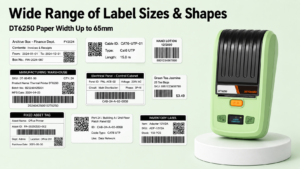
Detonger DT6250: Multi-Format Logistics and Export Workhorse
For freight forwarders, export hubs, and component manufacturing facilities requiring high-durability compliance labeling, the Detonger DT6250 2.5-inch Thermal Transfer Printer delivers industrial versatility.
- Why it excels for shipping:Supporting media widths up to 61mm (2.5 inches) at a sharp 300 DPI resolution, the DT6250 outputs crisp international tracking codes, GHS hazard diamonds, and component shipping tags. Its split-type consumable design separates the ribbon roll from the label roll, allowing dispatchers to load cost-effective bulk rolls of durable synthetic stock and wax-resin ribbons.
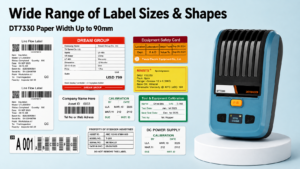
Detonger DT7330: Heavy-Duty Industrial Wide-Format Solution
For heavy machinery dispatch, chemical barrel shipping, and palletized cargo tracking, the Detonger DT7330 provides an expanded 3-inch wide-format capability.
- Why it excels for shipping:Built for demanding warehouse environments, the DT7330 accommodates wide synthetic labels and high-capacity ribbon cores. Its advanced media sensors ensure precise registration of serialized shipping barcodes and regulatory compliance text, maintaining reliable print quality across extended production shifts.
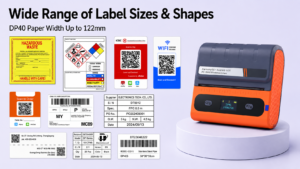
Detonger DP40 Series: The Direct Thermal Domestic Alternative
For standard domestic e-commerce operations prioritizing high-speed parcel delivery over extreme chemical resistance, the Detonger DP40 Series provides an inkless alternative.
- Why it excels for shipping:This 4-inch direct thermal printer handles standard 4×6 courier waybills. Powered by dual 2600 mAh batteries, warehouse personnel can print waterproof “three-proof” shipping labels directly on forklifts or at loading bays via Bluetooth.
Automating Logistics Workflows with WePrint Software
Deploying a thermal transfer label printer requires intelligent software to eliminate manual data entry errors. Detonger hardware integrates natively with the WePrint application across iOS, Android, and Windows PC.
WePrint simplifies dispatch operations through targeted capabilities:
- Direct Database & Spreadsheet Binding:Logistics teams can import shipping manifests from ERP, WMS, or e-commerce platforms (such as Shopify, Amazon, or WooCommerce) via Excel (.xlsx) or CSV files. WePrint automatically maps tracking numbers, postal routing codes, and addresses to standard 4×6 inch or custom freight templates.
- Dynamic Barcode Engine:The software automatically generates compliant 1D symbologies (such as Code 128, GS1-128) and 2D matrices (PDF417, QR Code, DataMatrix) with verified quiet zones, ensuring instantaneous reads under automated sorter scanners.
- High-Speed Batch Wireless Output:Using Bluetooth or Wi-Fi, warehouse teams can batch-print hundreds of durable shipping tags right at the staging lane or loading dock.
Selecting a thermal transfer label printer represents an investment in supply chain reliability. If your packages remain indoors and arrive within days, direct thermal hardware remains the more economical route; but if your business ships cross-border, transports hazardous cargo, or stages goods in outdoor holding yards, thermal transfer printing pays for itself by preventing a single delayed container or chargeback dispute. Explore Detonger’s specialized Shipping Label Printer for E-commerce, Warehouse and Logistics collection, or discover our high-durability Industrial Label Printer for Manufacturing, Warehouse and Durable Labels lineup to upgrade your shipping infrastructure today.
Frequently Asked Questions (FAQs)
Q: Can a thermal transfer printer also print regular direct thermal labels?
A: Yes. Most commercial thermal transfer printers can operate in direct thermal mode. If you load chemically treated direct thermal paper rolls and remove the ribbon, the printhead will apply heat directly to the paper facestock. However, to print on standard plain paper, polyester, or vinyl tags, you must load an appropriate thermal transfer ribbon.
Q: What type of ribbon should I use for shipping pallets stored outdoors?
A: For outdoor pallet labeling, you should use either a wax-resin hybrid ribbon (on coated paper or durable synthetic tags) or a pure resin ribbon (on synthetic PET/polypropylene labels). A pure resin ribbon provides maximum resistance to direct summer UV radiation, rainfall, and physical abrasion from forklift handling.
Q: Why do thermal transfer printheads last longer than direct thermal printheads?
A: In direct thermal printing, the heated printhead elements press directly against the abrasive, chemically treated surface of the moving paper, causing microscopic wear and chemical residue buildup. In thermal transfer printing, the smooth, lubricated polyester backing of the ink ribbon runs between the printhead and the label stock, protecting the heating elements from direct friction and extending printhead life.