
A plant label printer engineered for commercial greenhouses is an indispensable on-demand thermal printing system designed for wholesale growers, plug producers, hydroponic operators, and botanical propagation managers to produce durable, moisture-resistant cultivar markers and tracking tags. Commercial greenhouses present one of the most mechanically demanding environments for physical labeling: constant 85%+ relative humidity, automated overhead misting, liquid fertilizer runoff, pesticide misting, and continuous exposure to high-intensity supplemental grow lights quickly degrade standard paper markers. The decisive technical selection criteria for commercial greenhouse labeling include true thermal transfer technology (mandatory to fuse resin into synthetic media for multi-month moisture and UV survival), an ultra-sharp 300 DPI printhead (to render fine botanical typography, seedling batch codes, and micro-barcodes legibly), and versatile media handling capable of feeding thick plastic pot stakes, plug tray sticks, and self-locking loop wraps. Commercial greenhouse managers must evaluate their production workflows: if your facility loses valuable tracking data to washed-out markers, dropped pot stakes, or sun-bleached barcodes during propagation cycles, deploying an industrial-grade thermal transfer plant printer is mandatory to safeguard inventory traceability and streamline wholesale dispatch.
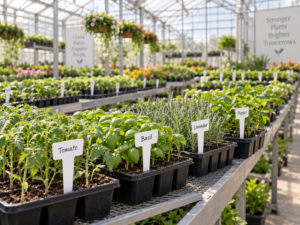
The Operational Risk of Substandard Greenhouse Labeling
In high-throughput wholesale and research greenhouses, every seedling flat, propagation bench, and potted cultivar represents a documented biological investment. When automated transplanting machinery or retail distribution networks rely on legible plant tags, low-durability marking methods introduce critical operational bottlenecks:
- Pulp Delamination and Water-Washout:Standard paper tags and desktop laser/inkjet sheets absorb water instantly under overhead misting booms and high-humidity propagation chambers. Saturated cellulose fibers delaminate, causing tags to turn to mush, drop into potting substrates, and leave entire plug trays unidentified.
- Direct Thermal Heat and Grow-Light Blackening:Economy direct thermal paper relies on a heat-activated chemical coating. Under high-pressure sodium (HPS) lamps, intense horticultural LED arrays, and solar greenhouse heat exceeding 35°C, direct thermal facestocks turn dark grey or solid black within days, completely erasing cultivar names and serialized inventory codes.
- Chemical Degradation from Fertigation and Pesticides:Automated greenhouse irrigation regularly injects corrosive nutrient solutions (nitrogen, phosphorus, potassium salts) and antifungal/pesticide sprays. Inferior printing inks dissolve, bleed, or turn into illegible smears upon contact with standard chemical drenches.
- The Bottleneck of Manual Marker Handwriting:Assigning workers to handwrite botanical taxa, seeding dates, and lot numbers with permanent markers is slow, inconsistent, and highly error-prone. Alcohol-based marker ink degrades rapidly under persistent UV exposure and rubs off during daily leaf handling.
Deploying a commercial plant label printer directly in the potting shed or greenhouse office resolves these vulnerabilities. Utilizing controlled thermal transfer energy, the machine melts solid resin polymers into durable synthetic substrates (such as rigid styrene, vinyl, or heavy-gauge polypropylene). The resulting image forms a scratch-proof, waterproof bond that withstands daily overhead misting, chemical fertilizer spray, and prolonged UV exposure throughout multi-month growing cycles.
Core Hardware Specifications for Greenhouse Operations
Printing botanical tags that endure high humidity and intense lighting while feeding thick horticultural substrates requires hardware built to rigorous industrial standards:
1. Thermal Transfer vs. Direct Thermal Technology
Direct thermal printing is unsuited for humid greenhouse production zones because moisture, sunlight, and heat degrade the chemical paper. Your facility requires a dedicated thermal transfer label printer capable of driving durable wax-resin or pure resin ribbons. Pure resin chemically fuses into synthetic plastic stakes, creating an impermeable graphic layer impervious to overhead sprinkler booms, algal growth, liquid fertilizers, and UV degradation.
2. 300 DPI Ultra-High Resolution Output
Greenhouse tags frequently condense multi-line data—botanical Latin names, patent numbers, common variety names, potting dates, and 2D DataMatrix or QR tracking codes—into compact printable zones on narrow stakes. A 203 DPI printhead produces coarse dot-matrix stepping that causes micro-fonts to blur and small 2D codes to fail optical verification. A 300 DPI (Dots Per Inch) printhead delivers razor-sharp typography down to 3pt and crisp quiet zones, ensuring instant first-pass reads by automated packing-line scanners and handheld mobile terminals.
3. Pliable and Rigid Substrate Compatibility (Stakes, Wraps, and Pot Labels)
Commercial greenhouses utilize diverse physical marking formats:
- Rigid Plastic Pot Stakes & Plug Sticks (PVC/Styrene):Non-adhesive stakes pushed directly into soil flats or rockwool cubes must be thick enough to resist bending. The printer requires heavy-duty feed rollers and high-torque stepper motors to transport these rigid media without slipping.
- Self-Locking Loop-Lock Tags (Tree & Shrub Wraps):Flexible synthetic wraps that loop around branches and sapling stems without damaging delicate plant tissue.
- Waterproof Adhesive Pot Labels:Synthetic label rolls applied directly to plastic nursery containers and cell trays that remain stuck during sub-irrigation flooding.
4. Precision Optical Sensors for Die-Cut & Notched Stakes
Horticultural pot stakes and loop tags use physical notches, pinfeed holes, or reflective black marks rather than standard adhesive liner gaps. The printer must feature sensitive, adjustable transmissive and reflective optical sensors to register each tag’s top-of-form boundary precisely, preventing text and barcodes from drifting across perforations during high-volume batch runs.
Technical Comparison: Greenhouse Plant Marking Methods
| Operational Metric | Manual Felt Pen / Plastic Stake | Direct Thermal (3-Proof Paper) | Dedicated Thermal Transfer Plant Printer |
| Imaging Technology | Liquid solvent ink hand-applied | Heated printhead on chemical coating | Pure resin ribbon melted into synthetic plastic |
| Moisture & Misting Tolerance | Moderate (fades under daily water) | Low (softens and curls over time) | Extreme (completely impervious to overhead misting) |
| Fertilizer & Pesticide Resistance | Poor (washes off with chemical spray) | Poor (chemical contact causes fading/staining) | Exceptional (impervious to nutrient salts and fungicides) |
| UV & Grow-Light Stability | Poor (fades completely within 2–4 weeks) | Fails completely (turns pitch black in heat/UV) | Archival quality (remains sharp across multi-season cycles) |
| Traceability & Barcode Capability | None (cannot handwrite scannable 2D codes) | Moderate (barcodes degrade in weeks) | Superior (crisp 300 DPI 1D/2D machine-readable codes) |
| Daily Production Speed | Extremely slow (manual bottleneck) | Fast | High-throughput batch printing directly from ERP |
| Primary Production Application | Small-scale hobby propagation | Short-term indoor retail checkout price tags | Commercial plug trays, wholesale liners, potted shrubs |
Recommended Detonger Models for Commercial Greenhouses
Detonger leverages 16 years of independent research, global ISO9001/CE certifications, and 11 invention patents to deliver reliable thermal hardware suited for commercial horticulture and durable nursery tagging.
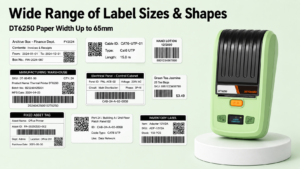
Detonger DT6250: Multi-Format Commercial Greenhouse Workhorse
For large commercial propagation greenhouses, wholesale nursery bays, and automated container potting lines, the Detonger DT6250 2.5-inch Thermal Transfer Printer provides industrial-grade versatility.
- Why it excels in greenhouses:Supporting media widths up to 61mm (2.5 inches) at a sharp 300 DPI resolution, the DT6250 easily feeds thick, non-adhesive plastic pot stakes, plug tray sticks, and wide loop-lock tags. Its split-type consumable bay separates the ribbon supply from the label roll, allowing greenhouse managers to load cost-effective bulk rolls of durable synthetic media and wax-resin ribbons. Its high-torque drive mechanism feeds rigid plastic stakes smoothly without slipping or jamming.
Detonger DT5150: The Compact Cleanroom & Propagation Bench Specialist
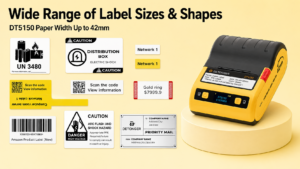
For tissue culture laboratories, research greenhouses, and boutique succulent propagation benches requiring compact, high-precision markers, the Detonger DT5150 1.5-inch All-in-One Thermal Transfer Printer delivers benchtop agility.
- Why it excels in greenhouses:Featuring an ultra-sharp 300 DPI printhead, the DT5150 outputs microscopic 2D DataMatrix codes, cultivar registration numbers, and fine botanical details on narrow synthetic tags down to 15mm. Its sealed, all-in-one consumable cassette integrates the resin ribbon and synthetic media into a single drop-in cartridge, allowing operators to swap tag types in seconds without manual ribbon threading or exposing the printhead to moist greenhouse dust. Built-in Bluetooth enables mobile teams to print tags directly at the propagation bench via smartphone or tablet.
Detonger DP27 Series: Agile Direct Thermal Retail Counter Option
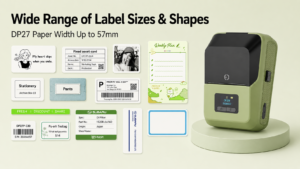
For garden center gift shops, dry seed displays, and short-cycle retail potting counters that do not face direct water misting, the Detonger DP27 Series (including the 300 DPI DP27P) provides an inkless, lightweight alternative.
- Why it excels in greenhouses:Weighing just 292g, this mobile 2-inch unit enables staff to print dynamic price tags, clearance stickers, and batch dates directly at the retail packaging bench via Bluetooth, keeping consumable overhead to an absolute minimum.
Automating Greenhouse Crop Tracking with WePrint Software
A commercial-grade plant label printer requires intelligent software to eliminate manual data entry errors and streamline crop tracking. Detonger hardware integrates natively with the WePrint application across iOS, Android, and Windows PC.
WePrint simplifies greenhouse workflows through specialized features:
- Crop Schedule & ERP Database Binding:Growers can export crop sowing schedules, seedling batch manifests, and cultivar databases directly from Excel (.xlsx) or CSV spreadsheets. WePrint automatically maps database columns to custom stake templates, batch-printing hundreds of serialized tags in minutes.
- Dynamic QR Code Generation:The software easily encodes web URLs directly into 2D QR codes, enabling retail buyers or wholesale inspectors to scan a pot stake with a smartphone to view growing certifications, plant patents, and care tutorials.
- Botanical Symbol & Icon Libraries:WePrint includes libraries of standardized horticultural pictograms (sun exposure, watering frequency, USDA hardiness zones, and toxicity warnings), allowing greenhouse staff to assemble professional, informative care stakes without graphic design experience.
Deploying a dedicated plant label printer protects your commercial crop investment, streamlines wholesale order fulfillment, and keeps vital botanical data intact through every irrigation cycle. Explore Detonger’s specialized Portable Label Printer and Handheld Label Maker for Small Business collection, or discover our high-durability Industrial Label Printer for Manufacturing, Warehouse and Durable Labels lineup to upgrade your greenhouse labeling infrastructure today.
Frequently Asked Questions (FAQs)
Q: Can a plant label printer print directly onto thick plastic pot stakes?
A: Yes. Commercial thermal transfer printers like the Detonger DT6250 feature adjustable media guides, heavy-duty platen rollers, and high-torque stepper motors capable of feeding and printing on thick, non-adhesive plastic pot stakes (such as rigid PVC or styrene). Standard consumer label makers lack the feed torque and clearance required to transport these thick agricultural substrates.
Q: Why do plant labels printed with standard direct thermal printers turn black in greenhouses?
A: Direct thermal paper utilizes a heat-sensitive chemical coating. When direct thermal labels are placed inside commercial greenhouses under intense summer sunlight, high ambient temperatures, or supplemental high-output grow lights (HPS/LED), the radiant heat and UV light activate the chemical layer across the entire tag, turning it solid black and destroying all text and barcodes. For greenhouse growing environments, always select a thermal transfer printer equipped with a resin-based ribbon and synthetic media.
Q: How does a plant label printer handle automated watering and fertilizer spray?
A: When printing with a thermal transfer printer loaded with a pure resin ribbon and synthetic plastic tags, the heated printhead fuses the solid resin polymers directly into the surface of the plastic. This creates an impermeable, chemical-resistant bond that will not smear, dissolve, or peel away when subjected to overhead misting booms, liquid fertilizer salts, or pesticide drenches.