
The best jar label printer for small business in 2026 is a dedicated on-demand thermal printing system engineered to help boutique skincare formulators, artisan candle makers, specialty honey packagers, and gourmet condiment producers output durable, scannable product packaging markers. Applying branded graphics, batch codes, and regulatory panels to cylindrical glass jars and plastic cosmetic containers presents unique physical and mechanical challenges: tight container curvatures create continuous peel stress, while oily creams, fragrant wax, hot water baths, and cold-chain refrigeration quickly destroy substandard paper tags. The decisive technical selection criteria for high-performance jar labeling include a 300 DPI high-resolution printhead to render micro-typography and dense barcodes cleanly, thermal transfer technology to resist hot wax, essential oils, and condensation, and pliable synthetic substrate compatibility to prevent edge-lifting. Small business owners must evaluate their production and retail workflows: if your goods contain organic body butters, bath scrubs, gourmet honey, or scented candle wax, deploying an industrial-grade thermal transfer jar printer loaded with pure resin ribbon is mandatory to keep packaging pristine on retail shelves and streamline batch production.

Why Packaging Labels on Jars Fail in Boutique Retail
For small-batch artisanal producers, packaging serves as the frontline brand ambassador. When jars sit on competitive retail shelves or travel through e-commerce shipping, cheap or improper labeling materials introduce severe commercial liabilities:
- Essential Oil and Butter Degradation:Scented candles, body butters, and culinary preserves naturally release vapors, essential oils, and condensation. Standard paper tags absorb grease, forming translucent dark stains, while water-based desktop inkjet inks bleed and smear immediately when handled with damp hands.
- Curved Surface Tension and Edge Lifting:Cylindrical mason jars, amber cosmetic pots, and hexagonal honey jars exert continuous outward spring-back tension on rigid paper labels. Standard paper stickers frequently bubble, flag, and peel away at the edges within weeks of application.
- Thermal Blackening from Heat Exposure:Economy direct thermal paper contains a heat-sensitive chemical coating. When applied to candle jars radiating warmth, containers subjected to hot-fill processes, or goods sitting in sunlit retail display windows, direct thermal facestocks turn pitch black, obliterating product names, ingredient panels, and barcodes.
- The MOQ Trap of Commercial Converters:Outsourcing all label production to third-party commercial print shops forces businesses into high Minimum Order Quantities (MOQs). When an artisan tweaks a fragrance formula, changes an ingredient ratio, or introduces a seasonal limited edition, thousands of pre-printed rolls become obsolete scrap.
Deploying a commercial jar label printer in-house resolves these challenges entirely. By utilizing controlled thermal transfer technology, the heated printhead melts solid resin polymers into pliable synthetic films. This produces permanent, scratch-proof packaging labels that remain pristine through oil spills, hot-water cleanses, and extensive consumer handling.
Core Hardware Specifications to Prioritize in 2026
Selecting the right hardware requires balancing mechanical durability with optical precision. Commercial buyers should evaluate potential machines against four primary benchmarks:
1. Thermal Transfer vs. Direct Thermal Technology
Direct thermal printing is cost-effective for short-term dry pantry tags, but it cannot withstand oils or heat. For premium jar products, your facility requires a dedicated thermal transfer label printer capable of driving pure resin or durable wax-resin ribbons. The resin chemically fuses into synthetic substrates, forming an archival-quality marker impervious to rubbing alcohol, essential oils, water baths, and warm candle wax.
2. Printhead Resolution: 203 DPI vs. 300 DPI
Jar labels typically condense multi-tiered hierarchies into compact spaces: brand typography shares minimal surface area with 4pt ingredient declarations, safety burn icons, and scannable 2D QR codes. A 203 DPI printhead produces visible pixelation and jagged edges on small typography. A 300 DPI printhead delivers crisp letterforms down to 3pt and sharp barcode quiet zones, ensuring instant first-pass reads at retail POS registers and automated logistics sorters.
3. Pliable Synthetic Substrates (Anti-Flagging)
Jar labeling demands media engineered to hug tight cylindrical curves. The printer must reliably feed flexible synthetic media:
- Polypropylene (BOPP) & Polyethylene (PE):Ultra-flexible films that wrap tightly around small glass and plastic containers without edge lifting.
- Matte Silver PET (Polyester):Provides a high-end metallic finish for luxury skincare cosmetics, apothecary balms, and specialty tinctures.
- High-Tack Acrylic Adhesives:Formulated specifically to anchor firmly to smooth glass, PET, and HDPE surfaces without bubbling.
4. Precision Optical Sensors for Round and Die-Cut Tags
Jar packaging frequently utilizes round stickers for container lids and custom die-cut shapes for jar fronts. The hardware requires sensitive, adjustable transmissive (gap) and reflective (black mark) optical sensors to calibrate non-standard label shapes accurately, preventing text drift during continuous batch runs.
Comprehensive Comparison: Jar Packaging Technologies
| Performance Metric | Direct Thermal Printing (3-Proof Paper) | Thermal Transfer Printing (Resin Ribbon + Synthetic Film) |
| Imaging Mechanism | Heated printhead activates chemical paper coating | Heated printhead melts solid resin onto synthetic film |
| Required Consumables | Direct thermal label roll only (inkless) | Synthetic label rolls + resin ribbon |
| Heat & Melt Resistance | Low (turns black near candle flame or hot wax) | Extreme (completely unaffected by warm wax and hot fills) |
| Oil & Solvent Resistance | Poor (essential oils and creams erase text) | Exceptional (impervious to essential oils, alcohols, and washes) |
| Edge-Lift on Curved Glass | Moderate (stiff paper tends to flag over time) | Low (ultra-flexible synthetic films conform securely) |
| Archival Shelf Life | 6 to 12 months (indoor ambient storage) | 5 to 15+ years (permanent commercial durability) |
| Recommended Application | Dry spice jars, bulk pantry goods, short-term batches | Scented candles, body butters, jam jars, skincare creams |
Top Detonger Models for Jar Labeling in 2026
Detonger leverages 16 years of independent research, global ISO9001/CE certifications, and 11 invention patents to deliver reliable thermal hardware tailored for boutique retail and product packaging.
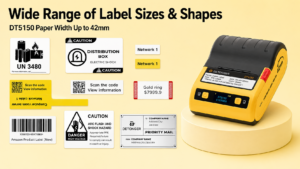
Detonger DT5150: The Compact Candle & Cosmetic Jar Specialist
For boutique candle makers, apothecary formulators, and balm crafters working with 1oz to 4oz jars, the Detonger DT5150 1.5-inch All-in-One Thermal Transfer Printer provides an agile, high-precision footprint.
- Why it excels for jars:Featuring a 300 DPI printhead, the DT5150 produces crisp micro-typography, safety burn icons, and compact QR codes on labels up to 36mm wide. Its sealed, all-in-one consumable cassette integrates the resin ribbon and synthetic label roll into a single cartridge, allowing operators to swap label stocks in seconds with zero manual ribbon threading or cleanroom contamination.
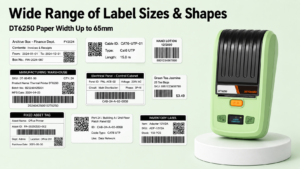
Detonger DT6250: The Wide-Format Gourmet Food & Body Butter Workhorse
For specialty jam producers, honey packagers, body scrub formulators, and 8oz to 16oz wide-mouth mason jars, the Detonger DT6250 delivers expanded media capability.
- Why it excels for jars:Supporting label widths up to 61mm (2.5 inches) at 300 DPI, the DT6250 provides ample printable area for multi-column ingredient panels, nutrition fact tables, and primary brand typography. Its split-type consumable structure separates the ribbon supply from the label roll, substantially reducing per-label printing costs during high-volume seasonal production shifts.
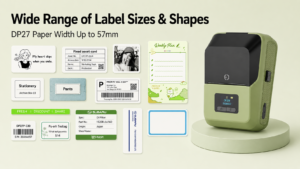
Detonger DP27 Series: Rapid Direct Thermal Solution for Dry Goods
For dry herb jars, bulk spice containers, and short-cycle retail pantry goods that do not face direct heat or oil spills, the Detonger DP27 Series (featuring the 300 DPI DP27P configuration) provides an inkless, direct thermal alternative.
- Why it excels for jars:Weighing just 292g, this mobile 2-inch unit enables shop workers to print dynamic price tags, flavor markers, and batch codes directly at the packing bench via Bluetooth, keeping consumable overhead to a minimum.
Automating Packaging Batches with WePrint Software
A commercial jar label printer requires versatile design and database software to eliminate transcription errors. Detonger hardware integrates natively with the WePrint application across iOS, Android, and Windows PC.
WePrint simplifies jar packaging workflows through purpose-built features:
- Automated Batch Coding & Expiration Sequencing:Floor managers can lock static design elements (logos, net volume, ingredient lists) while setting automated incrementation rules for lot numbers, production dates, and best-by dates.
- Excel & CSV Database Binding:When packaging diverse product lines with multiple scent profiles, flavors, or SKU numbers, operators can import external product matrices directly into the app. WePrint populates template fields automatically, letting staff batch-print complete sets in minutes without manual data entry.
- Barcode & QR Code Integration:The software generates compliant 1D retail barcodes (UPC/EAN) as well as 2D QR codes linking consumers directly to brand stories, recycling instructions, or online storefronts.
Deploying a purpose-built jar label printer protects your brand presentation, maintains regulatory compliance, and gives your business full flexibility over packaging runs. Explore Detonger’s specialized Portable Label Printer and Handheld Label Maker for Small Business collection, or discover our high-durability Industrial Label Printer for Manufacturing, Warehouse and Durable Labels lineup to upgrade your packaging infrastructure today.
Frequently Asked Questions (FAQs)
Q: Can a jar label printer handle round stickers for candle lids?
A: Yes. Advanced thermal printers like the Detonger DT series feature optical black-mark and gap sensors that can calibrate round, oval, or custom die-cut labels. When designing round lid labels in the WePrint app, you simply select the circular template geometry, and the printer will calibrate the exact top-of-form for every sticker.
Q: Why do my jar labels keep peeling off curved glass surfaces?
A: Edge lift on cylindrical jars occurs when the label substrate is too stiff to overcome the curvature tension of the glass, or when the adhesive lacks initial tack. To fix this, use flexible synthetic materials (such as thin PP, PE, or flexible PET) instead of rigid paper, and choose a high-tack acrylic adhesive formulated for curved glass or plastic. Always clean glass jars with an alcohol wipe to remove grease or glass mold-release agents before applying labels.
Q: Can I use direct thermal labels on scented candles or body scrubs?
A: It is strongly discouraged. Scented candles radiate heat when burning, which can turn direct thermal paper completely black and destroy the text. Body scrubs and skincare jars contain oils and butter creams that break down direct thermal coatings, causing markings to fade. For candles and oily products, always choose a thermal transfer printer equipped with a pure resin ribbon and synthetic film.