
The best thermal transfer label printer for shipping labels is an industrial-grade thermal hardware system engineered for cross-border e-commerce brands, 3PL fulfillment hubs, freight forwarders, and export manufacturers to produce resilient, machine-readable logistics waybills. While entry-level direct thermal (DT) devices are common for short-haul domestic parcels due to their ribbonless design, thermal transfer (TT) engineering is the benchmark for packages moving through high-heat shipping containers, open-air freight yards, transoceanic maritime routes, or extended warehouse storage. The decisive technical selection criteria for high-performance logistics printing include dual-mode media compatibility (handling durable wax-resin ribbons and non-porous synthetic facestocks), an optical resolution of 203 to 300 DPI (calibrated for high-speed linear GS1 barcodes and dense customs 2D matrices), heavy-duty drive mechanics built to process continuous 4×6 inch manifests, and seamless enterprise ERP/WMS database connectivity. Logistics operations directors must evaluate their fulfillment lifecycle: if your supply chain experiences carrier scan rejections, customs clearance holds from scratched waybills, or labels turning pitch-black under cargo bay heat, deploying a dedicated industrial thermal transfer shipping printer is a critical operational upgrade to safeguard parcel traceability and prevent delivery chargebacks.
Why Standard Shipping Labels Fail in Global Supply Chains
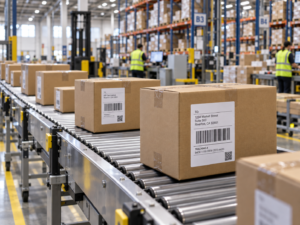
In modern automated distribution and international freight logistics, an unreadable barcode halts cargo movement immediately. When dispatch departments rely on budget-grade paper rolls or generic office printers, the downstream failure modes create severe financial overhead:
- Solar Radiation and Cargo Hold Heat:Standard direct thermal labels rely on a chemical coating of heat-reactive leuco dyes. When ocean containers cross the equator, delivery vans sit in summer traffic, or pallets stage on black asphalt docks—where ambient temperatures frequently surpass 50°C (122°F)—direct thermal waybills darken or turn entirely black, permanently obliterating barcodes, tracking numbers, and recipient addresses.
- Moisture, Precipitation, and Condensation Washout:Cross-docking in open rain, moving through cold-chain refrigerated distribution, or encountering maritime salt spray degrades ordinary cellulose paper. Standard papers absorb moisture, bubble, and tear away, while water-soluble inkjet inks run and smear, blinding automated optical sorter cameras.
- Mechanical Friction and Conveyor Belt Abrasion:Parcels moving through high-speed sorting centers face severe frictional contact with chute walls, transfer belts, and neighboring cartons. Weak print impressions scuff away, eroding the critical quiet zones around linear Code 128 barcodes and causing sorting diverters to miss scans.
- Carrier Relabeling Fees and Chargebacks:Major logistics networks (FedEx, UPS, DHL, Maersk) levy steep administrative surcharges for manual barcode reentry or carrier relabeling. In cross-border commerce, an illegible customs declaration or blurred Harmonized System (HS) barcode can result in weeks of port detention or cargo forfeiture.
A dedicated thermal transfer label printer eliminates these physical liabilities. By using controlled thermal printhead elements to melt solid wax-resin or pure resin formulations into durable coated papers or synthetic films (such as polypropylene or PET), the printer creates an archival-grade, scratch-proof graphic layer. The resulting shipping label remains razor-sharp through heavy rain, grease, intense solar exposure, and rough physical handling.
Core Hardware Specifications to Evaluate Before Purchasing
Selecting the best thermal transfer hardware for high-volume shipping demands careful evaluation of mechanical endurance, optical precision, and media capacity. Industrial buyers should evaluate candidates against four primary benchmarks:
1. Thermal Transfer vs. Direct Thermal Versatility
While direct thermal suffices for temporary domestic deliveries (1–5 days transit in climate-controlled vans), cross-border freight, hazmat transport, and multi-year pallet storage require a thermal transfer label printer. The ideal logistics printer should offer hybrid capability: operating in thermal transfer mode with ribbons for durable international manifests, while also supporting direct thermal mode with inkless paper for routine short-haul parcels when rapid turnover is needed.
2. Printhead Resolution: 203 DPI vs. 300 DPI
- 203 DPI (8 dots/mm):The global standard for large-format 4×6 inch (100x150mm) logistics waybills. It delivers high feed speeds (up to 150–200 mm/s) and perfectly legible linear barcodes (Code 128, Code 39) on standard cartons.
- 300 DPI (11.8 dots/mm):Essential for international export manifests and multi-field component shipping labels. International waybills often combine micro-typography (down to 4pt for customs declarations), multiple 2D matrices (PDF417, DataMatrix, QR codes), and hazardous GHS pictograms into compact label footprints. A 300 DPI printhead prevents module bleeding, ensuring instant camera reads.
3. Media Width and Feed Path Stability
Standard logistics waybills follow the 4×6 inch format, but intermediate pallets, chemical pails, and carton side-markers utilize diverse widths ranging from 2.5 inches to 4.5 inches. The printer must feature heavy-duty, adjustable internal media guides, high-durometer vulcanized rubber platen rollers, and high-torque stepper motors to transport heavy synthetic rolls without diagonal tracking, slipping, or feeding skew during extended production runs.
4. Split-Type Consumable Architecture
For enterprise logistics, running costs are as critical as hardware reliability. Machines utilizing separate, high-capacity label rolls and large-core ribbon spindles reduce consumable reload frequency. A split-type architecture enables managers to pair cost-effective bulk label stock with specialized wax-resin ribbons, substantially lowering the total cost of ownership (TCO) compared to proprietary all-in-one cartridge designs.
Technical Comparison: Shipping Label Technologies
| Performance Metric | Direct Thermal (Standard Paper) | Direct Thermal (3-Proof Paper) | Thermal Transfer (Wax-Resin + Coated Stock) | Thermal Transfer (Pure Resin + Synthetic PET/PP) |
| Imaging Mechanism | Heated printhead on chemical coating | Heated printhead on protective topcoat | Printhead melts wax-resin into coated facestock | Printhead melts solid resin into synthetic plastic |
| Consumable Requirement | Label roll only (inkless) | Top-coated label roll only | Label roll + wax-resin ribbon | Synthetic roll + pure resin ribbon |
| High Temperature Limit | Darkens above 45°C (113°F) | Begins darkening at ~55°C (131°F) | Stable up to 80°C–100°C (176°F–212°F) | Archival (resists 120°C+ continuous heat) |
| Rain & Moisture Tolerance | Fails (softens and tears) | Moderate (sheds light water splashes) | Superior (impervious to rain and humidity) | Maximum (submersible in salt water, BS5609 certified) |
| Abrasion & Friction Resistance | Poor (scuffs turn gray/black) | Moderate (resists light scuffs) | High (withstands conveyor sorting chutes) | Extreme (completely scratch-proof) |
| Expected Legible Lifespan | 1 to 3 months | 6 to 12 months | 2 to 5 years | 5 to 15+ years |
| Recommended Logistics Application | Local same-day courier parcels | Domestic ground parcels (1–5 days) | Cross-border air freight, LTL pallet shipping | Ocean maritime freight, chemical drum shipping |
Recommended Detonger Models for Shipping and Logistics
Detonger leverages 16 years of independent research, global ISO9001/CE certifications, and 11 invention patents to deliver robust thermal printing hardware engineered for freight forwarding, manufacturing dispatch, and e-commerce distribution.
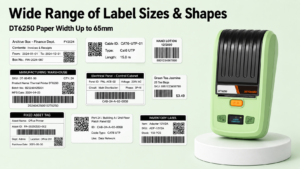
Detonger DT6250: Multi-Format Logistics and Export Workhorse
For freight forwarders, export hubs, intermediate warehouse docks, and manufacturing plants requiring wide-format compliance and component shipping markers, the Detonger DT6250 2.5-inch Thermal Transfer Printer provides industrial versatility.
- Why it excels for shipping:Supporting media widths up to 61mm (2.5 inches) at a sharp 300 DPI resolution, the DT6250 outputs crisp international tracking codes, GHS hazard diamonds, and parcel route identifiers. Its split-type consumable architecture separates the ribbon roll from the label roll, allowing dispatchers to load cost-effective bulk rolls of durable synthetic stock and wax-resin ribbons. Its precision media feed mechanism prevents paper drift, maintaining consistent registration across thousands of consecutive prints.
Detonger DT7330: Heavy-Duty Industrial Wide-Format Solution
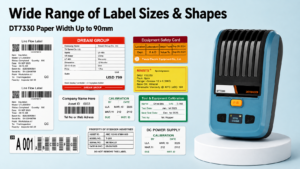
For heavy industrial machinery dispatch, chemical barrel shipping, and palletized cargo tracking requiring expanded label widths, the Detonger DT7330 delivers dependable wide-format throughput.
- Why it excels for shipping:Built for demanding warehouse and dispatch staging environments, the DT7330 accommodates wide synthetic labels and large-capacity ribbon cores. Its advanced media sensors ensure precise registration of serialized shipping barcodes and regulatory customs text, maintaining consistent, high-contrast print quality across extended production shifts.
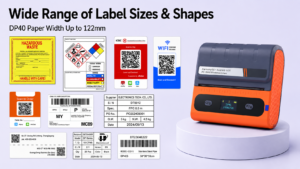
Detonger DP40 Series: The High-Speed Direct Thermal Alternative
For standard domestic e-commerce operations, local fulfillment centers, and high-velocity courier sorting where inkless 4×6 inch waybills are the primary standard, the Detonger DP40 Series offers a portable, high-throughput solution.
- Why it excels for shipping:Accommodating media widths up to 114mm (with a 104mm effective print width), the DP40 batch-prints standard 4×6 courier waybills at high speeds. Equipped with dual 2600 mAh battery packs and Bluetooth connectivity, warehouse operators can batch-print shipping tags and pallet manifests directly on forklifts or at loading bays.
Automating Logistics Batches with WePrint Software
The best thermal transfer label printer requires intelligent software to eliminate manual data entry errors and prevent shipment delays. Detonger hardware integrates natively with the WePrint application across iOS, Android, and Windows PC.
WePrint optimizes dispatch operations through specialized enterprise capabilities:
- ERP & WMS Database Integration:Logistics managers can export daily shipping orders directly from platforms like Shopify, Amazon, WooCommerce, SAP, or warehouse management systems into Excel (.xlsx) or CSV manifests. WePrint automatically binds database columns to custom shipping templates, populating tracking numbers, routing codes, and delivery addresses in seconds.
- Dynamic Barcode & 2D Symbology Engine:Generates compliant 1D logistics barcodes (Code 128, GS1-128) and dense 2D matrices (PDF417, QR Code, DataMatrix) with verified quiet zones, ensuring immediate first-pass recognition under automated sorter scanners and handheld mobile terminals.
- High-Speed Batch Wireless Output:Using Bluetooth or Wi-Fi, warehouse teams can stream and batch-print hundreds of durable shipping tags right at staging lanes or cross-dock bays without returning to a central office computer.
- Multi-Platform Developer SDKs:For fully automated sorting and packing lines, Detonger provides multi-platform SDKs that allow corporate IT engineering teams to trigger automated thermal transfer print jobs directly from custom warehouse management applications.
Investing in the best thermal transfer label printer for shipping labels safeguards your supply chain against scanning dropouts, prevents carrier chargebacks, and guarantees uninterrupted parcel traceability across global logistics routes. Explore Detonger’s specialized Shipping Label Printer for E-commerce, Warehouse and Logistics collection, equip your dispatch teams with our versatile Thermal Label Printer options, or discover our high-durability Industrial Label Printer for Manufacturing, Warehouse and Durable Labels lineup to upgrade your shipping infrastructure today.
Frequently Asked Questions (FAQs)
Q: Why is thermal transfer better than direct thermal for international shipping labels?
A: Direct thermal labels use a heat-sensitive chemical paper coating that darkens and fades when exposed to high temperatures, sunlight, and friction. In international transit, packages sit in hot cargo holds, cross various climate zones, and face extended customs delays. Thermal transfer technology melts wax-resin or resin ribbons directly into the label facestock, creating an archival-grade mark that remains sharp and scannable through rain, sunlight, high heat, and heavy friction.
Q: Can a thermal transfer shipping printer also print standard direct thermal paper?
A: Yes. Most commercial thermal transfer printers support dual printing modes. If you load chemically treated direct thermal paper and remove the ribbon, the printhead will apply heat directly to the paper to create the image. This dual-mode functionality allows logistics teams to use low-cost direct thermal paper for fast domestic deliveries while switching to thermal transfer with ribbons for export shipments.
Q: What type of thermal ribbon is best for corrugated shipping cartons?
A: For standard corrugated cardboard cartons moving through domestic or regional freight, a wax-resin hybrid ribbon paired with premium coated paper labels provides the best balance of cost and performance. It delivers significantly higher scratch, moisture, and heat resistance than standard wax ribbons while remaining more economical than pure resin ribbons. If shipping on synthetic plastic films or under BS5609 maritime regulations, a pure resin ribbon is required.