
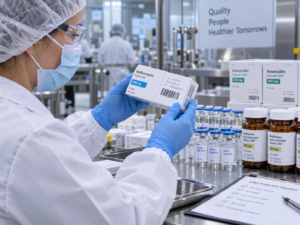
A lab tube label printer configured for precision dimensioning is an indispensable specimen tracking tool engineered for clinical diagnostics cores, biobanks, genomic research facilities, and pharmaceutical testing laboratories. While selecting imaging mechanics (thermal transfer vs. direct thermal) is vital, choosing the optimal physical label dimensions dictates whether a specimen successfully navigates automated centrifuges, robotic liquid handlers, and optical scanners. Unlike flat microplates or square culture flasks, laboratory tubes—ranging from 0.2ml PCR micro-tubes to 1.5ml/2.0ml microcentrifuge tubes, 2.0ml cryogenic vials, and 15ml/50ml conical falcon tubes—present tight cylindrical radii and strict dimensional thresholds. If a label is even 1mm too long, it overlaps and obscures sample graduation markings or binds inside centrifuge rotors; if it is too short or wide, the outward curvature tension causes edge-flagging and scanner jamming. Laboratory operations managers must pair their tube formats with the exact label geometries, 300 DPI printhead resolution, and cryo-resilient synthetic materials required to guarantee sample integrity throughout deep-freeze storage down to -196°C.
Why Tube Geometry and Label Dimensions Dictate Lab Success
In high-throughput pathology and diagnostic workflows, incorrect label dimensions represent a severe physical failure point. Specimen containers follow precise ergonomic and mechanical specifications to fit standard automation racks, microcentrifuge rotors, and robotic cappers.
Applying mis-sized or poorly cut labels triggers immediate failure modes:
- Rotor Binding and High-Speed Centrifuge Imbalance:Microcentrifuge tubes (1.5ml and 2.0ml) spin at forces exceeding 15,000 to 20,000 x g. If a tube label overlaps excessively or flags outward at the edge, it creates windage drag, rubs against the rotor well, or jams the tube inside fixed-angle cavities, causing sample breakage and catastrophic centrifuge damage.
- Graduation Line and Liquid Level Obscuration:Technicians and automated optical liquid sensors must clearly inspect meniscus levels, sample turbidity, and volumetric graduations on the tube wall. Labels that are excessively wide encircle the entire tube body, blinding both manual observation and automated liquid level detection.
- Robotic Liquid Handler & Capper Jamming:High-density automated storage racks (such as 96-well ANSI/SLAS formats) feature fractions of a millimeter of clearance between tube sidewalls. An edge-flagging or thick, overlapping label catches on adjacent wells, causing robotic grippers to drop samples or jam sorting carousels.
- Cap-to-Body Mismatch:Cryovials stored in 81-place or 100-place freezer boxes are typically scanned from the top using flatbed 2D readers, while secondary tracking relies on side-wall barcodes. Choosing a side-only label leaves the tube unidentifiable while nested inside cold storage boxes.
Deploying a specialized lab tube label printer capable of feeding precise, die-cut synthetic profiles eliminates these physical hazards, ensuring labels adhere flush to micro-tubes without peeling, overlapping critical viewports, or failing automated reads.
The Definitive Tube-to-Label Size Matching Matrix
To ensure seamless integration across manual benchtop handling and automated storage, laboratory supervisors should calibrate their label stock against standardized container formats:
| Tube Type & Volume | Approximate Tube Dimensions | Best Label Size (Width x Height) | Optimal Label Configuration | Key Operational Considerations |
| 0.2 ml PCR Tubes / Strips | 5 mm – 6 mm Ø x 21 mm | 20 mm x 6 mm (or 5 mm round cap dot) | Wrap-around side strip or circular cap dot | Extremely tight radius; requires ultra-thin flexible film to avoid edge lift |
| 0.5 ml Microcentrifuge Tubes | 8 mm Ø x 30 mm | 24 mm x 10 mm to 25 mm x 9 mm | Rectangular body label | Leaves vertical graduation line visible; prevents interference with snap caps |
| 1.5 ml / 2.0 ml Centrifuge Tubes | 11 mm Ø x 40 mm – 42 mm | 33 mm x 13 mm to 38 mm x 15 mm | Body label + optional 9.5 mm round cap dot | Fits standard rotors without overlap; provides space for 2D DataMatrix + 2 lines of text |
| 1.8 ml / 2.0 ml Internal-Thread Cryovials | 12 mm Ø x 45 mm – 48 mm | 38 mm x 19 mm or Self-Laminating (38 mm x 45 mm) | Wrap-around self-laminating tail | Clear polyester tail wraps over printed text to guard against liquid nitrogen and frost |
| 5.0 ml Transport / Cryo Tubes | 16 mm Ø x 60 mm | 40 mm x 20 mm to 50 mm x 25 mm | Rectangular body tag | Accommodates multi-line patient demographics, accession barcodes, and study IDs |
| 15 ml Conical Falcon Tubes | 17 mm Ø x 120 mm | 50 mm x 25 mm to 60 mm x 30 mm | Rectangular vertical/horizontal | Leaves volume graduations visible from 1 ml to 15 ml |
| 50 ml Conical Falcon Tubes | 30 mm Ø x 115 mm | 60 mm x 30 mm to 75 mm x 38 mm | Large rectangular format | Supports full chemical hazard warnings, study IDs, and dual linear/2D barcodes |
Key Technical Specifications for Small-Format Lab Tube Printing
Dispensing and printing micro-sized labels requires dedicated hardware built around precise optical alignment and mechanical handling:
1. 300 DPI High-Resolution Optical Engine
When printing on small-format labels (such as 24mm x 10mm for 0.5ml tubes or 9.5mm circular cap dots), usable surface area is microscopic. Technicians must condense alphanumeric sample IDs, date stamps, and machine-readable 2D DataMatrix or QR codes into spaces as small as 4mm x 4mm. A standard 203 DPI printhead utilizes larger 0.125mm dots, causing micro-modules to bleed together. A 300 DPI (Dots Per Inch) printhead delivers fine 0.084mm dot pitch, preserving distinct rectangular cell boundaries and sharp quiet zones.
2. Pure Resin Thermal Transfer Architecture
Direct thermal labels must never be deployed on laboratory tubes. Ambient exposure to histological solvents (xylene, ethanol), autoclave steam (+121°C), and vapor-phase liquid nitrogen (-196°C) immediately dissolves or darkens direct thermal facestocks. Your facility requires a dedicated thermal transfer label printer driving pure resin ribbon. The solid resin melts directly into cryogenic synthetic films, forming an indelible bond immune to freeze-thaw abrasion and chemical immersion.
3. Pliable Cryogenic Substrates with High-Tack Adhesive
Curved surfaces exert continuous spring-back force against rigid labels. The printer must feed ultra-thin, highly flexible synthetic materials:
- Cryogenic Polypropylene (PP):Thin, pliable films engineered to flex around micro-diameters without lifting.
- Self-Laminating Polyester:Features a white printable zone coupled with a clear protective laminate tail that wraps over the printed text, providing a mechanical shield against frost, liquid nitrogen immersion, and centrifuge friction.
- Low-Temperature Acrylic Adhesives:Formulated to anchor permanently to low-surface-energy (LSE) virgin polypropylene tubes without embrittlement at -80°C or -196°C.
4. Precision Micro-Gap Optical Sensors
Micro-labels for 0.5ml to 2.0ml tubes feature narrow die-cut gaps (often 2mm or less). The printer requires sensitive, adjustable transmissive (gap) and reflective (black mark) optical sensors to calibrate top-of-form alignment precisely. This prevents text and 2D codes from drifting across die-cut margins during high-throughput batch runs.
Technical Comparison: Tube Label Formats
| Feature / Metric | Standard Rectangular Body Label | Self-Laminating Wrap-Around Label | Circular Cap Dot Label | Pre-Matched Body + Cap Combo Set |
| Primary Placement | Cylindrical tube side-wall | Tube side-wall with protective wrap | Flat top of snap cap or screw cap | Side-wall + cap simultaneously |
| Centrifuge Shear Resistance | High (if properly sized without overlap) | Maximum (laminate locks tail flush) | N/A (zero centrifugal windage) | High (complete physical coverage) |
| Freezer Box Top-View Scanning | None (requires removing tube from rack) | None (requires removing tube) | Excellent (scannable inside 96-well grid) | Excellent (dual-view identification) |
| Solvent & Alcohol Wipe Resistance | Exceptional (when using pure resin) | Absolute (chemical barrier shield) | Exceptional (pure resin on synthetic) | Maximum overall durability |
| Typical Target Application | 1.5ml microcentrifuge, 15ml falcons | Cryovials in liquid nitrogen dewars | 0.2ml PCR tubes, microplate storage | Biorepositories, master stock biobanks |
Recommended Detonger Models for Laboratory Tube Labeling
Detonger leverages 16 years of independent hardware research, global ISO9001/CE certifications, and 11 invention patents to deliver reliable thermal hardware tailored for life sciences and clinical pathology.
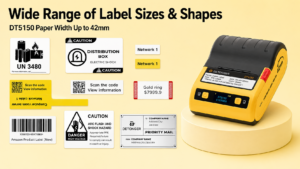
Detonger DT5150: The Micro-Vial & Cleanroom Bench Specialist
For genomics facilities, molecular biology suites, and cleanroom bio-repositories managing 0.2ml PCR tubes, 0.5ml/1.5ml microcentrifuge tubes, and 2.0ml cryovials, the Detonger DT5150 1.5-inch All-in-One Thermal Transfer Printer delivers benchtop precision in a compact footprint.
- Why it excels for lab tubes:Equipped with a 300 DPI printhead, the DT5150 precisely aligns and prints micro-labels down to 15mm in width, rendering crisp 2D DataMatrix codes and 3pt text on small-format cryo-labels. Its sealed, all-in-one consumable cassette integrates the pure resin ribbon and cryogenic label rolls into a single cartridge, allowing lab personnel to swap between tube sizes in seconds without manual ribbon threading or exposing cleanroom air to particulate contamination. Built-in Bluetooth enables technicians to generate serialized specimen tags directly inside biosafety cabinets or at accessioning benches.
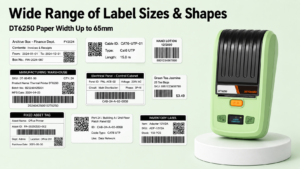
Detonger DT6250: Multi-Format High-Throughput Laboratory Workhorse
For centralized hospital pathology cores, veterinary research facilities, and environmental testing labs handling mixed container formats—such as 15ml/50ml conical falcon tubes, blood collection vacutainers, and reagent media bottles—the Detonger DT6250 provides expanded media capacity.
- Why it excels for lab tubes:Supporting label widths up to 61mm (2.5 inches) at 300 DPI, the DT6250 provides the broader printable area needed for 50ml falcon tubes and wide transport vials. Its split-type consumable design separates the ribbon supply from the label roll, substantially lowering per-label operational overhead during large-scale clinical trial cohort intake.
Streamlining Specimen Workflows with WePrint Software
A high-performance lab tube label printer requires intelligent software to eliminate manual transcription errors and guarantee precise spatial layout. Detonger hardware integrates natively with the WePrint application across iOS, Android, and Windows PC.
WePrint optimizes laboratory labeling through specialized features:
- Pre-Calibrated Tube Template Libraries:Select from pre-loaded layouts engineered specifically for 0.5ml, 1.5ml, 2.0ml, and conical tube formats, complete with locked margins and designated 2D DataMatrix placeholder fields.
- LIMS & Excel Database Synchronization:Import daily accessioning logs directly from CSV or Excel spreadsheets. WePrint automatically binds database columns (patient ID, aliquot sub-number, volume, sample type) to custom label fields, batch-printing serialized cryo-labels in seconds.
- Automated Timestamping & Aliquot Counters:Supervisors can configure automated incrementation rules for aliquot sub-numbers (e.g., -A1, -A2, -A3) alongside live accession timestamps.
- Developer SDKs for Liquid Handling Integration:For automated diagnostic analyzers and robotic carousels, Detonger provides multi-platform SDKs, allowing IT engineering teams to trigger automated tube label print jobs directly from centralized LIMS or EHR architectures.
Selecting the right label size and pairing it with a purpose-built lab tube label printer prevents costly sample loss, eliminates centrifuge jamming, and ensures complete barcode scannability across deep-freeze storage cycles. Explore Detonger’s specialized Medical & Lab Label Printing Solutions, or discover our high-durability Thermal Transfer Label Printer collection to upgrade your specimen labeling workflow today.
Frequently Asked Questions (FAQs)
Q: What is the most versatile label size for standard 1.5ml and 2.0ml microcentrifuge tubes?
A: A 33 mm x 13 mm (or 38 mm x 15 mm) rectangular synthetic label is the universal standard for 1.5ml and 2.0ml tubes. This geometry covers enough circumference to hold a high-density 2D DataMatrix code, a primary sample ID, and a date stamp, while leaving volumetric graduations completely visible and preventing overlap that causes jamming inside high-speed centrifuge rotors.
Q: Can I use standard paper labels on tubes stored in -80°C freezers or liquid nitrogen?
A: No. Standard cellulose paper labels absorb ambient humidity and frost. In ultra-low freezers (-80°C) or liquid nitrogen (-196°C), standard paper embrittles, cracks, and delaminates from curved plastic tube walls. Furthermore, water-based adhesives freeze and fail, resulting in lost labels. You must use flexible synthetic films (such as cryogenic polypropylene) paired with low-temperature acrylic adhesives and pure resin ribbons.
Q: Why do my tube labels peel off at the corners (edge-flagging) after application?
A: Edge-flagging on small-diameter tubes typically occurs for three reasons: the label material is too stiff (such as thick paper or rigid polyester) to overcome the curvature tension of the tube; the label was applied over frost, water, or hand oils; or the label is slightly too long, causing a partial overlap where the adhesive fails to bond to the silicone-coated top-face of the label. To fix this, wipe tubes clean, select ultra-thin, flexible cryogenic polypropylene, and ensure label length leaves a 1mm to 2mm gap before completing a full circle.