
A heat shrink label printer is a dedicated thermal printing device engineered for panel builders, electrical contractors, network installers, and aerospace technicians to print permanent identification markers directly onto polyolefin tubing. Unlike flat, adhesive-backed stickers that peel off small-diameter conductors under vibration, heat shrink tubing slips over the termination pin or bare wire and contracts under heat-gun activation to form an insulated, permanent sleeve. The most critical hardware selection criteria for heat shrink printing include thermal transfer technology (mandatory to prevent heat degradation during recovery), a 300 DPI high-resolution printhead (to keep alphanumeric wire tags legible before and after shrinking), and specialized media feed guides designed for flattened tubing rolls. Electrical contractors should evaluate their wire harness gauges: if you routinely transition between marking fine 22 AWG instrumentation wires and heavy 2/0 AWG feeder cables, choosing a versatile printer with drop-in tube cassette capability and high-temperature resin compatibility is the only way to ensure code compliance and pass electrical inspections.
The Operational Risk of Inadequate Wire Identification
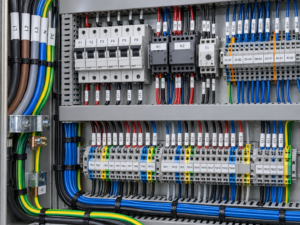
In industrial control panels, switchgear assemblies, and avionics bays, wire identification errors introduce massive financial liabilities and safety hazards. Relying on adhesive flags or vinyl wraps for high-density terminal blocks often results in adhesive failure: environmental heat, airborne hydraulic oil, and continuous equipment vibration break down standard adhesives, causing tags to slide down conductors or drop off completely.
Attempting to mark heat shrink tubing with generic direct thermal hardware is equally dangerous. Direct thermal technology uses heat-activated chemicals in the paper. When an electrician applies a 250°C to 300°C industrial heat gun to shrink the tube, a direct thermal mark turns pitch black across the entire sleeve, instantly destroying the wire ID.
A purpose-built heat shrink label printer utilizes high-temperature thermal transfer engineering. By fusing solid resin ribbon directly into the porous surface of cross-linked polyolefin tubing, the machine creates an indelible alphanumeric legend. When the heat gun contracts the sleeve, the printed text shrinks proportionally without flaking, cracking, smudging, or fading. The sleeve provides dual functionality: durable wire identification and electrical insulation rated to withstand up to 600V.
Core Hardware Specifications to Evaluate
Printing on non-adhesive, flattened polyolefin tubes presents unique mechanical demands compared to feeding standard flat paper. Buyers must evaluate hardware against specific electrical standards:
- Thermal Transfer Print Mechanism (Resin Ribbon Fusing):As noted, direct thermal is disqualified for heat shrink applications. Your device must be a thermal transfer label printer capable of driving pure resin ribbons. Pure resin creates an impenetrable chemical bond that withstands heat-gun activation, grease, hydraulic fluids, and brake-cleaner solvents without eroding.
- 300 DPI High-Resolution Output:Wire tags typically display dense information—such as terminal block IDs, phase markers, circuit designations, and micro-barcodes—across tiny 6mm to 12mm sleeve heights. Standard 203 DPI printers produce coarse text with visible pixel stepping that becomes illegible once the tube shrinks and deforms slightly. A 300 DPI printhead maintains crisp letterforms and sharp quiet zones on 2D DataMatrix codes.
- Adjustable Media Guides and Tension Control:Flattened heat shrink tube rolls are significantly thicker and stiffer than standard label stock. A reliable wire marking printer requires high-torque feed stepper motors and adjustable internal media baffles to keep the tubing centered across the platen roller, preventing lateral drift, wrinkles, and jams.
- Field Portability and Drop-In Cassettes:Field electricians working on site trailers, ladder racks, or substations cannot waste billable hours manually threading delicate ribbons around open gears. Choosing portable units with drop-in, sealed consumable cassettes containing both the continuous tube roll and resin ribbon ensures rapid reloading without exposing the printhead to job-site debris and copper shavings.
Technical Comparison: Heat Shrink Tubing vs. Alternative Wire Markers
| Wire Identification Method | Durability & Heat Resistance | Vibration & Movement Resistance | Re-Termination Capability | Primary Application |
| Heat Shrink Tubing (Polyolefin) | Extreme (resists 125°C+ continuous, oils, solvents) | Maximum (hugs conductor tightly; zero adhesive slippage) | Permanent (must be cut off to remove) | Control panels, aviation harnesses, mil-spec wiring |
| Self-Laminating Vinyl Wraps | Moderate to High (clear tail protects printed area) | Moderate (adhesive can soften in high-heat panels) | Moderate (peels off with deliberate force) | Cat6 network cables, coaxial lines, pre-terminated cords |
| P-Type / T-Type Flag Tags | Moderate (flag remains exposed to friction) | Low (can snag and tear in tight harness bundles) | High (easy to slice off without damaging conductor) | Fiber optic jumpers, ultra-thin diagnostic wiring |
Recommended Detonger Models for Heat Shrink Labeling
Detonger leverages 16 years of independent research, global ISO9001 certifications, and 11 invention patents to deliver rugged thermal hardware optimized for electrical infrastructure and wire harness manufacturing.
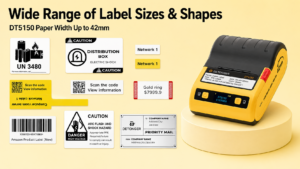
Detonger DT5150: The Portable Panel Builder’s Toolbelt Specialist
For commercial electricians, telecom technicians, and control panel wiremen working on site, the Detonger DT5150 1.5-inch All-in-One Thermal Transfer Printer provides unmatched field agility.
- Why it excels for heat shrink:Featuring a precision 300 DPI printhead, the DT5150 delivers crisp text and micro-barcodes on flattened polyolefin heat shrink tubing up to 36mm wide. Its sealed drop-in cassette system packages the resin ribbon and tubing roll together, allowing technicians to swap between heat shrink sleeves and self-laminating wire wraps in seconds. Powered by long-life battery technology and Bluetooth connectivity, field technicians can generate wire sleeves directly inside the electrical closet.
Detonger DT5250: High-Capacity Industrial Harness Workhorse
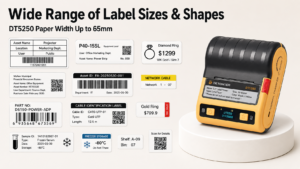
For switchgear manufacturing plants, industrial machine builders, and utility substation contractors handling larger gauge conductors and high daily volume, the Detonger DT5250 delivers expanded capacity.
- Why it excels for heat shrink:Supporting media widths up to 63mm (2.5 inches) at 300 DPI, the DT5250 handles heavy-gauge 3:1 and 2:1 shrink ratio tubing for thick multi-conductor industrial power cables. Its high-capacity battery easily powers full 10-hour installation shifts, and its high-torque drive mechanism feeds thick continuous tubing without feeding slippage.
Automating Wire Schedules with WePrint Software
A high-performance heat shrink label printer requires intelligent software to eliminate manual typing bottlenecks and miswiring errors. Detonger printers integrate natively with the WePrint application across iOS, Android, and Windows PC.
WePrint streamlines electrical panel labeling workflows:
- Rule-Based Serialization:Technicians can establish sequential wire numbering rules (such as TB1-01 through TB1-99) with customized increments and prefix/suffix parameters.
- Excel Wire Schedule Import:For enterprise projects, engineers can import complete wire run lists directly from Excel spreadsheets. WePrint automatically maps conductor source, destination, and wire ID columns into pre-calibrated heat shrink templates.
- Continuous Cut & Length Adjustment:The software allows operators to calibrate individual sleeve lengths to fit terminal spacing perfectly, minimizing tube waste during high-volume assembly runs.
Investing in a dedicated heat shrink label printer protects your installations against short circuits, simplifies future maintenance, and ensures complete compliance with electrical safety standards. Explore Detonger’s specialized Cable Label Printer for Wire, Electrical and Heat Shrink Labels collection, or discover our comprehensive Durable Wire & Cable Label Printing Solutions to equip your team with professional-grade marking tools today.
Frequently Asked Questions (FAQs)
Q: Can I print on heat shrink tubing using a direct thermal label printer?
A: No. Direct thermal printers use heat-sensitive paper that turns black when exposed to thermal energy. The moment you use a heat gun to shrink the tube over a wire, the heat will turn the entire sleeve black and erase your markings. Heat shrink tubing requires a thermal transfer printer equipped with a pure resin ribbon to ensure the text remains intact through heat recovery.
Q: What shrink ratios are supported by heat shrink tube printers?
A: Thermal transfer printers can print on both 2:1 and 3:1 shrink ratio polyolefin tubing, provided the tubing is supplied in flattened, continuous rolls designed for thermal feed mechanisms. A 3:1 ratio provides greater flexibility, as it shrinks down to one-third of its original diameter, making it ideal for sliding over larger terminal connectors and snugging tightly onto smaller wire gauges.
Q: How do I select the right size of heat shrink tubing for my wire gauge?
A: Measure the outside diameter (OD) of your wire’s insulation (including any terminal lugs that the sleeve must slip over). Choose a tubing diameter whose expanded inside diameter (ID) is slightly larger than the wire/lug OD, but whose recovered (fully shrunken) ID is smaller than the wire’s bare insulation OD. This ensures the sleeve slips on easily and contracts firmly onto the wire without slipping.