
A bottle label printer engineered for barcode tracking is an indispensable thermal printing system designed for commercial beverage bottlers, cosmetic formulators, pharmaceutical packagers, and condiment producers to generate scannable, high-durability product identifiers on demand. Applying barcodes to cylindrical glass bottles, plastic droppers, and squeeze containers presents unique physical and mechanical challenges. The most critical hardware selection criteria include a 300 DPI high-resolution printhead to render microscopic linear 1D barcodes and 2D QR codes without thermal bleed, thermal transfer technology to withstand condensation, moisture, and alcohol wipes, and flexible synthetic substrate compatibility to prevent edge lift on curved container walls. Packaging and operations managers should first evaluate their filling and refrigeration workflows: if your bottled goods undergo cold refrigeration, ice bucket submersion, or contact with essential oils and alcoholic solutions, deploying an industrial-grade thermal transfer bottle printer paired with pure resin ribbon is mandatory to eliminate retail checkout scanning failures and costly distribution delays.
The Operational Stakes of Barcode Integrity on Cylindrical Bottles
In retail distribution, automated warehousing, and pharmaceutical tracking, an unreadable barcode represents an immediate supply chain failure. When bottles travel across point-of-sale (POS) checkout lanes or automated conveyor sortation hubs, laser scanners and optical camera imagers must read the tracking code on the very first pass.
Relying on standard office desktop inkjet printers or generic direct thermal paper rolls creates severe commercial liabilities:
- Inkjet Smearing and Moisture Damage:Bottled beverages, chilled craft beers, and white wines develop heavy surface condensation when transitioned from cold-storage rooms to ambient loading docks. Water-based inkjet inks dissolve instantly, while office paper absorbs moisture, bubbles, and peels away from cylindrical glass surfaces.
- Curved Surface Geometric Distortion:Applying barcodes to small-diameter bottles (such as 10ml to 30ml dropper bottles or 50ml spirit miniatures) compresses the physical reading plane. If standard 1D barcodes wrap horizontally around a tight curve, the laser beam cannot sweep the full series of bars and spaces simultaneously, resulting in a scan failure.
- Direct Thermal Heat and Chemical Blackening:Basic direct thermal paper utilizes a heat-sensitive chemical coating. Exposure to ambient filling room heat, shipping vehicle sunlight, or accidental contact with essential oils, alcohol tinctures, and liquid hand soaps triggers the chemical coating, turning the label solid black and obliterating all UPC/EAN barcodes.
Deploying a commercial bottle label printer resolves these physical vulnerabilities. Utilizing controlled thermal transfer energy, the printhead fuses pure resin or durable wax-resin ribbons into synthetic polymer films (such as flexible PP, PET, or PE). This creates an indelible barcode layer that withstands condensation, refrigeration, friction, and chemical solvent wipe-downs throughout the product’s entire retail shelf life.
Core Hardware Specifications for Bottle Barcode Printing
Producing scannable barcodes that conform to curved containers requires hardware built around specific mechanical and optical tolerances:
- 300 DPI High-Resolution Output:While 203 DPI suffices for large 4×6 inch logistics cartons, bottle labels typically condense brand logos, net volumes, mandatory ingredient warnings, and scannable barcodes into tight footprints. A 300 DPI (Dots Per Inch) printhead delivers clean edge definitions and sharp quiet zones on micro-modules, ensuring that compact 1D UPC/EAN codes and dense 2D DataMatrix or QR codes scan instantly without module bridging.
- Thermal Transfer vs. Direct Thermal Versatility:For bottled items exposed to moisture, refrigeration, fatty oils, or cleaning agents, a dedicated thermal transfer label printer running pure resin ribbon is mandatory. Pure resin forms an impermeable chemical bond with synthetic plastic labels, preventing barcode erosion during ice water submersion or alcohol wipe-downs. For dry goods in ambient pantry environments, direct thermal printers running “three-proof” paper offer an economical, inkless alternative.
- Conformable Synthetic Substrates (Anti-Edge Lift):Cylindrical glass and plastic bottles exert continuous outward spring-back tension on rigid paper labels. A commercial bottle printer must reliably feed pliable synthetic films—such as thin polypropylene (PP), polyethylene (PE), or Matte Silver PET—coated with high-tack acrylic adhesives engineered to adhere tightly around curved surfaces without flagging or edge peeling.
- Ladder vs. Picket Fence Barcode Printing Alignment:When labeling curved bottles, printing barcodes in a “ladder” orientation (bars running horizontally, parallel to the bottle curve) ensures the scanner can sweep across the bars along the flat vertical axis of the bottle. High-end printers feature precision platen rollers and stepper motors that render sharp, crisp ladder barcodes without horizontal edge jitter.
Comparing Thermal Technologies for Bottle Barcode Labels
| Performance Metric | Direct Thermal Printing (3-Proof Paper) | Thermal Transfer Printing (Resin Ribbon) |
| Imaging Mechanism | Heated printhead darkens chemical coating on paper | Heated printhead melts solid resin onto synthetic film |
| Consumable Configuration | Direct thermal label roll only (inkless) | Synthetic label rolls + pure resin ribbon |
| Moisture & Condensation Tolerance | Moderate (resists brief splashes; softens in ice) | Extreme (completely impervious to ice buckets & condensation) |
| Oil & Alcohol Resistance | Poor (essential oils and alcohol dissolve text) | Exceptional (withstands plant oils, cosmetic serums, alcohol) |
| Curved Surface Edge-Lift Resistance | Moderate (stiff paper tends to lift on tight curves) | Superior (ultra-flexible synthetic films conform securely) |
| Archival Contrast & Shelf Life | 6 to 12 months (indoor ambient conditions) | 5 to 15+ years (permanent industrial durability) |
| Recommended Application | Short-shelf dry pantry bottles, bakery syrup jars | Craft beer, artisan spirits, cosmetic serums, apothecary oils |
Recommended Detonger Models for Bottle Barcode Labeling
Detonger leverages 16 years of independent research, global ISO9001/CE certifications, and 11 invention patents to deliver reliable thermal hardware suited for commercial packaging and precision barcode marking.
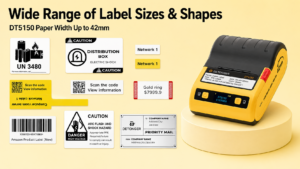
Detonger DT5150: The Compact Dropper Bottle & Cosmetic Vial Specialist
For apothecary crafters, essential oil formulators, serum producers, and vape e-liquid packagers working with 10ml to 50ml bottles, the Detonger DT5150 1.5-inch All-in-One Thermal Transfer Printer delivers benchtop precision.
- Why it excels for bottle barcodes:Featuring an ultra-sharp 300 DPI printhead, the DT5150 outputs compact 2D QR codes and micro-UPC barcodes on synthetic labels up to 36mm wide without module distortion. Its all-in-one consumable cassette houses both the resin ribbon and synthetic label roll inside a sealed cartridge, allowing operators to swap label stocks in seconds with zero manual ribbon threading or cleanroom dust contamination.
Detonger DT6250: Multi-Format Industrial Workhorse for Beverage & Sauce Bottles
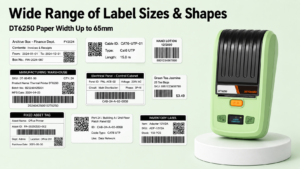
For craft breweries, boutique distilleries, hot sauce makers, and 250ml to 500ml cosmetic pump bottles, the Detonger DT6250 2.5-inch Thermal Transfer Printer provides expanded capacity.
- Why it excels for bottle barcodes:Supporting media widths up to 61mm (2.5 inches) at 300 DPI, the DT6250 provides ample printable area for complex label layouts featuring brand graphics, full ingredient declarations, and high-density retail barcodes. Its split-type architecture separates the ribbon supply from the label roll, substantially reducing ongoing consumable overhead during large production runs.
Detonger DP27 Series: Agile Direct Thermal Solution for Ambient Dry Goods
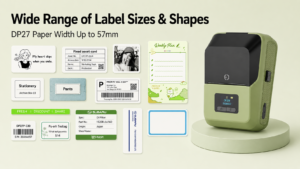
For dry spice containers, short-cycle beverage bottles, or temporary batch neck tags that do not face moisture or grease, the Detonger DP27 Series (featuring the 300 DPI DP27P configuration) provides an inkless, lightweight alternative.
- Why it excels for bottle barcodes:Weighing just 292g, this mobile 2-inch unit enables staff to print dynamic UPC tags, flavor identifiers, and batch dates directly at the packaging bench via Bluetooth, keeping consumable overhead to an absolute minimum.
Automating Packaging Batches with WePrint Software
A commercial bottle label printer requires intelligent software to eliminate manual data entry errors and ensure standard barcode verification. Detonger hardware integrates natively with the WePrint software ecosystem across iOS, Android, and Windows PC.
WePrint simplifies bottle packaging workflows through dedicated capabilities:
- Standardized Barcode Generation:Built-in symbology engines generate compliant 1D retail barcodes (UPC-A, EAN-13, Code 128) and 2D matrices (QR Code, DataMatrix) with verified quiet zones and customizable error correction levels.
- Excel & CSV Database Binding:For packaging operations managing multiple flavors, scent variations, or SKU lists, operators can import external spreadsheets directly into the app. WePrint dynamically maps database columns to the label template, batch-printing serialized barcode sets in minutes.
- Dynamic Lot & Expiration Sequencing:Production managers can lock static branding elements while configuring automatic incrementation rules for batch codes, bottling dates, and best-by dates.
Deploying a purpose-built bottle label printer safeguards your brand presentation, eliminates retail checkout scanning errors, and ensures full supply chain visibility from the bottling line to the consumer’s hands. Explore Detonger’s specialized Barcode Label Printer for Warehouse, Inventory and Asset Tracking collection, or discover our high-durability Industrial Label Printer for Manufacturing, Warehouse and Durable Labels lineup to upgrade your packaging infrastructure today.
Frequently Asked Questions (FAQs)
Q: Can a bottle label printer print barcodes that wrap around small dropper bottles without scanning errors?
A: Yes, but orientation matters. When printing barcodes for small-diameter cylindrical containers (such as 10ml or 15ml vials), it is recommended to print the barcode in a “ladder” orientation (where the bars run horizontally, and the scanner beam sweeps vertically). This prevents the curve of the bottle from distorting the width of the bars and spaces relative to the scanner’s laser line. Additionally, using a 300 DPI printer ensures the narrowest bars remain sharp and well-defined.
Q: Why do barcode labels on refrigerated bottles bubble and peel away from the glass?
A: When chilled bottles are brought to ambient temperatures, surface condensation forms. Standard paper labels absorb this water, causing the paper fibers to expand and the adhesive to lose tack, leading to bubbling and edge lift. To prevent this, use flexible synthetic materials (such as thin polypropylene or flexible PET) paired with a high-tack, water-resistant acrylic adhesive formulated specifically for wet glass and plastic surfaces.
Q: Can I print full-color bottle labels with a thermal bottle label printer?
A: Commercial thermal printers are monochrome devices designed to output high-durability single-color graphics (most commonly black, though single-color resin ribbons such as white, gold, red, or blue are available). For cost-effective full-color branded packaging, businesses typically purchase pre-printed label rolls with color artwork from a commercial converter, then use their in-house thermal printer to print variable barcodes, lot numbers, and ingredient panels directly into designated blank spaces.