
A waterproof label printer engineered for two-dimensional matrices is an indispensable thermal printing system designed for industrial manufacturing, cold-chain distribution, chemical facilities, and outdoor asset management teams to produce scannable, moisture-resistant QR codes on demand. Unlike standard alphanumeric text or forgiving linear barcodes, high-density 2D QR codes store encrypted URLs, batch records, maintenance histories, and equipment serials inside a tightly calibrated grid of microscopic square modules. When exposed to outdoor rainfall, high humidity, wash-down chemicals, or sub-zero condensation, poorly engineered labels quickly fail. Selecting the right hardware requires balancing three decisive technical criteria: optical printhead resolution (300 DPI is strictly mandatory to eliminate module bleeding and preserve geometric timing patterns), imaging technology (thermal transfer paired with pure resin ribbons provides true archival chemical and submersion resilience), and media handling capability for non-porous synthetic substrates. Operations directors must evaluate their environmental risks: if your QR codes are exposed to cleaning solvents, weathering, or freezing condensation, deploying a dedicated thermal transfer printer is the only way to ensure 100% first-pass optical scan rates and prevent catastrophic traceability failures.
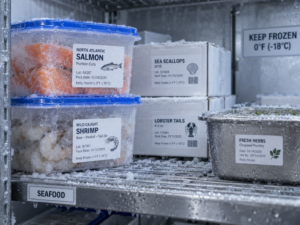
The Operational Risk of QR Code Degradation in Wet Environments
In modern digital supply chains and smart manufacturing ecosystems, a QR code acts as the physical-to-digital bridge connecting physical parts, tools, and specimens directly to cloud databases, ERP systems, and LIMS records. However, because QR codes rely on strict geometric symmetry, precise module contrast ratios, and clear quiet zones, moisture presents a severe operational hazard.
Relying on standard office desktop printers or generic paper-based labels introduces widespread tracking failures:
- Module Bleeding and Quiet Zone Infiltration:Standard cellulose paper absorbs ambient humidity. As moisture wicks through the paper pulp, the microscopic black modules swell and bleed into adjacent white cells and the surrounding quiet zone. This blurring destroys the timing patterns and finder patterns required by optical camera imagers and smartphone cameras, causing scan timeouts or unreadable errors.
- Direct Thermal Blackening and Chemical Erasure:Basic direct thermal paper relies on a heat-sensitive chemical coating. Exposure to sunlight UV, outdoor radiant heat, or routine solvent wipe-downs (such as isopropyl alcohol, degreasers, or sanitizing agents) activates or dissolves this coating, causing the entire QR matrix to turn completely black or fade into illegibility within days.
- Adhesive Delamination and Curling:When water or steam penetrates behind paper labels, water-based adhesives dissolve, causing tags to bubble, flag, and drop off equipment chassis, outdoor utility meters, and warehouse pallet racks.
Deploying an industrial-grade waterproof label printer eliminates these vulnerabilities. Utilizing controlled thermal transfer energy, the machine melts solid resin polymers into synthetic films (such as Matte Silver PET, polypropylene, or flexible PVC). This creates an indelible graphic bond that prevents edge bleeding, withstands complete water submersion, and resists aggressive industrial solvents throughout multi-year deployment lifecycles.
Core Hardware Specifications for Waterproof QR Code Labeling
Producing micro-sized, highly dense 2D codes that endure extreme moisture requires hardware engineered to precise mechanical and optical standards:
- 300 DPI High-Resolution Output:QR codes frequently condense extensive character strings—such as encrypted 64-character web links or complex JSON strings—into compact footprints measuring 15mm x 15mm or 20mm x 20mm. A standard 203 DPI printhead utilizes larger dots (0.125mm), which causes shifting micro-modules to merge and round off cell corners. A 300 DPI (Dots Per Inch) printhead delivers smaller, precisely defined dots (0.084mm) that maintain crisp rectangular boundaries and stark black-to-white contrast ratios.
- Thermal Transfer vs. Direct Thermal Versatility:For permanent asset tracking, outdoor infrastructure, and cryogenic vial identification, your hardware must be a thermal transfer label printer running pure resin ribbon. The melted resin forms an impermeable shield impervious to rain, saltwater spray, hydraulic oils, and autoclaves. For short-cycle transit like cold-chain produce boxes, direct thermal models running premium “three-proof” (water-, oil-, and scratch-proof) top-coated paper offer an inkless, cost-effective alternative.
- Synthetic Substrate Feed Compatibility:Waterproof labels use non-porous synthetic materials (such as PET, PE, PP, and vinyl) that exhibit higher rigidity and different surface tension than paper. The printer must incorporate high-torque stepper feed motors, wear-resistant platen rollers, and adjustable printhead pressure mechanisms to prevent ribbon wrinkling, diagonal slip, or walking during continuous print jobs.
- Precision Optical Registration Sensors:QR code label rolls frequently incorporate pre-printed brand borders, transparent carrier liners, or die-cut circular geometries. The printer requires sensitive, adjustable transmissive (gap) and reflective (black mark) optical sensors to calibrate each label’s top-of-form boundary, ensuring QR matrices never print over perforations or die margins.
Comparing Thermal Technologies for Waterproof QR Code Labels
| Evaluation Metric | Direct Thermal Printing (3-Proof Media) | Thermal Transfer Printing (Resin Ribbon) |
| Imaging Mechanism | Heated printhead activates chemical paper coating | Heated printhead melts pure resin onto synthetic film |
| Required Consumables | Direct thermal label roll only (inkless) | Synthetic label rolls + pure resin ribbon |
| Micro-QR Code Cell Sharpness | Moderate (slight thermal bloom on dense matrices) | Superior (razor-sharp, high-contrast module boundaries) |
| Moisture & Submersion Resilience | Moderate (resists brief splashes; degrades under soak) | Extreme (completely impervious to prolonged water immersion) |
| Solvent & Chemical Resistance | Low (alcohol wipes, oils, and acetone erase print) | Exceptional (withstands isopropyl alcohol, fuels, xylene) |
| Outdoor UV & Heat Lifespan | 6 to 12 months (turns dark under heat/UV) | 5 to 15+ years (permanent archival legibility outdoors) |
| Recommended Operational Use | Chilled food cartons, cold-chain transport, parcel tags | Outdoor utility tagging, industrial assets, chemical drums |
Recommended Detonger Models for Waterproof QR Code Labeling
Detonger leverages 16 years of independent research, global ISO9001 quality certifications, and 11 invention patents to deliver robust thermal hardware optimized for precision durable marking.
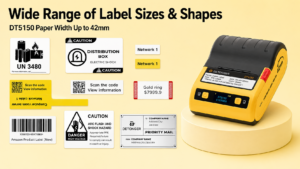
Detonger DT5150: The Compact 300 DPI Thermal Transfer Specialist
For electronics manufacturing, IT server racks, clinical laboratory cryovials, and compact equipment tagging where small, impervious QR codes are required, the Detonger DT5150 1.5-inch All-in-One Thermal Transfer Printer delivers benchtop and mobile precision.
- Why it excels for waterproof QR tags:Outputting at an ultra-sharp 300 DPI, the DT5150 renders microscopic 2D DataMatrix and QR codes on narrow Matte Silver PET labels down to 15mm without dot bridging. Its sealed, all-in-one consumable cassette integrates the pure resin ribbon and synthetic waterproof media into a single drop-in cartridge, allowing field workers to replace consumables in seconds without exposing the print mechanism to moisture, dust, or grease. Built-in Bluetooth allows technicians to generate durable tags on demand right at the equipment rack.
Detonger DT6250: Multi-Format Waterproof Industrial Workhorse
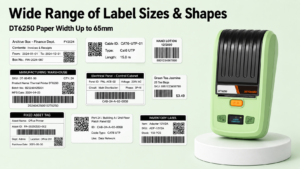
For warehouse racking, outdoor piping, chemical container identification, and equipment compliance tracking requiring larger format QR codes, the Detonger DT6250 provides expanded media flexibility.
- Why it excels for waterproof QR tags:Supporting label widths up to 61mm (2.5 inches) at 300 DPI, the DT6250 provides ample printable area for dual-identification layouts—such as a prominent dynamic QR code alongside corporate ownership logos, human-readable alphanumeric serials, and equipment ratings. Its split-type consumable design separates the ribbon supply from the label roll, substantially reducing ongoing consumable overhead during large-scale enterprise tagging overhauls.
Detonger DP40 Series: The 4-Inch High-Volume Logistics Champion
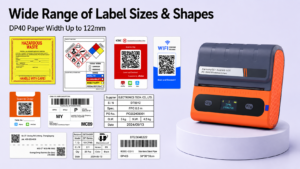
For cross-dock distribution, cold-chain refrigerated pallets, and freight yards requiring wide-format moisture-resistant QR codes on the move, the Detonger DP40 Series handles large-format tasks with ease.
- Why it excels for waterproof QR tags:Accommodating media widths up to 114mm (with a 104mm effective print width), the DP40 batch-prints standard 4×6 inch logistics waybills and pallet labels containing high-density tracking QR codes. Paired with Detonger’s 3-proof direct thermal paper, it generates water-shedding shipping labels that survive heavy rain on open loading docks. Powered by dual 2600 mAh battery packs, logistics personnel can batch-print wireless order queues directly at the pallet.
Automating QR Code Production with WePrint Software
A dedicated waterproof label printer requires versatile design and database software to eliminate transcription errors and enforce barcode compliance. Detonger hardware integrates natively with the WePrint application across iOS, Android, and Windows PC.
WePrint streamlines enterprise QR code labeling through targeted capabilities:
- Dynamic QR Code Symbology Engine:Generates standard QR codes and micro-QR formats with customizable Error Correction Levels (ECC Level L, M, Q, or H). Configuring Level H allows the QR code to remain 100% scannable even if up to 30% of the label surface is scratched or partially obstructed by grime.
- Excel & CSV Database Binding:Operators can import external spreadsheets containing thousands of unique URLs, serial numbers, or asset records. WePrint dynamically maps columns to the canvas, rendering unique, scannable QR codes for every record without manual re-keying.
- Dynamic Batch & Timestamp Serialization:Production supervisors can configure dynamic rules that advance sequential alphanumeric serials and generate real-time timestamps alongside scannable QR matrices.
- Enterprise SDK & API Integration:For automated assembly lines and warehouse execution systems, Detonger provides multi-platform SDKs that allow corporate IT engineers to trigger automated QR code print jobs directly from existing ERP, MES, or WMS databases.
Equipping your facility with a dedicated waterproof label printer protects your digital tracking ecosystem against scanning dropouts, prevents inventory data corruption, and ensures seamless optical verification across harsh operating environments. Explore Detonger’s specialized Barcode Label Printer for Warehouse, Inventory and Asset Tracking collection, or discover our high-durability Industrial Label Printer for Manufacturing, Warehouse and Durable Labels lineup to upgrade your QR code tracking infrastructure today.
Frequently Asked Questions (FAQs)
Q: Why do optical scanners fail to read waterproof QR codes printed at 203 DPI?
A: Optical scanners and smartphone cameras decode 2D QR codes by measuring the exact spatial ratios between the black and white square modules and finding the position-detection patterns. On small labels (such as 15mm x 15mm), a 203 DPI printer’s larger print dots (0.125mm) cause the micro-modules to bleed together, rounding off sharp square corners. A 300 DPI printhead uses smaller dots (0.084mm), preserving the sharp geometrical boundaries and clear quiet zones required for immediate decoding.
Q: Can I print waterproof QR code labels without using an expensive resin ribbon?
A: Yes, if your application involves short-to-medium-term storage or logistics (such as cold-chain refrigerated food transport or courier parcels). You can utilize an inkless direct thermal printer running premium “three-proof” (waterproof, oil-proof, scratch-proof) direct thermal paper. The paper features a protective top-coat that causes water to bead up and roll off. However, for permanent asset tracking, outdoor equipment, or exposure to cleaning solvents, a thermal transfer printer equipped with a pure resin ribbon and synthetic PET film is strictly mandatory.
Q: How does the QR code Error Correction Level help with waterproof labels in wet environments?
A: The QR code standard includes Reed-Solomon error correction, which Detonger’s WePrint software allows you to configure (Levels L, M, Q, and H). Level H provides up to 30% data recovery. If an industrial label in a wet or muddy environment is partially covered by dirt, grease, or minor surface scratches, an optical scanner can still reconstruct and read 100% of the embedded data without failure.